Follow Us on Google
From Taiwo Ogunniyi, Ilorin
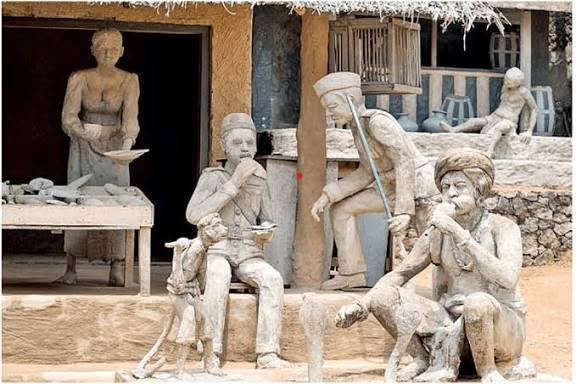
More than 1,000 mysterious stone figures have stood for generations at Esie in Irepodun Local Government Area of Kwara State, silently preserving clues to an ancient civilisation whose origins scholars are still trying to unravel.
The soapstone images, depicting men, women, children, royalty, soldiers, hunters, craftsmen and other figures, have made Esie one of Nigeria’s most significant archaeological and cultural heritage sites.
Yet, decades of study have failed to fully answer some of the most basic questions: Who made them? When were they carved? Why were they assembled at Esie? And what society did they represent?
It is this continuing mystery, coupled with concerns about the physical preservation of the sculptures, that has prompted historians, archaeologists, art scholars and conservation experts to call for fresh multidisciplinary research and greater investment in the heritage site.
The National Commission for Museums and Monuments (NCMM) records Esie Museum as Nigeria’s first museum, established in 1945 principally to preserve the unusual collection.
The figures display elaborate hairstyles, clothing, ornaments, facial marks and postures, with scholars saying the details offer rare evidence of the social, political and artistic life of a sophisticated precolonial West African society.
The Metropolitan Museum of Art describes the Esie sculptures as a collection of more than 1,000 soapstone figures whose exact dates and cultural origins remain uncertain, although some estimates place their production between the 12th and 15th centuries.