Follow Us on Google

By Christy Anyanwu
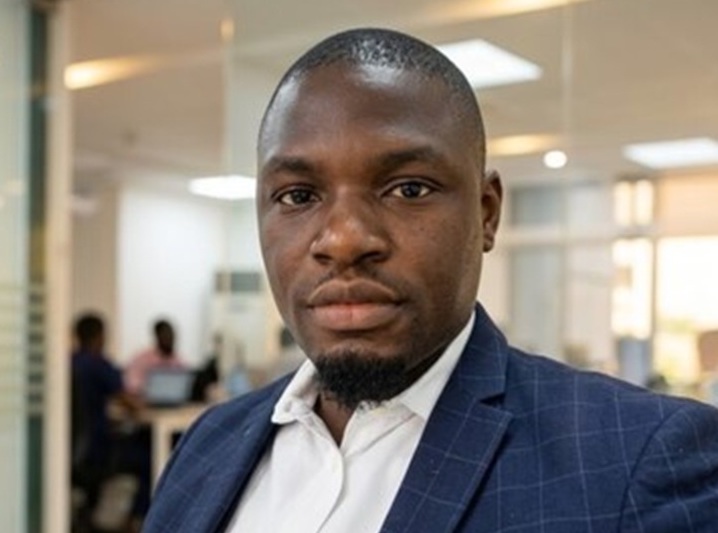
Godwin Uchechukwu Uke is a brilliant, Nigerian expert, who is flying the flags of Nigeria and Nnamdi Azikiwe University high in the United States, where his creative and innovative solutions are finding expression in solving engineering problems. He is another example of how exposure to global best practices rapidly boosts a person’s capacity and capabilities.
In this interview, he offers advice on how future occurrences of the fire disaster that happened at Afriland Towers and other public facilities could be avoided.
Tell us a bit about yourself – where you come from and where you schooled.
I am proudly from Enugu State, Nigeria. I obtained my Bachelor’s degree in Mechanical Engineering from Nnamdi Azikiwe University, Awka, and advanced my studies with a Master of Science degree in Engineering Management from The Catholic University of America (CUA) in Washington, D.C., United States. My professional journey spans over nine years across Nigeria’s oil, gas, and manufacturing industries, having worked with Dangote Group Nigeria and Asharami Synergy Ltd (Sahara Group). My career path focuses on optimizing facility operations, energy efficiency, and asset lifecycle management. Throughout my career, I have championed sustainability, safety, and smart infrastructure integration. I am a recipient of the Vice Admiral Mel Williams Leadership Excellence Award for outstanding leadership and service. Beyond my technical expertise, I am deeply passionate about mentoring young engineers, developing sustainable infrastructure strategies, and supporting research that bridges engineering and management. My vision is to contribute to sustainable development across Africa through application of advanced engineering management principles, ensuring infrastructure not only meets today’s needs but remains resilient for generations to come.
If you had to address a group of young high school students on career day, what would you tell them you find exciting about engineering as a field and why you studied it?
I would find such opportunity to address young students very exciting, and I would tell them that engineering is the heartbeat of civilization. Every technological marvel from smartphones to airplanes and renewable power grids springs from an engineer’s creativity and problem-solving mindset. Engineering excites me because it provides the tools to transform imagination into reality. I chose the field out of curiosity for how systems work and a passion to design solutions that make life better. Over time, I discovered that engineering is not just about machines and formulas, it’s also about leadership, teamwork, and innovation. The field teaches you to think critically, work collaboratively, and impact society positively. Engineers design sustainable cities, drive industrial growth, and contribute to global challenges like clean energy, water access, and climate resilience. To young students, I would say: if you have curiosity, courage, and compassion for humanity, engineering is your field. It will push you to ask “why,” challenge you to find “how,” and reward you when your solution changes lives. Beyond a profession, engineering is a service to humanity where passion meets purpose, and every innovation improves the world we live in.
From a practical perspective, what are the significant issues involved in engineering design and management of facilities, whether buildings, manufacturing operations, transportation and the like?
Engineering design and facility management are complex, interdisciplinary processes that balance performance, safety, and sustainability. One of the most significant issues is the disconnect between design and long-term operational performance. Facilities are often built for aesthetics or cost savings, without adequately addressing maintenance accessibility, energy efficiency, or user adaptability. Another challenge is integrating technology and sustainability within infrastructure. The need for Building Information Modeling (BIM), Computerized Maintenance Management Systems (CMMS), and IoT-based monitoring tools has become crucial in managing complex assets. Yet, many organizations still rely on manual or outdated systems that hinder efficiency. Other issues include inadequate maintenance culture, lack of skilled manpower, poor risk management, and failure to comply with international safety and environmental standards such as ISO 55000 and LEED certification. In manufacturing and transportation systems, challenges often centre on equipment reliability, process optimization, and minimizing downtime. To overcome these, a systems engineering approach, which emphasizes lifecycle cost analysis, reliability engineering, and resilience planning—is vital. Ultimately, effective facility management demands a holistic understanding that merges engineering design, data analytics, and leadership discipline to deliver facilities that are safe, sustainable, and operationally efficient.
You probably must have read media reports about the fire disaster that struck Afriland Towers, in Lagos, Nigeria. Given your experience in facility design and management, what would you say went wrong? If you had to advise Mr. Tony Elumelu, whose organization, Heirs Holdings, owns Afriland Towers, what preventive measures would you suggest to him, and should be incorporated into the design of the proposed Falomo Towers project?
The unfortunate Afriland Towers fire incident underscores the importance of proactive facility safety design and management. In my professional opinion, the disaster likely resulted from lapses in preventive maintenance, absence of modern fire detection systems, or inadequate emergency response protocols. Electrical faults, outdated suppression systems, and non-compliance with NFPA (National Fire Protection Association) standards are often underlying factors in such incidents. For high-rise structures, safety begins at the design stage. I would advise Mr. Tony Elumelu and Heirs Holdings to adopt digital twin technology for real-time monitoring, integrate IoT-based fire detection and alarm systems, and implement AI-driven predictive maintenance platforms that can forecast risks before they escalate. Additionally, enforcing NFPA 101 Life Safety Code compliance, conducting regular safety audits, and training facility personnel in emergency response are essential. The proposed Falomo Towers should also incorporate fire-rated compartmentalization, automated sprinkler systems, and LEED-certified sustainable materials to ensure resilience and environmental responsibility. Safety should never be reactive; it must be embedded into the DNA of the facility from conception to operation. By combining smart technology, regulatory compliance, and strong maintenance culture, Nigeria can set a new benchmark for fire-safe, world-class infrastructure.
From the perspective of global best practices, how has graduate study at the Catholic University of America helped your career growth? Based on this, would you advise Nnamdi Azikiwe University to establish an intellectual exchange program with the CUA to enhance the knowledge of senior Unizik undergraduates?
My graduate studies at The Catholic University of America (CUA) were transformative, both academically and professionally. The Engineering Management program blends technical mastery with leadership and decision-making skills training engineers to lead multidisciplinary teams, manage complex systems, and drive innovation. CUA’s global approach exposed me to data analytics, smart facility systems, and sustainable asset management all grounded in ethical leadership and evidence-based problem-solving. I learned how to apply systems thinking in addressing infrastructure reliability, lifecycle optimization, and risk assessment. This international experience reshaped my career outlook and positioned me to contribute strategically to engineering projects rather than just technically. It also taught me to value research collaboration and continuous improvement, two pillars of global engineering excellence. I strongly recommend that Nnamdi Azikiwe University (UNIZIK) pursue an academic exchange or research partnership with CUA. Such collaboration would enable Nigerian undergraduates to gain hands-on exposure to advanced laboratory tools, renewable energy applications, and data-driven engineering techniques. Joint symposia, virtual seminars, and internships could enhance knowledge transfer and equip Nigerian students with global competencies. In a world driven by technology and innovation, global partnerships are no longer optional; they are essential pathways for educational transformation and national development.
When you are not thinking about engineering solutions, how do you unwind? What do you love to do?
When I am not engaged in engineering solutions, I prioritize family, reflection, and creativity. Spending quality time with my wife and son brings me immense joy. They are my greatest source of motivation and balance. I also enjoy cooking; it allows me to experiment, innovate, and unwind much like problem-solving in engineering, but with flavor and heart. Beyond that, I volunteer in mentorship and leadership programs, guiding young engineers and students on professional growth, ethics, and innovation. It gives me great satisfaction to see the next generation of African engineers develop the mindset to solve real-world problems. I also enjoy reading research articles, exploring emerging technologies, and playing indoor sports. These activities help me stay active, focused, and mentally refreshed. I believe in continuous learning and often dedicate personal time to studying sustainability, digital transformation, and systems management. For me, a fulfilling life balances productivity with purpose. Engineering trains the mind, but relationships, service, and faith nourish the soul. Together, they define who I am — not just as an engineer, but as a person committed to impact and continuous growth.
What do you miss most about Nigeria?
What I miss most about Nigeria is the spirit of resilience and community that defines our people. Nigerians possess an extraordinary ability to find hope and humor even in challenging situations. That spirit of togetherness, creativity, and determination is deeply inspiring and difficult to replicate anywhere else in the world. I miss the warmth of family gatherings, church programs, and the energy of local markets where life feels vibrant and connected. I also miss our rich culinary culture from jollof rice to ofe onugbu and suya. Each meal tells a story of heritage and joy. Professionally, I miss the dynamic nature of working in Nigeria’s industrial landscape – the challenges, the innovation, and the opportunities to make tangible impacts through infrastructure development. Despite the hurdles, Nigeria remains a land of immense potential, driven by its youthful population and entrepreneurial energy. No matter where I am, Nigeria remains my root, the foundation that shaped my discipline, values, and sense of service. I am proud to represent her globally and look forward to contributing to her continued progress through knowledge transfer, collaboration, and sustainable engineering leadership.