Follow Us on Google

The recent order handed down to the Chief of Defence Staff, General C.G. Musa by President Ahmed Bola Tinubu to end the menace of oil theft once and for all may have to reset the security dynamics of the oil-rich region of Nigeria. The problem of oil theft, which has its roots in the militant activities of armed groups in the Niger Delta region protesting economic injustice, political exclusion and environmental degradation by the Nigerian state and its international oil companies clientele, has lasted many years. To draw attention to the sorry state of affairs in a region that is the proverbial goose that lays the golden egg, various armed groups embarked on disruptive activities in oil production such as blowing up pipelines, shutting down flow stations and kidnapping expatriates working in the oil fields of the Niger Delta.
These violent activities, which peaked in the early 2000s, disrupted oil production and reduced output from about 2 million harrels per day to about 700,000bpd by 2007. For a country that depends on crude oil exports for about 80 per cent of its foreign exchange earnings, the drastic reduction of oil production output negatively impacted finances. A period of respite was ushered in when President Umar Musa Yar’Adua granted amnesty to militants in exchange for peace in the Niger Delta, beginning from 2009, allowing the Nigerian state to optimize oil production. However, many years down the line, a legacy problem of oil theft has emerged from the ravages of Niger Delta militancy with the sole objective of making illegal petro-dollars for its faceless and nameless sponsors.
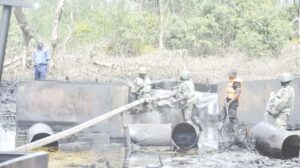
In connivance with criminal elements that have the knowledge of the network of oil pipelines running through the creeks of the Niger Delta, which links onshore well heads to flow stations and export terminals, oil thieves carry out multiple breaches on this important artery of oil production to criminally divert products away to the booming market for stolen crude. While some of this stolen crude is diverted to the high seas for international buyers, others are absorbed by the many illegal artisanal refining sites that dot the landscape of the Niger Delta. According to the Nigerian Extractive Industry Transparency Initiative [NEITI], Nigeria lost about 619.7 million barrels of crude oil, valued at $46.16 billion, to oil thieves between 2009 and 2020. And four years later, in 2024, oil theft is still ongoing at the rate of about 400,000 barrels of stolen crude daily.
Other News
Oil theft in the Niger Delta has also made it impracticable for the Nigerian state to ramp up oil production to meet its OPEC quota of 1.5 million bpd, a situation that has imperilled the fiscal plan for the year 2024, which is benchmarked with a projected production of 1.78 million barrels per day. It is clearly in a bid to salvage this ugly situation that President Tinubu has given marching orders to the armed forces to stamp out oil thieves in the Niger Delta to restore investor confidence and ramp up production to meet the set target of over 2 million bpd and raise the revenue profile of the Nigerian federation. But as commendable as this charge by the Commander-in-Chief to the Chief of Defence Staff may be, new strategies are needed, if the desired outcomes are to be achieved.
While the NNPCL has prepared the ground for the implementation of the new presidential directive by recovering the over 5,000 breaches on vital oil and gas infrastructure, which has resulted in a marginal increase in oil production in recent times, the state-owned oil giant must be relieved of the responsibility and burden of hiring private security companies to combat oil theft. The outsourcing of the security of pipelines and other oil and gas production infrastructure was an aberration in the first instance that should not have happened as it was tantamount to the state ceding its sovereignty to non-state entities. Crude oil is a sovereign commodity and the responsibility for the security of its production and management should be the responsibility of the sovereign state of Nigeria through the armed forces and other law enforcement agencies of the state as is the case all over the world.
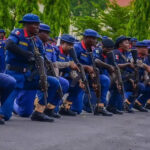
To this end, defence and security agencies of the Nigerian state must take over the responsibility of combating oil theft in the Niger Delta, along with the security of vital oil and gas assets, from private security contractors with available resources re-channelled towards repositioning the armed forces and other law enforcement agencies towards carrying out President Tinubu’s order. In the light of the grave danger posed by the menace of oil theft in the Niger Delta to the economic well-being of Nigeria, it has become imperative to designate oil theft a treasonable offense against the Nigerian state. Accordingly, special courts should be created by the leadership of the judiciary in Nigeria to be dedicated to the trial of oil theft suspects in order to use quick dispensation of justice as a deterrent against intending offenders.
But to gain the support and cooperation of members of the host oil-producing communities and earn their trust in the war against pipeline vandalism and oil theft, the Nigerian state, through its intervention agencies, must do more to improve the socio-economic well-being of the people of the Niger Delta. The improvement of socio-economic conditions in the Niger Delta will be directly proportional to the improvement of the security situation in the region, as the people will increasingly vest the legitimacy in the Nigerian state enough to allow it secure critical oil and gas infrastructure against vandalism for the purpose of oil theft.