Follow Us on Google
By Omoniyi Salaudeen
Normalcy is gradually returning to the country following the #EndBadGovernance protests that rocked several states in the federation.
The demands of the organisers of the 10-day civil unrest are as varied as the groups that led the street demonstration.
While a section of the masses harped on the ravaging hunger in the country, others called for an immediate reversal of the fuel subsidy removal, which has put the economy on the downhill.
Alongside these individuals is another group of people who felt agitated by the high cost of governance and the seeming profligacy of the government that has milked the populace dry through aggressive tax drives and endless calls for sacrifice.
Notwithstanding the divergence, the common currency uniting the various groups is the pain of the reform policies of the present administration which centred largely on subsidy removal and the floating of the naira. Not a few public affairs analysts had commended President Bola Ahmed Tinubu for his audacious courage in declaring “no more subsidies” on the day of his inauguration.
According to the proponents of the idea, money saved from the subsidy removal would be used to provide basic social services and also finance capital projects that would act as a catalyst for economic growth.
One year on, all of these promises have turned out to be a rope of sand. Contrary to the general expectation, the combined effects of the unstable value of the naira, rising food inflation, and the incessant increases in the pump price of petroleum products have put the economy on the edge, while the masses writhe in pain.
By hook or crook, protests have been held, masses have spoken out their minds and the government has listened. Yet, there is no convergence on the way to move the nation forward. What the intense protests and the demands of the organisers have done is put the government on the defensive. Twice within the week, President Tinubu had to come out of his cocoon to address the nation, pleading for dialogue, but with a caveat. In his two successive broadcasts, he insisted on pushing ahead with oil sector reform, urging the citizens to bear the pains of it for the sake of the future of the country.
But for civil society, nothing short of a total removal of subsidies can guarantee sustainable peace in the country.
This is the crossroads the Federal Government has found itself. The big question now is: What are the antidotes for stable economic growth and better welfare for the common people? This is the critical issue now at the front burner of national discourse. And the debate is raging. Should the government have a rethink about subsidy? There is a school of thought that believes that the sustained argument by successive governments in support of subsidy removal is fraudulent and essentially flawed. According to the proponents of this idea, energy subsidies, including electricity tariffs, should be the priority of the government to enhance productivity.
To this group of analysts, therefore, how to fix the moribund refineries and make them functional should be the conversation now and not subsidy removal.
Among other things, they blamed the current rate of inflation, the food crisis, the shutting down of industries, and the attendant loss of jobs on subsidy removal bearing in mind that PMS is the major source of energy for the informal sector which is the most dominant sector in the economy.
To that extent, sustaining subsidy removal will not only destroy the economy, but also disrupt the lives of ordinary citizens because it is the most important in their lives. “No economy survives high cost of energy,” they said.
However, the Minister of Finance and Coordinating Minister of the Economy, Wale Edun, in his self-comforting assessment of the situation, said that it would be hard for Nigeria’s economy to survive if any administration tries to reverse fuel subsidy removal after President Tinubu’s government.
He said that with the removal of fuel and forex subsidy the Federal Government had been able to reduce the percentage of what Nigeria was spending on debt servicing from 98 per cent to 61 per cent.
In a statement posted by the Senior Special Assistant to the President on Media and Publicity by Temitope Ajayi, on his X handle, he said: “Let me be frank here, if any president will come up and dares to return payment of petrol subsidy or forex subsidy, he will have to deal with reversing the gains we have attained with reduction of percentage of what we were spending out of our revenue to service debt, which we have reduced from 98 per cent to 67 per cent.
“Then, he will need to borrow to run virtually every other responsibility of government, including to pay salaries or even to construct a kilometer of road. With this, more debts are incurred and debt servicing will now exceed all our revenue thereby leading to bankruptcy and a total collapse of every facet of the governance system.”
Other News
Just as some analysts reacted to the President’s speech, not many people see this as a reason to justify the subsidy removal that has brought untold hardship to the average Nigerian.
So, the challenge now is for the government to find a way out of the current quagmire.
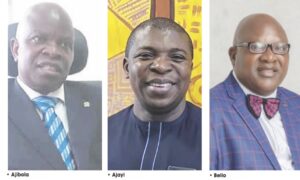
An erudite Professor of Economics at the Babcock University, Illisan, Ogun State, and former President of the Nigerian Institute of Bankers (NIB), Segun Ajibola, sharing his perspective of the civil unrest tension in the country vis-a-vis the issue of subsidy removal in an interview with Sunday Sun, suggested, among other things, the provision of subsidy to critical social services like healthcare, education, housing, transportation, etcetera, that have direct bearing on the welfare of the masses, and the review of electricity tariff to enhance productivity.
His words: “The whole concept of subsidy is a distortion in the price system or what you call price mechanism. In a developing economy like ours, subsidy is a necessity. But I think the peculiar problem we have been confronted with in Nigeria is the scam that goes along with these subsidies, especially the oil subsidy.
“The first attempt at finding a way out of the present situation is to look into how to resolve the scam that is associated with oil subsidy. If it had been possible to tackle that problem, it would have been a different story. But the problem is so monumental that tackling it will lead to nowhere.
“For example, look at the leakages that go into the neighbouring countries through the smuggling of petroleum products. While we are subsidizing these countries, Nigerians bear the brunt of it. And our borders are so porous that canvassing policing of smugglers will just be a waste of time.
“In this situation, therefore, the government can help to subsidise agriculture, health facilities, housing, transportation, education and other basic necessities and make it available directly to the masses. Such subsidy can make life more meaningful to the generality of the people, but it should not be subjected to scam like we have in the oil sector.
“I don’t believe in palliative; palliative breeds laziness and a reduction in productivity. An economist will not canvass palliative.
“On the question of electricity subsidy, for me, I have issues with the band system they have introduced. I am on band A here in Lekki Phase One, where we are supposed to have 20 hours of electricity in a day, but for sometimes we don’t have supply for five days. Since the 1st of April when they introduced the banding, I cannot count of 10 days when we had electricity supply for 20 hours. Yet, we pay through our noses. My feeling is that the issue of banding should be phased out completely.
“For me, I am unable to justify the banding that we are talking about. It is something that should be revisited. In my university, Babcock University, for example, it will cost us N400 million plus to pay for electricity and buy diesel in a month. By my calculation, it is over N5 billion in one academic session. How will the system survive under that kind of situation?
“As of today, some first generation universities are unable to sustain the supply of electricity for students and staff. How would you expect such a structure to stand the test of time?
“In some universities, I understand that students are not getting two to three hours of electricity in a day in a learning environment where you have to work in the laboratory, where you have teaching hospitals. The earlier the so-called banding is reviewed the better. I am not sure it is something that can help productivity in this environment.
“Every segment of the productive sector of the economy is complaining. Manufacturers Association of Nigeria (MAN) is complaining, NACCIMA is complaining, Lagos Chamber of Commerce and Industry is complaining, SMEDA is complaining, teaching hospitals are complaining, universities are complaining. They are paying for Band A and they are not getting 20 hours of electricity. Yet nobody is reviewing the tariff. Is that not fraudulent?
“I believe the Ministry of Power has run out of ideas. That is why they forced this band system on the people and is hurting the economy. It also worsens the inflationary trend because as it pushes up the cost of production so the manufacturers will pass it on to the hapless masses. If educational institutions cannot sustain electricity for learning, then what kind of graduates are we producing. If teaching hospitals cannot pay, what is the implication of that on the health of the citizens? There are so many issues to resolve as far as electricity supply is concerned. So, the DISCOs, GENCOs and co should not hide under the cover of banding and run away from solving the problem they have not even scratched on the surface.”
Prof. Tayo Bello, though supported the subsidy removal, he attributed its unmitigated effect on the masses to the concurrent floatation of the naira, urging the government to work out the way to shore up the value as an alternative solution to economic stability.
Speaking with Sunday Sun in a telephone interview, he said: “I am an apostle and advocate of subsidy removal. There is nothing fundamentally wrong in removing subsidy. The only problem is that it was not properly removed. If it had been done properly, it would have brought succour to the economy.
“If they had not tempered with the naira value when they removed subsidy, it would have helped the economy. Though the government is lying about it, they are paying more subsidy than we were paying before the removal. They should have continued to manage the exchange rate of the naira to the dollar. Even if N1,000 is exchanged for a dollar, subsidy removal would have benefited us. So, it is not subsidy removal that caused the current crisis, it is the devaluation of naira that created the major problem we are facing today.
“The only way out of the present situation is for the government to find a way of managing the exchange rate of naira. If there is an improvement in the value of the naira today, there will be stability in the economy. The drug that was being bought for N300 has now gone up to N4,000. It is not subsidy removal that caused it; it is the exchange value of our naira. The President should have settled down for one or two months and study the situation on ground before he made the declaration of subsidy removal. The protest you see in the North is as a result of the collateral damage that has been done to the lives of ordinary people. People cannot get food to eat because of inflation.
“The way forward is the revaluation of the naira. To achieve that, we must increase our productivity. The major problem manufacturers are facing today is the high cost of importation of raw materials which is as a result of the devaluation of the naira. The government must also make our refineries functional. They have been spending billions of naira to pay workers in these refineries without even producing a drop of refined product. Yet, they are threatening to go on strike. Except we device a means of boosting our foreign reserve to revaluate our currency, we will be deceiving ourselves. Unfortunately, Buhari had sold our crude oil in advance in exchange for the loans they took and spent before they exited out of power. This means for the next five years, we may not earn anything from the sales of our crude oil.”