Follow Us on Google

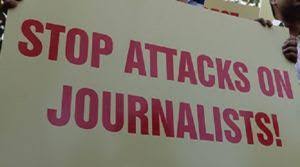
It has become impossible to ignore the dangerous and brazen attacks on journalists in Nigeria. They are intimidated, assaulted, unlawfully detained and even killed simply for informing the public. The worst part is that there is hardly any consequence. This must stop. No democratic nation can tolerate this anymore.
The Nigerian authorities and security agents must ensure that this culture of impunity is stopped. It is an assault not only on journalists but also on democracy itself. The Nigeria Union of Journalists (NUJ) has recently drawn urgent attention to this dangerous reality. In a statement by its National President, Alhassan Yahya, the union demanded the prosecution of those responsible for crimes against journalists.
It expressed concern over the persistent intimidation, unlawful arrests, physical attacks, cyberbullying and other forms of harassment directed at journalists in Nigeria and elsewhere. Media practitioners face this grim reality daily across the country. It should stop.
That is why the International Day to End Impunity for Crimes Against Journalists should not be another ceremonial event of speeches and empty promises. It is a call to action. Governments and relevant agencies must demonstrate through concrete measures that attacks on journalists will no longer be tolerated. Paying lip-service to press freedom must cease. Those who attack journalists must no longer be allowed to walk free.
The NUJ has correctly observed that the failure to bring perpetrators of attacks against journalists to justice creates an atmosphere of fear, encourages self-censorship and undermines the public’s right to accurate information.
When journalists begin to fear the consequences of reporting the truth, society becomes poorer. Citizens are deprived of the information they require to make informed decisions. Corruption flourishes. Democracy itself becomes weaker. Journalists perform an indispensable public service. They investigate corruption. They ask questions and expose injustice. They report conflicts, monitor elections, and amplify the voices of ordinary citizens.
Journalists are not adversaries. They are partners in national development. The least they deserve is freedom and the enabling environment to perform their duty to the public. Yet, in Nigeria, journalists increasingly find themselves under attack from individuals, politicians, security personnel, criminal elements and even those entrusted with enforcing the law.
Reporters covering protests are assaulted. Investigative journalists are threatened, unlawfully arrested and detained for prolonged periods. These actions have no place in a democratic society. Daniel Ojukwu, a reporter at the Foundation for Investigative Journalism has been repeatedly and unlawfully arrested and detained by security agents. His latest ordeal is a charge under the obnoxious Cyberbullying Act over an investigative report on the alleged disbursement of money by a public official. He has been detained in prison pending the next hearing of his case.
Other News
Several organisations, including Amnesty International, have called for Ojukwu’s immediate release. We align ourselves with that call.
Nigeria has a poor press freedom record. The country is ranked 112th out of 180 countries in the 2026 World Press Freedom Index. It is 12th in Africa. This places it among nations classified as having a difficult press freedom environment. These rankings reflect the experiences of journalists who face intimidation while carrying out their constitutional responsibilities.
More than 1,000 incidents involving journalists were recorded in Nigeria between 2013 and May 2026. These include physical assaults, unlawful arrests and detention, kidnappings, killings and threats. Reporters are brutalised for covering an event. Cameramen are assaulted for recording public proceedings, sometimes their work tools are damaged or destroyed. Editors are threatened for publishing uncomfortable truths.
This calls for decisive action from the Federal and state governments, as well as security agencies. Freedom of expression and press freedom are constitutionally guaranteed. They must be respected. Officers who unlawfully arrest, assault or harass journalists must face disciplinary action and criminal prosecution where appropriate.
Politicians, public officials and influential individuals must stop seeing critical reporting as hostility. Criticism is not an act of sabotage. Neither is investigative reporting a declaration of war. A free press holds power accountable. Nigeria must join mature democracies which recognise this truth.
Media organisations should continue to provide safety training, legal support and adequate insurance for journalists assigned to hazardous beats. Reporters should be protected from cyberbullying and online surveillance. Journalists themselves must uphold the highest ethical standards of fairness, accuracy and professionalism.
Civil society organisations should speak up for media professionals. The judiciary must equally play its part. Cases involving attacks on journalists should receive prompt attention. Justice delayed in such cases is justice denied. But the harm done in such denials is not only to the journalist but to the entire country and democracy itself.
When reporters are silenced through violence or intimidation, corruption thrives, abuse of power deepens and citizens become the ultimate victims. Perpetrators of crimes against media professionals must be identified, prosecuted and punished. Government should lead the crusade to end the attacks on journalists.