Follow Us on Google

From Adesuwa Tsan, Abuja
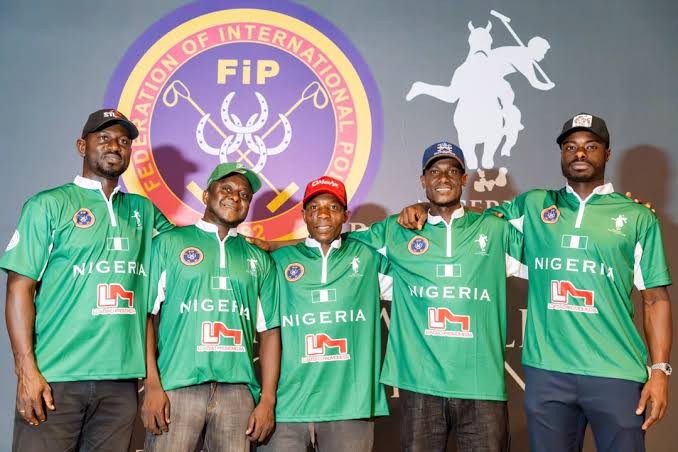
Nigeria is seeking to strengthen its position in international polo through youth development and increased exposure to global competitions following its historic hosting of the 2026 Federation of International Polo (FIP) World Championship Zone E qualifiers in Abuja.
Although the national team lost 9-5 to Pakistan and failed to qualify for the World Championship scheduled for February 2027 in Punta del Este, Uruguay, stakeholders said the tournament provided an opportunity to assess Nigeria’s competitiveness, identify technical deficiencies and develop strategies for improving the country’s performance on the international stage.
The competition, held at the Guards Polo Club, Abuja, from November 9 to 16, featured Nigeria, India, Iran and Pakistan, marking the first time in more than 100 years of polo in Nigeria that the country hosted an international tournament of such magnitude and the first time the event was staged on the African continent.
National Chairman of the Nigerian Polo Association (NPA), Suleman Abubakar, described the hosting as a milestone in the development of the sport, saying it demonstrated Nigeria’s capacity to organise major international competitions despite the disappointment of missing out on qualification.
“It’s the first time in over 100 years of polo in Nigeria that such an event has been hosted here and on the continent,” he said. “So for us it is a validation of the efforts of the administration and also a signal to the direction of things to go in the future of polo in Nigeria.”
Abubakar said the competition exposed Nigerian players to the technical standards required to compete against established polo nations.
, particularly India and Pakistan, whose proficiency highlighted areas requiring improvement.
“At 14-goal polo, the Pakistanis and the Indians have shown a sort of technical proficiency that makes them strong contenders for the World Cup Championship,” he said.
“So for us it has been a real eye-opener, it’s been a privilege and also a great development to play against them and to play with them. So there are pointers of the areas where we need to improve as a nation and as a team.”
He identified youth development as a major priority, noting that several players representing the visiting countries were barely out of their teenage years but had already attained considerable proficiency.
“Clearly this tournament has demonstrated to us in Nigerian polo management that we need to get a very active youth pipeline because some of the players we played against were barely out of their teens, most of them were in their 20s and already very proficient polo players,” he said.
The NPA chairman said the association would encourage polo clubs across the country to prioritise the recruitment and training of younger players to improve Nigeria’s competitiveness in future international tournaments.
“So this provides us the impetus to develop a youth pipeline within the clubs and it’s going to be a renewed mandate, renewed hope to the clubs to develop their youth pipelines and give it priority so we can be competitive in the world of polo,” he said.
Abubakar also faulted the perception of polo as an exclusively elitist sport, arguing that such categorisation discouraged wider participation and failed to reflect the changing composition of players in Nigeria.
Other News
“I think the classification or categorisation of polo as an elitist sport by the media alienates a very important part of the society because if you watch the field of polo today, most of the people playing are not elites,” he said.
“They are sons of grooms, horsemen as well as some of the patrons who sponsor the game.”
He maintained that the sport was gradually attracting interest beyond its traditional base, citing the increasing visibility of polo-branded stickers on commercial vehicles as an indication of its expanding appeal.
An executive committee member of the International Polo Federation, Karim Loza, said Nigeria’s hosting of the qualifiers represented an important step towards expanding the sport across Africa and strengthening the continent’s participation in international polo.
“One of the main purposes of FIP is to develop the game and the sport internationally. And the polo development starts, there is a lot of opportunities and growth in the continent here in Africa,” he said.
Loza described Nigeria as one of Africa’s leading polo-playing countries and expressed optimism that the tournament would encourage two or three additional African countries to join the international federation.
He stressed that regular international competitions were essential to improving technical standards, explaining that players and teams needed sustained exposure to opponents from different countries to develop their abilities.
“It’s very important for the players and the teams to know and to play against each other. And that way the level will increase,” he said.
“So the only way that the level of the game itself of the players and of the teams to increase is by having these international tournaments and championships.”
While acknowledging football’s overwhelming popularity in Nigeria, Loza said polo had established a significant following through its network of clubs, players, horses and sponsors, adding that the sport should be allowed to develop independently rather than be measured against football.
Also speaking, Chief Operating Officer of DGold DAO Tokenization Limited, one of the tournament’s sponsors, Fahad Mansur, said Nigeria’s successful hosting had strengthened its prospects of attracting future international polo competitions despite the national team’s failure to qualify.
“It’s a good start, at least, we have hosted a wonderful qualifiers tournament and the world is watching and this is just the beginning,” he said.
“Subsequent championships and tournaments, I’m sure they will consider Nigeria again.”
Chairman and Chief Executive Officer of Trobell International Nigeria Limited, Lawal Garba, who said he had sponsored polo in Nigeria for 41 years, described the tournament as a source of national pride and commended the organisers for the arrangements put in place.
Garba expressed satisfaction with the organisation and safety measures, noting that the involvement of horses and the intensity of competitive matches made polo a demanding sport requiring adequate preparation and strict safety standards.