Follow Us on Google
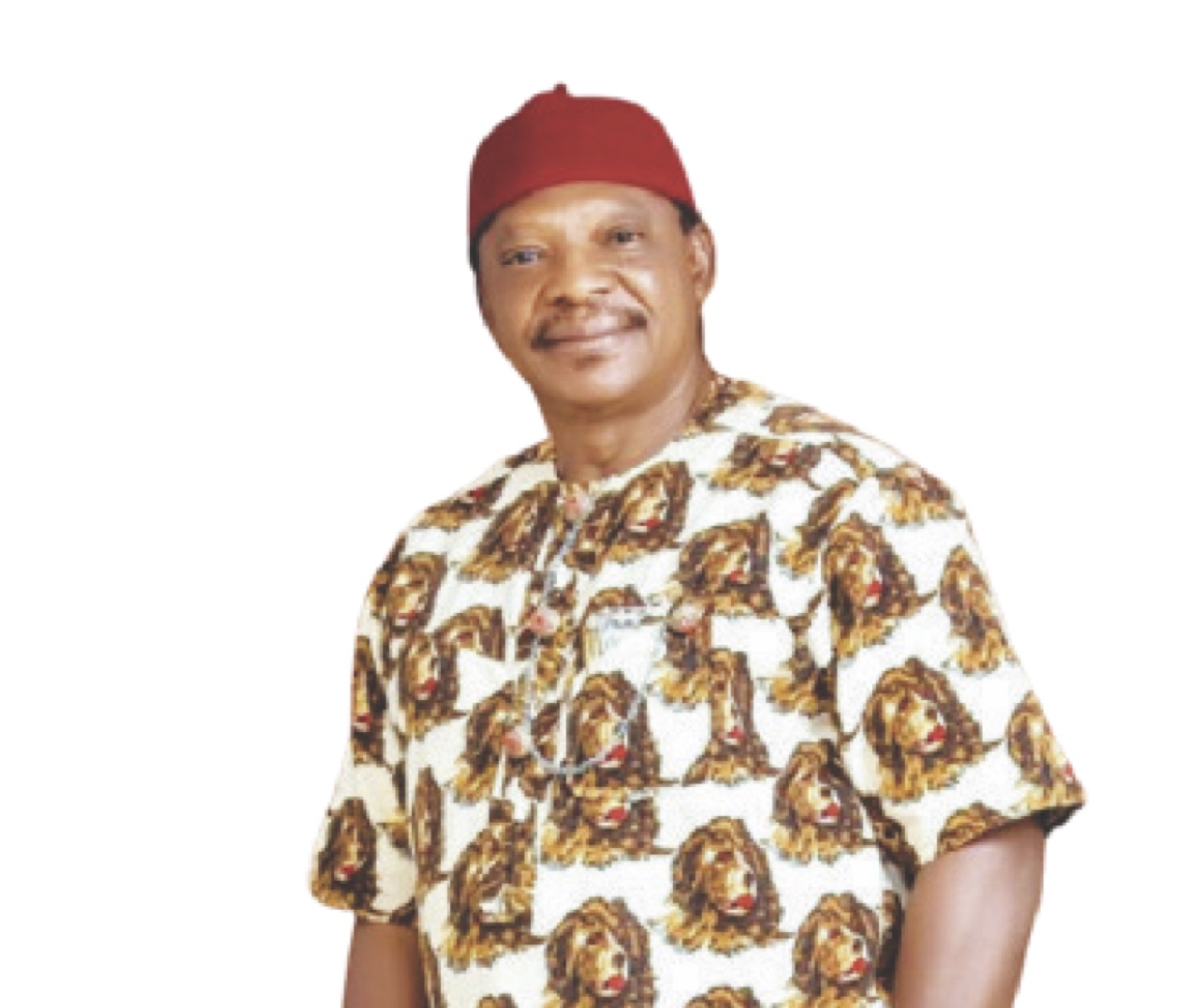
A fresh water ecologist, Emeka Ukwuaba spent a greater part of his life as a public servant. He has managed the Enugu State Agricultural Development Programme and was a one-time Commissioner for Public Utilities, Water Resources and Rural Electrification in Enugu State. Ahead of his 70th birthday, Ukwuaba has published a new novel, Hypnotising Minefield, his fourth published creative works so far, the others being the novels – the Unending Jackboot Rhythm (2020), and Benign Pain (2021) – and a poetry volume, Vile Tentacles. Henry Akubuiro chatted with him at the Mamman Vatsa Writers’ Village, Abuja, recently, where he spoke on his literary journey and the significance of his latest work of fiction.
Hypnotising Minefield is your latest published literary work (2025). It is also your fourth work. This is incredible, considering that all your works have come in the last five years, and you are on the cusp of turning 70. Do you see yourself as a late bloomer and why did it take you so long to become a published author? Tell us about your literary journey.
Yes, I am a late bloomer. My first work was published five years ago. Since then, it has been like unpacking. Incidentally, I majored in sciences and have been very busy with public service. By profession, I am a fresh water ecologist – fisheries and related matters in fresh water ecology – and, by extension, agriculture. At a time, I was Programme Manager, Enugu State Agricultural Development Programme. Public service also exposed me to engineering infrastructural works. I was also a one-time commissioner for public utilities, water resources and rural electrification during the tenure of Governor Chimaroke Nnamani of Enugu State. Naturally, I had to continue on private retirement with construction, though I have stints in public service. Presently, I am a commissioner in Enugu State Independent Electoral Commission.
On what took me long to become a published author, though I was in love with literature, I didn’t consider it an area I should pursue until something pushed me naturally as it were. The inspiration for my first novel came from the incessant clamour for Biafra and the way young people were going about it, though I wasn’t averse to their campaign. But I needed to tell them about the tragedy of war, because I experienced it myself. I was 12 at the outbreak of war, and it was a bitter experience. I was a keen observer of what happened. I went through three years of terrible experiences.
Were you a member of the Boys Scout?
Yes, I was also into karate, so I love military things. We were to register with the Boy’s Company, but we were yet to come of age. I took note of all that transpired during the war. Incidentally, we were part of what was called Biafra 2. Biafra 1 encompassed areas that were never captured by Nigerian soldiers, including Umuahia, Owerri and Aba area. That was the seat of Biafra until the surrender. The rest of the Biafran territory failed literally. Enugu failed within four months of the war, so were left behind – what some people would refer to as “people living behind enemy lines”. My family ran away first, but gradually many communities and towns around us fell, and we had to find our way home.
You were talking about what led to your first work, Unending Jackboot Rythm…
Yes. I had read many works on Biafra, but none struck me as reflecting the experience of those living behind the enemy lines. That was the angle I came from. Interestingly, so many youths, after reading the book, were no longer eager about fighting another war. Their idea about war was similar to ours when we were growing up. The euphoria was wonderful until the dawn of reality. So far, I have published three works of fiction in between a poetry volume.
Were you influenced by any writer before you set out as a writer?
Definitely, yes. I read Chinua Achebe’s novels and the war stories of Elechi Amadi. I also read Olusegun Obasanjo’s My Command. At our age growing up, James Hardly Chase’s novels stirred our interests, and I went through all the series.
While writing Hypnotising Minefield, which of the characters gave you the toughest challenge?
Merimba was that character, the lady whose betrothed friend, Bright Kabula, was executed through a backdated 1983 decree that prescribed death penalty, Bright, who was cut in a web of drug trafficking, was undergoing persecution, and was expecting, at most, a six-month imprisonment, ended up being taken up and the charges reversed that led to his execution by firing squad. Merimba was already four months’ pregnant. She was such a difficult character to paint, because I almost felt Merimba was like my own sister. Emotions kept flowing as I led out the characters. She went through different things: she became a psychiatric nurse, who also suffered in her profession. After taking too many drugs, she became addicted and insane. On a few occasions, her patients mauled her while she was pregnant. The worst experience was that, after coming out of trauma of losing her would-be husband, her twin went into drug manufacturing and was caught in Indonesia and was also sentenced to death by firing squad. She had a difficult moment looking at her future, having lost her initial husband and now was about to lose her brother.
What inspired Hypnotising Minefield? I can see you wrote with so much expertise about the narcotics trade. Is the work a product of imagination or laced with facts?
Other News
I live in a society and I have come of age, too. I have seen parents and friends whose children get into drugs and the experiences they had. I have also taken a look at the society I live in and the level of corruption and politics in it. I also try to look at the nexus between drug pushing, criminality and so much money flowing in, as well as corrupt tendencies. With so much resources, they influence governments and the authorities to do anything to get by. That, in a nutshell, was the thing that drew me in. Again, there was an incident that happened around where I lived in Enugu, where, all of a sudden, the water coming from the shallow wells of a mysterious compound became fouled, smelling terrible. It was even causing some itching. People were wondering what was happening. Then they began to associate what they were going through with that mysterious compound. After some time, some aromatic compounds started wafting out, and it was time to alert the NDLEA, who came and discovered that methamphetamine or what they call crystamet (mkpuru mmiri) was being manufactured right there. They pounced on the compound and seized everything. I observed what happened because of my job, and it was part of my motivation for the new novel.
The novel also exposes high level corruption among government agencies. Do you think fiction has a role to play in righting political wrongs?
It is the case with literature in our clime, especially. Writers believe we have a role to direct the society alright, because we observe what’s happening in the society, and our own way of fighting the wrongs in our society is by writing. Though it is fiction, we reflect what’s happening – the political unconscious. We alert the society of the evils going on through our writings.
How long did it take you to write this novel?
It took me about two years from conception to rewriting.
The novel is set in Nagiva, is it an imaginary society or a real one?
(Laughs). It is a fictitious name that reflects a nation under reference.
You will be turning 70 in less than two weeks, what has life taught you?
In 70 years, I have come, seen but I have not conquered (laughs). I am grateful to God, because, with so many dire situations – grave ones I have lived through – I have come out successful. I am getting by, anyway. At some time in this country, we had a middle class – I belonged to that class. Today, the middle class has been eroded, and it’s either you belong to the upper echelon or you are down. I am down now, but, in Nigeria, we live with the hope of a better tomorrow. I am a happy person, like most Nigerians, even in terrible situations.
What life experience made you a different person?
The civil war made me a different person. It was Uhuru before the war started. But undergoing the three years of the traumatic civil war, we learnt to adapt to the situation; I became a wine tapper at 12, because we had to survive. On one occasion, I climbed the palm tree and I was about to remove the palm wine from the tree when I was attacked by a hive of bees; and, before I could come down, my two eyes were swollen. Yet, the next day, I sneaked out of the compound to tap palm wine again, because we had to survive. Early enough, I knew if I took grit to survive as a human being. I had another scary experience when I had to tap the wine after it had rained the day before, and, halfway up, my two legs slipped from the trunk and I fell down, with my entire torso badly wounded. There and then, I learnt that nothing in life could turn me off; it took struggles to succeed as a man.
Hypnotonising Minefield is slated for launch this November, why did you tie it to your 70th birthday?
70 years is a milestone, and I took my time to put together the book that would reflect the seriousness of that event – a milestone text. Without gainsaying, it is way ahead of other published works of mine. Everybody I have extended an invitation to attend has told me this is a special one. I have had occasions before, but I consider this very special. I want my friends to jolly with me. In a country where the average lifespan for men is below 55 years, to clock 70 is a big achievement. How else will I leave a legacy without a book? Chinua Achebe is dead, but he is still the talk of town, and royalty still flows into his accounts. If my work succeeds internationally, this is the only work that I am leaving behind for my children to benefit from. The book launch will be held on the 22nd of November at the Enugu Trade Fair Complex. It is open to all book lovers, both young and old.