Follow Us on Google
• Afenifere, ACF, NEF, MBF, INC, CSOs list recommendations
By Omoniyi Salaudeen, Vincent Kalu, Oluseye Ojo and Noah Ebije
As with the previous cycles of election, concerned stakeholders have renewed calls for a review of the Electoral Act to ensure that the 2027 general election is devoid of any form of manipulation.
In Nigeria, agitation for electoral reform is a perennial issue, but the events of the 2023 elections have given a push for a change with a new sense of urgency.
The renewed agitation is being led by a coalition of civil society organisations (CSOs), political parties, and other eminent citizens who are worried by the flaws in the current system and demanding a more credible and transparent electoral process.
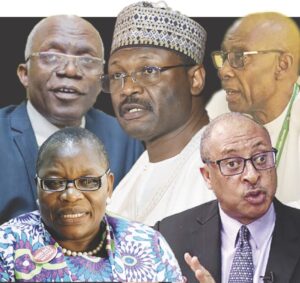
Notably, a coalition of prominent Nigerian figures, including Professor Pat Utomi, former Minister of Education, Dr. Obiageli Ezekwesili, and human rights lawyer, Mr. Femi Falana, is at the forefront of the renewed campaign for a review of the existing electoral law. They have vowed to mobilise for comprehensive reform ahead of the 2027 general elections. Other similar civil society organisations, like Yiaga Africa and the Policy and Legal Advocacy Centre (PLAC), have also joined the movement, organising advocacy campaigns, publishing reports, and engaging with lawmakers to ensure that the mistakes of the past are not repeated.
The renewed agitation for the reforms ahead of the next general election is a reflection of the deep-seated public dissatisfaction with the current state of electoral democracy in Nigeria, a sentiment that was exacerbated by the controversies of the 2023 elections.
Based on the positions of various stakeholders, including political parties, the Independent National Electoral Commission (INEC), and even the National Assembly, some of the critical areas highlighted for reform ahead of the 2027 general elections include mandatory electronic transmission of results, introduction of full electronic voting to minimize human interference, ballot snatching, vote-buying and other forms of rigging, transparent appointment of INEC chairman and financial autonomy for the electoral umpire to limit executive interference or delay in release of funds.
Others are the establishment of an electoral offences commission vested with the power to investigate, arrest, and prosecute electoral offenders, Diaspora voting to allow Nigerians living abroad to vote, regulation of campaign finance, and One-Day election.
The position of stakeholders is that for the 2027 elections to be more credible and transparent, Nigeria must move beyond superficial reforms. The country needs fundamental changes to its electoral law, a strengthening of INEC’s independence, and a concerted effort to curb electoral offences and promote inclusivity. This agitation calls for a timely and comprehensive amendment of the Electoral Act 2022 to close loopholes and clarify the ambiguous provisions. Despite the enactment of the Electoral Act 2022, which was widely seen as a significant step forward, many believe it still contains loopholes that were exploited in the last election cycle.
Electronic voting and transmission of results
This is a top priority. Advocates of electronic transmission of results have consistently articulated their position as a matter of not just efficiency, but of fundamental democratic principles. Femi Falana SAN, Human Rights Activist, attributed prolonged litigation after elections to the inherent flaws of manual voting and transmission of results. He had this to say: “We are wasting valuable resources on needless election cases. Nigeria records the highest number of pre-election and election petitions in the world. What is lacking is the political will on the part of the government to ensure that the law works.”
To him and other change campaigners, the failure of the electronic transmission system in 2023 was not a technological issue but a lack of political will to implement it fully.
A leading civil society organisation on elections, Yiaga Africa, also harped on the need to eliminate manual voting from the electoral system. “The introduction of technology in elections offers an extremely high level of security and confidence as they are considered to be far safer than manual systems that are often prone to flagrant rigging,” it stated.
While noting some improvements in the electoral process, it insisted that only real time electronic transmission of results could guarantee credible elections. “The legitimacy of electoral outcomes has greatly improved due to the new provisions in the Electoral Act 2022.
“The real-time publishing of polling unit-level results and transmission of results using the IReV demonstrates INEC’s commitment to transparency in results management.
“Political actors who want power at all costs and would not mind sacrificing the common good of the Nation in exchange for their selfish interests may be apprehensive of the electronic transmission of results.
“We cannot teach our way into electoral integrity. Technology is helpful, but it cannot replace trust, transparency, and institutional credibility,” YIAGA insisted. The ambiguity in the 2022 Act regarding the electronic transmission of results from polling units led to controversies that trailed the 2023 elections. With another cycle of election drawing nearer, stakeholders are vehemently calling for a review of the law to explicitly and unequivocally state that electronic transmission is compulsory and final.
Beyond electronic transmission, they are also agitating for the introduction of full electronic voting to minimize human interference, ballot box-snatching, and other forms of rigging.
INEC’s independence
The credibility of the electoral process largely rests on the independence and capacity of INEC. The demand for a change in the mode of appointing the INEC Chairman is a long-standing one, with roots in the recommendations of the Justice Uwais Electoral Reform Committee. One of the significant recommendations of the committee is the proposal shifting the appointment power from the executive to the judiciary, a body perceived as being more independent.
“The National Council of State should also be involved in the appointment of the Chairman,” the committee recommended. However, over the years, these recommendations have been ignored by successive administration.
Beyond that, there is also a proposed legislation before the National Assembly seeking for “an act to alter the provisions of the constitution of the federal republic of Nigeria to reform the mode of appointing the chairman of the Independent National Electoral Commission by involving the National Judicial Council, and for related matters”. Whether or not the Bill will see the light of the day is another big question.
According to Civil Society Organisations (CSOs) like Policy and Legal Advocacy Centre (PLAC) and Yiaga Africa, “the process of appointment of INEC Chairman and National Commissioners is flawed and a source of mistrust in the electoral process.”
The group argues that public’s perception of the appointment process directly impacts their trust in the electoral outcome. “The lack of transparency and credibility in the appointment process for key electoral officials is a major setback for our democracy,” YIAGA stated.
Femi Falana, a Senior Advocate of Nigeria, also speaking in the same breadth, said: “The President who is a candidate in an election should not have the power to appoint the umpire who will preside over the election.
“We are asking for a truly independent electoral body. And the first step is that the chairman and national commissioners must not be appointed by the President.”
Financial Autonomy
While INEC has a degree of financial autonomy, a major concern remains the late and inadequate release of funds, which hampers its ability to plan and prepare for elections effectively. In view of this, agitators are calling for the timely and full release of INEC’s funding to ensure it has the resources to prepare adequately for elections without being subject to political pressure. They want a legal framework that guarantees INEC’s financial independence from the executive arm of government.
Electoral offences commission
The call for a dedicated Electoral Offences Commission is a long-standing and bipartisan demand in Nigeria. Professor Mahmood Yakubu, Chairman of INEC, while lamenting the growing culture of electoral manipulation in one of his public statements, said: “As long as electoral offenders are not punished, we will continue to be faced with electoral violence.
“We need an Electoral Offences Commission or tribunal to deal with electoral offenders.”
This would reduce the impunity which has marred Nigeria’s electoral process to date, and which threatens to undermine citizens’ confidence in the country’s political system.
Campaign funding
The role of money in elections, particularly vote-buying and the exorbitant cost of campaigns, is a major concern. There is a demand for a more robust framework for the regulation and
enforcement of campaign finance laws.
Reform of judicial process
There is also a strong call for reforms to the electoral dispute resolution process. CSOs argue that the current system places an unfair burden of proof on petitioners and that the judiciary’s decisions have at times contradicted the spirit of the law.
One-day elections
The House of Representatives has proposed a bill to alter the constitution to allow for all general elections—presidential, governorship, and legislative—to be held on the same day. The goal is to streamline the process, reduce costs, and minimize the risk of manipulation where earlier results could influence subsequent polls.
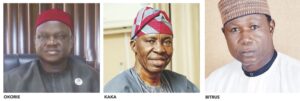
The pioneer National Chairman of the All Progressives Grand Alliance (APGA), Chief Chekwas Okorie, in a telephone chat with Sunday Sun, identified some critical areas that needed amendment, including real time electronic transmission of results directly to the IRev as well as full implementation of electronic voting, among others.
His words: “The major area we are looking at, first and foremost, is to deepen the technology that has already been introduced. And that is the technology that makes it possible for election results to be transmitted from the polling units to the IRev in real time so that people can follow the outcome of elections from wherever they may be. That way, it will be difficult for people to manipulate the results of elections. Another one is that nobody should tolerate any longer the issue of glitch in an election. “Where there is a glitch, election should be re-conducted rather than resorting to a manual voting system. That was what made the last general elections to be so suspicious even after the Supreme Court had given its judgment. It does not help the legitimacy of the person who claimed to have won.
“There is also a need for the review of the electoral law that stipulates that a candidate must secure 25 percent of votes cast in 2/3 of the states of the federal and overall simple majority to be declared as President. We have seen the weakness of that arrangement. The weakness of that arrangement in the last election was that the winner had a total of 9 million votes after the so-called glitch. The other two leading contenders, Atiku Abubakar and Peter Obi, put together had 13 million votes.
“What it simply means is that the number of those who did not want Tinubu to become President is more than those who voted for him. And now, he is President by that flawed arrangement.
“I have a lot of expectations about these reforms because INEC has submitted its proposal to the National Assembly which practically contains most of the things I have said other than 50 per cent plus one which some of us have recommended over time. The only thing is that I have little confidence that this National Assembly can save this country in terms of credibility of elections.”
However, former deputy governor of Ogun State, Senator Gbenga Kaka, did not see the incessant reviews of the Electoral Act as a solution to Nigeria’s problem, blaming the trend on a lack of trust among the political class.
He argued: “There is nothing wrong with our system. The problem is those of us who are implementing the system. What I know is that a bad decision is far better than a no decision at all. We have not honestly practised the electoral law contained in our constitution to know whether it is workable or not. It is so because trust is missing in our lexicon. Without trust, there can be no justice. And without justice, unity will be far from all of us.
Other News
“How many times have we heard America amending its constitution or electoral laws? We amend our constitution at every turn of election cycle, yet we are never satisfied. People who feel that the electoral law does not favour them will always cry foul, asking for a review of the electoral law. Once the amendment is badly implemented, the other group will also start making noise. We should re-examine ourselves so that we can make the system work.”
Afenifere identifies key areas for reform
The pan-Yoruba socio-political organisation, Afenifere, said amendments to some aspects of electoral law are desirable.
National Publicity Secretary of the organisation, Mr. Jare Ajayi, said Afenifere aligns with the ongoing amendment to some aspects of the Electoral Act 2022, towards ensuring the credibility of the 2027 elections.
He mentioned that Sections 77(2), 117(1), 132(5), and 178(5) were desirable for amendments.
But he was quick to say that the preparedness of Nigerians to make the electoral laws work is fundamental to the success of the electoral process in Nigeria.
“What we are saying is that even when the amendments have been carried out, the success or otherwise of the electoral process would depend largely on how sincere the stakeholders are in observing the necessary laws and regulations.
“Those we are referring to as stakeholders here are governments, INEC, politicians, the judiciary, law enforcement agencies, and the electorate.”
Ajayi stated that amendments to the Electoral Act 2022 are not sufficient to take care of perceived lacuna in the said Act without amending certain aspects of the 1999 Constitution (as amended).
“This is because some aspects of the Act are not necessarily in consonance with the Constitution; whenever any law in the country is in conflict with the Constitution, such a law would be invalid to the extent of the inconsistency.”
The areas he believes need amendment are those areas that touch on Diaspora and inmates’ eligibility to register and vote.
“It is also expected that the proposed amendments will drastically reduce the amount of money political parties can charge prospective candidates to obtain forms and so on,” he said
Electoral reforms necessary before 2027 polls – ACF, NEF
The two foremost Northern socio-cultural groups – Arewa Consultative Forum (ACF) and Northern Elders Forum (NEF) have also thrown their weights behind electoral reforms ahead of the 2027 general elections in the country.
The National Publicity Secretary of ACF, Professor Tukur Muhammad-Baba told the reporter: “There are many aspects of the Electoral Act that need changes. The most urgent relates to the transmission of results. Another is the process of conducting the election itself which I think needs to be all conducted simultaneously. Then there’s a need to insert a provision for adjudication of disputes arising from the conduct of and the election within a reasonable time frame such that all is concluded before inauguration.
“There are others such as the need to use available technology as much as possible. There should be strong legislation to criminalise such conduct and ensuring that violators are punished as instantly as practicable. It has become a tradition to agitate for changes because, foremost, no Constitution is perfect and it is normal to agitate for changes to it in line with developments or new experiences. Society is dynamic, so should all aspects of the processes in the political system. Thus, it’s nothing to worry about. Ours is a developing democracy, yet to be fully stable, so such amendments are to be expected and tolerated.”
Also, in a chat with the reporter, Spokesperson, Northern Elders Forum (NEF), Professor Abubakar Jika Jiddere said: “Election is what determines the quality of a democracy and good leadership. Without electoral credibility it will be very difficult if not outright impossible to achieve democratic consolidation. The issue of electoral reform must also address the issue of party primaries and party supremacy. However, the most important thing in election is its credibility, but in Nigeria, almost all the politicians and their political parties, don’t want free, fair and credible elections. They prefer a spoilt system where he who has the financial backing can take his way into any political office. And that is one of the major reasons for corrupt system and poor leadership. So if they want good election, they must make sure that votes are cast and counted and they must find a way of removing fake votes. Votes are usually done through finger printing and everybody knows in the world that everyone has fingerprints.
“Elections all over the world today are using advanced technology. Most countries use advanced technology that eliminate votes to drastically reduce rigging.
“Crimes are happening here because the whole electoral system is flawed and that is why it is easy to snatch boxes and all these things because we have over-compromised the system, we have over-compromised integrity. Our democracy is really in crisis and all in all our democracy is what we described in political science as plutocracy, a system where only the rich can rule.”
Electoral reforms: MBF, INC list aspects of electoral act that should be amended
The Middle Belt Forum (MBF) and the Ijaw National Congress (INC) have also made recommendations on the aspect of the Electoral Act that should be amended.
MBF President, Dr. Bitrus Pogu, noted that the clause that allows the Independent National Electoral Commission (INEC) to use its discretion to conduct election in any way it deems fit should be removed.
He pointed out that the electoral reform should now be definitive so that election has to be conducted in such a manner that the identification of electorate should be done through technology, using fingerprints, facial recognition, so that duplication of votes could be eliminated.
“So, any election that holds without the technology or technological instruments provided should be a nullity. It has to be technology based.
“Secondly, all transmission of electoral results from the polling units to the coalition centre should also be electronically done. From the polling units, the results should be transmitted to the IReV, and we can cuut off these people called returning officers completely at every level.
“So, technology should take over from the elections. Every agent will get a copy of the result and the results electronically transmitted. At that level, it will be checked to ensure that, yes, what was transmitted is what was done at the election. And any election that is not done according to the rules should not be accepted.
“No manual collation, no manual accreditation should be allowed. Then, if the IReV works in real time, we’ll be monitoring what happens across the country, and results will count. Anybody who says that there isn’t enough or adequate coverage by GSM or by whatever, it is a lie because we have satellite phones. And by the time the results come, all the agents at the final collation point will know what comes to them and then the returning officer will now announce the result as it is. Just to confirm what has already been transmitted.”
The MBF president said it has become a tradition for Nigerians to agitate for electoral reforms after every election cycle because the rules are not usually adhered to.
He stated that in the last election, halfway within the election, especially the presidency, they said there were glitches, adding that: “We know now that it is a lie. But it was deliberately created to manipulate the system. If all those lies and falsehoods were not introduced, we would have had a pure, clean result, and those who went to court wouldn’t have even done that.”
Pogu said a major cause of electoral problems is the fact that being in office in Nigeria brings a lot of benefits.
“If you know that you are going to get a job that will give you 20 or so million naira in a month, and you are going to get other benefits attached to it, you will fight for that job. It is a do or die affair, but if you know, for example, you will be paid like a usual civil servant, and being a Senator or member of the House of Representatives doesn’t mean getting rich overnight, you will not fight for it.
The President of Ijaw National Congress, Prof Benjamin Okaba, suggested that the electoral reforms being proposed must ensure that the independence and integrity of INEC is strengthened, the appointment of the INEC chairman, national commissioners, and resident electoral commissioners (RECs) should be transparent, merit-based, and insulated from political interference, the nominees should be politically neutral for at least a decade, disclose assets, and undergo open senate confirmation hearings.
He further said that INEC should have financial autonomy; its funding should be directly sourced from the Federation Account to reduce executive influence.
He suggested the establishment of Electoral Offences Commission and special courts to prosecute electoral offenders promptly, with trials concluded within 180 days.
He also suggested the amendment of the ambiguous sections of the Electoral Act, particularly those related to result transmission (e.g., Sections 60(5) and 64(4)&(5)), to prevent conflicting interpretations and ensure enforceability.
“There should· Mandatory Electronic Transmission, which legally mandate electronic transmission of results to INEC’s IReV portal within two hours of polling unit declaration, with collation live streamed to ensure transparency, and technology enforcement to strengthen provisions for using BVAS and IReV to eliminate manipulation and build public trust. We should introduce provisions for early voting for essential service providers (e.g., security personnel, INEC staff) and the diaspora voting.
“INEC should enforce transparent party primaries conducted via live broadcast, with certified membership/delegate registers published 48 hours beforehand, and the implementation of real-time disclosure of campaign finances, adhering to statutory limits, and enforce peace accords overseen by observers,” Okaba said.
He equally suggested the amendment of the laws to ensure all election petitions are resolved before swearing-in ceremonies to prevent legitimacy crises, and the enhancement of the capacity and integrity of the judiciary to handle electoral disputes impartially and efficiently.
According to him, for the 2027 elections to be credible, amendments to the Electoral Act must prioritise INEC’s independence, technological transparency, inclusivity, and stringent enforcement against fraud.
He called on Nigeria to learn from models like Ghana and enforce existing laws with political will. These reforms, coupled with stakeholder collaboration, are essential to restore public trust and ensure democratic integrity.
Prof Okaba said the persistent agitation for electoral reform in Nigeria before every major election stems from deep-rooted systemic issues that undermine public trust in the electoral process. Top on the list of these issues, he noted is that Nigeria has a history of deeply flawed elections, such as the 2007 polls, widely condemned as the worst in its democratic history due to ballot stuffing, falsified results, and logistical failures .
“Despite improvements in subsequent elections (e.g., 2011 and 2015), irregularities like vote-buying, violence, and result manipulation persist. The 2023 elections further exposed operational inefficiencies, technological failures, and non-compliance with laws, reinforcing public scepticism. This pattern of disappointment creates a cyclical demand for reforms before each election to prevent a repeat of past failures.
“Then INEC is often perceived as lacking true independence. Its leadership appointments are influenced by the executive branch, leading to allegations of partisan bias. For instance, INEC’s abrupt abandonment of real-time result uploads during the 2023 presidential election fuelled suspicions of political interference. Additionally, INEC’s guidelines and regulations are not legally binding, as courts have ruled that non-compliance with these guidelines is not a ground for challenging election outcomes. This institutional vulnerability necessitates repeated calls for legal reforms to strengthen INEC’s autonomy and enforceability of its rules.”
The third issue he said was that the technological innovations like the Biometric Voter Accreditation System (BVAS) and IReV were introduced to enhance transparency. “However, their implementation has been inconsistent. In 2023, INEC failed to upload presidential results to IReV, citing “technical glitches,” even though the system worked for legislative elections held simultaneously. The Supreme Court further ruled that electronic transmission of results is not legally mandated, as it was not explicitly enshrined in the Electoral Act. This gap between technological promises and delivery erodes trust, prompting demands for legally backed technological safeguards.”
The forth reason he adduced is what he called judicial inconsistencies and electoral litigation, adding that Nigeria’s electoral jurisprudence is marred by conflicting court judgments and an overreliance on technicalities over substantive justice.
“For example, courts have imposed stringent evidentiary requirements to prove over voting, requiring litigants to present voter registers, BVAS machines, and polling unit results—a burden often impossible without INEC’s cooperation . Additionally, pre-election litigation often remains unresolved until after elections, undermining legitimacy. This judicial unpredictability, he stressed, fuels agitation for reforms to ensure timely and fair dispute resolution.”
He also pointed out that political actors actively circumvent electoral reforms. “The monetisation of politics, vote-buying, and corruption within INEC (e.g., temporary staff accepting bribes) are rampant. The absence of an Electoral Offences Commission allows impunity for offenders, discouraging public participation. Moreover, internal party primaries are often flawed, with candidates imposed by elites rather than chosen democratically. These practices necessitate repeated reforms to enforce accountability and curb manipulation.”
According to him, the agitation for electoral reform before every election reflects a cycle of unmet expectations—where each electoral cycle exposes new loopholes, yet comprehensive solutions remain elusive.
He noted that Nigeria’s problem is not a lack of laws but a lack of political will to enforce them. “Until fundamental issues – INEC’s independence, technological enforcement, judicial consistency, and accountability are addressed; electoral reform will remain a perennial feature of Nigeria’s democracy,” he said.
On what should be done to politicians responsible for ballot snatching, violence, vote buying and all forms of malpractices and manipulations, the president of the Ijaw National Congress, said there is the need to establish an electoral offences commission to investigate, prosecute, and punish electoral offenses such as vote-buying, violence, and ballot box snatching. This body, he said, would ensure accountability and deter future violations. He also recommended the amendment of the Electoral Act to close loopholes that allow impunity. “This includes explicitly criminalising electoral manipulations and ensuring strict penalties for offenders. Enforcement should be consistent and transparent to build public trust.”
He also recommended the improvement of coordination between security agencies and INEC to protect polling stations and electoral materials. Security personnel should be trained to remain neutral and respond effectively to violence or intimidation during elections, he suggested.