Follow Us on Google
• Presidential, NASS elections hold February 20 2027, guber, State Assembly, March 6 νWe’re ready if polls’ll be free, transparent – PDP, ADC
•Timetable doesn’t reflect what Nigerians expect – Okorie, Pogu
• CSO says non-passage of Electoral Bill may derail polls
By Vincent Kalu, Omoniyi Salaudeen, Ndubuisi Orji, and Juliana Taiwo-Obalonye
Different reactions on Friday trailed the release of the timetable for the 2027 general election by the Independent National Electoral Commission (INEC).
The main opposition parties- the Peoples Democratic Party (PDP) and the African Democratic Congress (ADC) declared their readiness for the 2027 general election, following the release of the timetable for the contest by the Independent National Electoral Commission (INEC), yesterday.
The ADC National Publicity Secretary, Bolaji Abdulahi, in his immediate reaction, on the release of the 2027 election timetable, told Saturday Sun that the opposition party is ready for the next general election, noting that it had no issues with the timetable released by the umpire.
According to him, “For us, we are ready for the general election. It (timetable) is also good. It gives structure to everything. It enables political parties to firm up their plans. For us, we are ready. We don’t have any problem with it. That is our immediate response. Our immediate reaction is that we will be guided by the timetable.” Nonetheless, Abdullahi said the ADC will take a closer look at the timetable and react, accordingly, if need be.
Similarly, the PDP National Publicity Secretary, Ini Ememobong, in a terse statement noted that “ whenever INEC is ready for the elections, the PDP will be ready, provided that they can guarantee free, fair and credible elections.”
Chief Chekwas Okorie, in his reaction to the INEC timetable, said the document “doesn’t really reflect much of what are expecting.”
In his reaction, he told Saturday Sun: “To the best of my knowledge, the release of the timetable is in consonance with the 2022 Electoral Act as amended. It doesn’t really reflect much of what are expecting. For example, the timetable is still reflecting the 360 days notice provided by the 2022 Electoral Act.
But the Senate has cut the time by half to 180 days. The implication is that if the Senate and House of Representatives harmonisation committee eventually accepts 180 day, this thing INEC has produced has to change in all material particular. It will put everybody, including political parties, in a tight situation because the period for primaries, congresses and so on will shrink by half.
The other aspect is that INEC is anticipating that the National Assembly will delay the passage of the new law to the point that it may not be able to cope up with the time and so we would be compelled or forced to go back to 2022 Electoral Act. That is what the National Assembly wants to see, that is what the presidency wants to see. But let me tell you in conclusion, that is a recipe for anarchy. They must be prepared for what follows. Nigerians are not going to fall for that plan. They must know that Nigerians are determined to defend their votes more than at any other time. This is a country sitting on a keg of gun power. Anybody who thinks Nigerians can be taken for a ride should think again. People should aim to win elections in a free and fair contest. All this kind of trying to cut corner will hurt Nigeria and all those who think they can benefit from it.”
President of Middle Belt Forum (MBF), Dr. Bitrus Pogu, while reacting to the timetable of the 2027 general elections, released by the Independent National Electoral Commission (INEC), said, the transmission of election results in real time has to be adopted to ensure credibility.
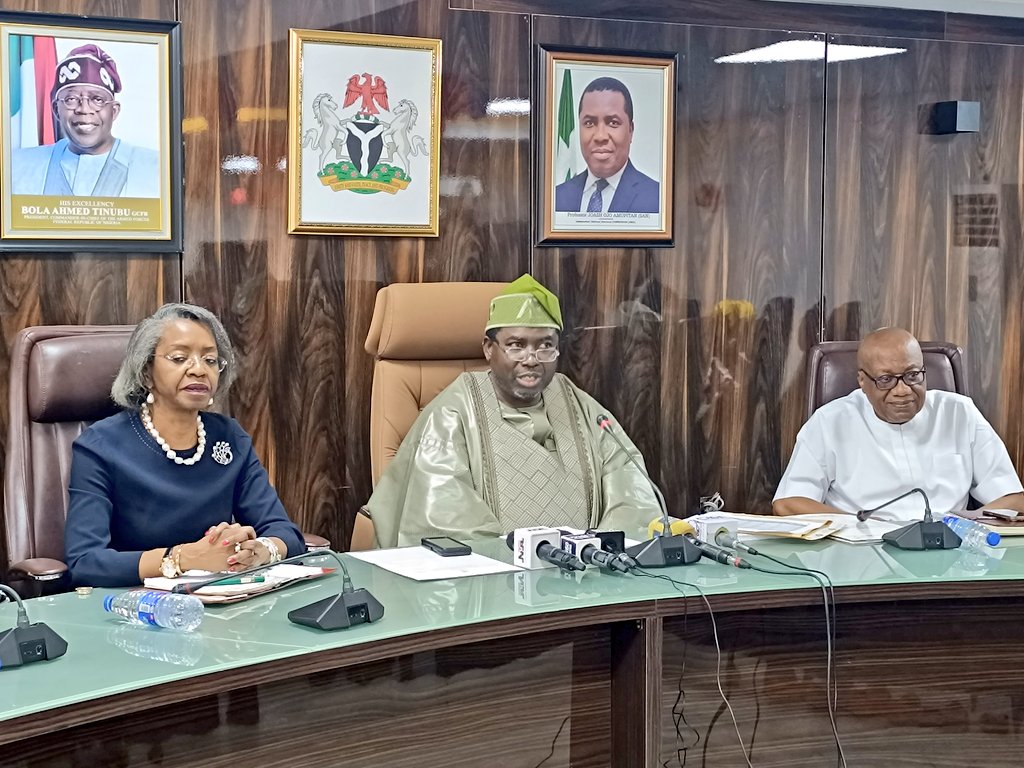
INEC Chairman, Prof Joash Ojo Amupitan, during a media parley, on Friday, in Abuja, noted that the presidential and the National Assembly elections will hold on February 20, 2027, while that of governorship and the state assembly takes place on March 6, 2027.
Other News
Dr. Pogu said, the timetable is similar to what the country has always had, noting that, the important thing is the credibility of the election.
According to him, if the National Assembly adopts the electronic transfer of results real time, cutting out all those returning officers so that the portal will be visible to any Nigerian to see as things unfold, there wouldn’t be any problems, adding that: “It doesn’t matter which election comes first, whether it is the presidential or the governorship, the important thing is let it be fair and free and credible.”
He advocated for pressure to be mounted on the National Assembly to ensure that: “We achieve our goal of timely transmission of results at this time of our electoral development, because the technology is there, and even the former INEC chairman disclosed clearly that they have the equipment on ground, and the machines they are using have capacity even without internet to be able to transfer the electoral data to the IReV.
“So, we have the capacity; we have no excuse, unless they don’t want Nigeria to move forward.
Somebody said the Senate president, when they made the first pronouncement, was trying to go by ship to Europe instead of flying.
“That analogy is telling us that, yes, there is the need for this change and it is necessary, and that’s what we should insist on.”
The Civil Society Legislative Advocacy Centre (CISLAC) has slammed delays in passing the amended Electoral Act, cautioning that further hold-ups could derail key phases of the 2027 general elections following the Independent National Electoral Commission (INEC)’s recent release of the official timetable.
Reacting to INEC’s roadmap, Executive Director, Auwal Musa Rafsanjani, CISLAC warned that procrastination risks compressing voter registration, party primaries, election notices, and official campaigns, potentially disrupting preparations and eroding public trust.
The group urged INEC to partner with the National Assembly for swift passage of the bill, stressing that delays “could undermine effective planning.”
CISLAC also flagged early campaigning by politicians, noting observer reports of pre-official activities that distort legal timelines and challenge INEC’s enforcement. It demanded public clarification on monitoring mechanisms and strict party compliance.
“Electoral credibility hinges on transparency in materials, timelines, and enforcement,” he said, calling for accessible communication, voter education, civil society engagement, and media involvement.
Rafsanjani renewed demands for reforms like upgraded result transmission tech, harsher penalties for malpractice, and broader voter outreach—measures it said go beyond INEC’s timetable.
CISLAC pressed INEC to combat misinformation, ensure legal clarity, and align future updates with the amended Act. Executive Director Auwal Musa Rafsanjani emphasized proactive planning and communication to sidestep past election flaws.