Follow Us on Google

By Tope Adeboboye
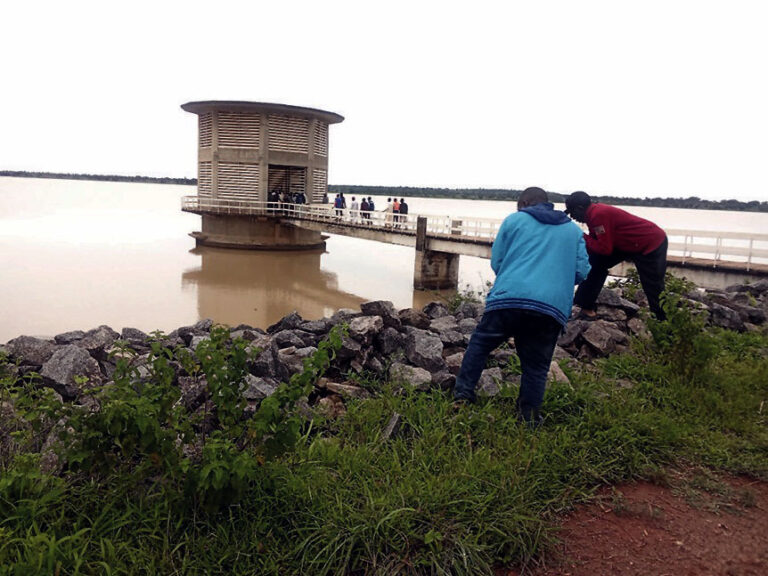
It is known as the “Power State,” and that isn’t without a reason. Two of Nigeria’s major hydroelectric power stations, Kainji Dam and Shiroro Dam, are located in the state.
Niger State is also home to political power, two of Nigeria’s most powerful former military rulers hail from the state. It is also the state with the largest landmass in Nigeria.
The state also has a number of attractions, including Gurara Waterfalls, Zuma Rock, Kainji National Park and Borgu Games Reserve.
But Since May 2015, the state and its administrators seem to have donned a reticent habit. The governor, 51-year-old Alhaji Abubakar Sani Bello, is a rather taciturn man who seems shy of the media. Many have concluded that the governor has been quiet because he has nothing to showcase.
But at a recent encounter, Alhaji Bello asserted that his administration has been anything but lethargic in its approach to developmental issues. He said that, on the contrary, he hit the ground running immediately after his inauguration.
The governor said there were things he didn’t know as a private citizen that he got to know of after he became governor.
He spoke about one such case: “In 2014, the union of former councillors in the state were protesting because they had not been paid their entitlements. And they came to me seeking help. They said they had been suffering on account of their entitlements not being paid. I was upset by their plight and supported them. I told them to go get a lawyer and sue the government. In fact, I gave them money to get the lawyer. Shortly after, they got the lawyer and sued the government, Then I became governor of Niger State and inherited the case against government.”
Bello said he had done a yeoman’s job in agriculture, infrastructural development, energy, education and industrialisation, among others.
He said: “We came in at a time our revenue went down completely, unfortunately. But despite that I thought we shouldn’t complain, we should do our best as much as we can. In public office, you shouldn’t expect people to praise you for doing your job. But they can criticise you for not doing your job. But in Nigeria, public officers expect to be praised for doing their jobs.
“We complain about infrastructure, but if you go round Nigeria, you will see a lot of infrastructure. But our bad maintenance culture and lack of sustainability means that, over time, everything has degenerated. Our attitude towards laws and regulations also contributed to the problem.”
The governor said he had been quiet because his works have been speaking for him, adding that people of the state were well aware of his achievements. He said when he assumed office, his administration adopted four focal areas, education, agriculture, economic empowerment and health. He scrapped state sponsorship of pilgrimages, and stopped funding for unrealistic projects. He said he also commenced citizens’ empowerment through the introduction of Nigerlite of the Month Award, even as he said he also forced contractors back to complete abandoned projects.
The governor stated that his government also resuscitated abandoned water projects in the state by working on abandoned water projects; boreholes were provided in many areas as temporary measures while the major repair works were in progress.
In agriculture, Governor Bello said his administration had been working hard to develop the sector. He said he initiated a collaboration with a foreign investor to create 4,000 jobs from rice production in Borgu and Bida local government areas, along several other initiatives. His government, he said, also provided scores of tractors to farmers for the 2018 farming season and beyond. Apart from making over 30,000 hectares of land available as grazing reserve for pastoral farming, Governor Bello said his government revived 17 irrigation schemes, estimated to provide jobs for 60,000 youths.
In the education sector, Bello said his government developed and designated two secondary schools as centres of excellence in each senatorial district, approved the construction of at least two primary schools that meet UNESCO standard in each local government area, and approved foreign scholarship for students with eight distinctions in their exit examinations, among other accomplishments.
“We have invested hugely in primary and secondary school education in the state. With over 640,000 children in primary schools, we have made provision for physical structures as well as teaching materials for contemporary education to children.
“At the secondary and post-secondary levels, we continue to invest in the training of high-level manpower. We have spent over N4.3 billion in renovation of schools and provision of teaching materials too,” he said.
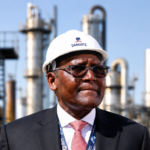
Bello explained that his dream of an industrialised Niger State would soon start manifesting: “We have signed a $450 million sugar production project with Dangote Plc to ensure refined sugar and ancillary products are made for local consumption and also for export. The thrust for industrial growth is to diversify the economy of the state, which depends largely on agricultural output.”
On health, which he said were crucial to his administration, the governor noted that, “We have been able to attract the donation of a hospital in Suleja, which is likely going to be the second largest trauma centre in the North. We also attracted the donation of a Primary Healthcare Centre (PHC) in Minna by PZ Cussons, and we are focused on the provision of efficient primary healthcare, which accounts for 80 per cent of the state’s healthcare needs. We have rejuvenated existing PHCs and are ensuring that they are adequately manned and stocked.”
On roads, the governor said several initiatives are on-going. He listed the Sabon-Gari- UK Bello Road, Kuta Road, Bomas/Obasanjo Road, Bosso/Yahaya Bawa Bosso Road and Tegina Township Road as either on-going or completed.
He also spoke on plans to power the economic growth of the state.
His words: “To do that, we are focused on tapping biomass from sugarcane to serve as fuel for electricity generation. Sugarcane is grown profusely for industrial purposes and would also serve for giving power to the state.
“Solar arrays are also under focus as a source of clean and steady power for our state. These will complement what is already available from the hydroelectric generating schemes in the state.”
On security, Governor Bello said his administration has, alongside other governors in the axis, introduced land and air patrol to control the inter-border banditry and cattle rustling. He said his government has eliminated gang fights in Minna, initiated the process to build living quarters for soldiers in Zuma Barracks and others.