Follow Us on Google
From Juliana Taiwo-Obalonye, Abuja
Other News
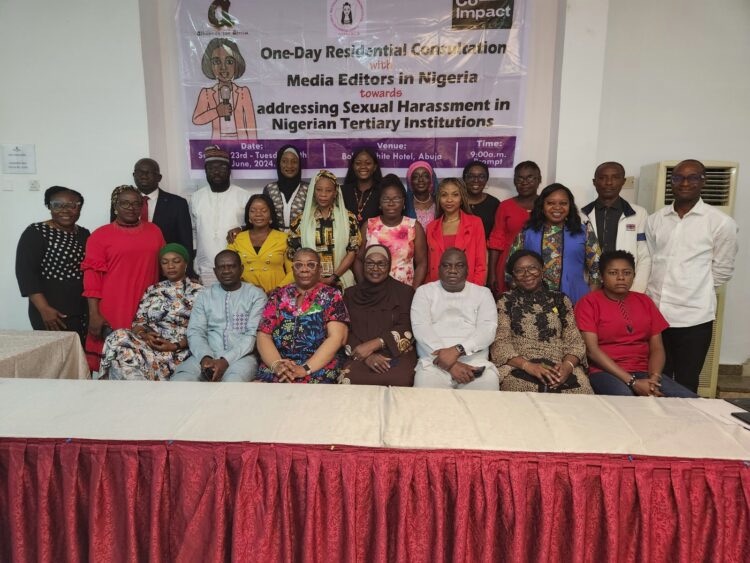
Nigerian media editors have united to address the pervasive issue of sexual harassment in tertiary institutions.
In a communique issued after a one-day residential consultation organised by Alliances for Africa (AfA) and Co-Impact in Abuja and signed by AfA Executive Director, Iheoma Obibi, the editors demanded a policy against sexual harassment in the nation’s tertiary institutions.
They noted that sexual harassment remains prevalent and significantly underreported in Nigerian tertiary institutions, leading to severe immediate and long-term repercussions for victims, staff and the institutions themselves.
They also observed that gender unit heads in most institutions lack proper training and understanding of their roles, and that survivors and reporters of sexual harassment face retaliation without adequate protection.
The editors recommended that tertiary institutions should form committees to assess the qualifications of gender unit heads, ensuring they are suitably trained.
They also called for media involvement to be progressive when civil society organisations receive reports of harassment, including collaboration to share story ideas with peers.
Other recommendations include encouraging men otherwise known as ‘He4She’ to support women’s rights initiatives to combat harassment, using social media and the media to promote the anti-sexual harassment bill’s passing, and establishing accountability benchmarks to record and disseminate yearly reports on harassment instances.
The editors urged all stakeholders, including media houses, administrators of tertiary institutions, faculty staff, students, government agencies, regulatory agencies, civil society organisations, religious and traditional institutions, to join in the collective effort to eradicate sexual harassment from Nigerian tertiary institutions.
Meanwhile, human rights activist, Chidi Odinkalu, has said sexual harassment is a serious issue in Nigerian universities that requires immediate action.
He said addressing sexual harassment in tertiary institutions requires a comprehensive approach that prioritises student safety, institutional accountability, and a culture of honour and respect.
He said policymakers and university administrators must work together to develop and implement effective measures to combat the pervasive problem.
He emphasised the need for effective mechanisms to address the problem and protect students.
Odinkalu identifies three key aspects of tackling sexual harassment, including power, institutional integrity, and honour, stressing the importance of creating systems that ensure institutional integrity and bring consequences for perpetrators.
To promote honour and skill, Odinkalu suggests simple measures like keeping doors open during meetings with female students.
He noted that many Nigerian universities lack clear sexual harassment policies, he proposed reframing the issue as an ‘honour code’ to appeal to the patriarchal mindset and encourage men to behave honourably.
Odinkalu, who shared heart wrenching stories, likened students to ‘bones hung around our necks’ that should not be ‘chewed’ by those entrusted to mentor and teach them.
Stakeholders in attendance were drawn from the media, academia and civil society organisations.