Follow Us on Google
From Molly Kilete, Abuja
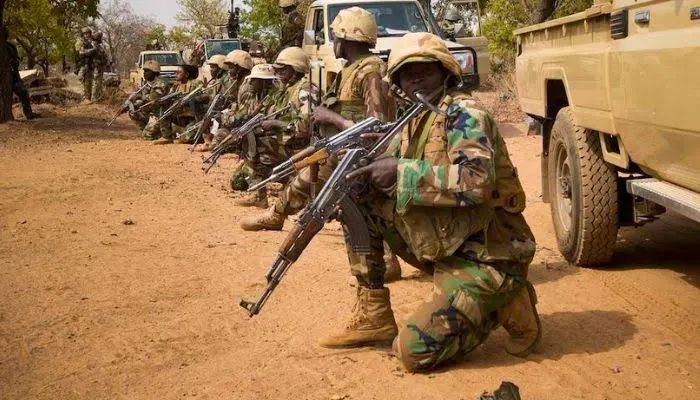
The Economic Community of West African States (ECOWAS) has concluded plans to activate a 260,000-strong rapid deployment counter-terrorism brigade and provide logistics and financial support to frontline states ravaged by terrorism.
ECOWAS President Dr Omar Alieu Touray, who made this known, also said this is in addition to its 5,000-man brigade under the auspices of the African Peace and Security Architecture and Continental Standby Force.
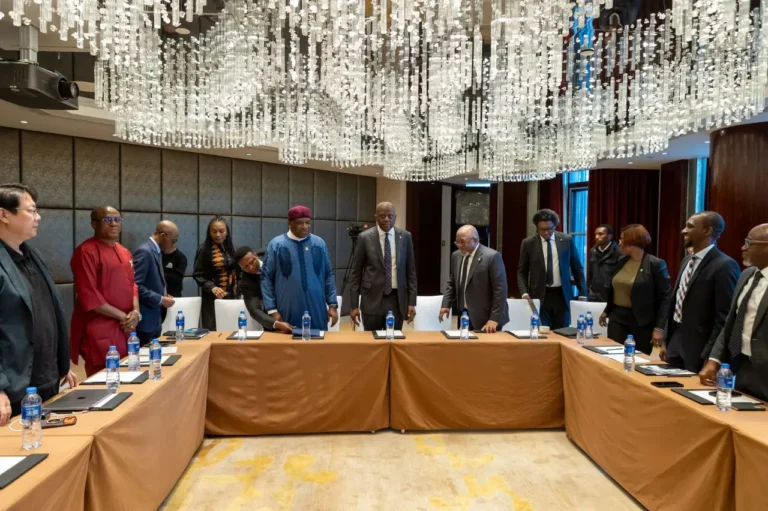
Touray made the revelation at the opening session of the maiden African Chiefs of Defence Staff Summit, held in Abuja.
The summit, with the theme “Combating Contemporary Threats to Regional Peace and Security in Africa: The Role of Strategic Defence Collaboration,” was attended by Vice President Kashim Shettima, who represented President Bola Ahmed Tinubu; the Minister of State for Defence, Bello Matawalle; Deputy Secretary-General of the United Nations, Amina Mohammed; Nigeria’s Chief of Defence Staff, General Christopher Musa; service chiefs; former Nigeria’s Chiefs of Defence Staff; former Nigeria’s Permanent Representative to the United Nations, Prof. Ibrahim Agboola Gambari; officials from the ECOWAS and the African Union (AU); members of the diplomatic corps and academia; and Chiefs of Defence Staff and representatives from 36 out of the 54 African countries.
Represented by ECOWAS’s Commissioner for Political Affairs, Peace and Security, Abdel-Fatau Musah, at the meeting, Touray said the activation of the rapid deployment force has become a necessity given the asymmetric security dynamics in the region.
He said, “We are conscious of the fact that this bold initiative requires the necessary financial resources and capabilities to make it a reality. To this end, ECOWAS will be hosting a meeting of the Ministers of Finance and Defence to agree on the country’s funding modalities to raise an annual budget of $2.5 billion for the activation of the regional counter-terrorism force. The meeting of these ministers is taking place this coming Friday in Abuja.
“By this initiative, ECOWAS is also throwing the gauntlet to bilateral and multilateral partners to complement this daring regional initiative. In particular, we hope that this summit will, through the African Union, send a clarion call to the United Nations to redeem the pledge made under United Nations Security Council Resolution 2719 of December 2023 to fund 75% of African-led peace support operations.”
Touray said that, besides the counter-terrorism effort, ECOWAS is also pursuing the operationalisation of its integrated maritime security with the establishment of three integrated maritime centres across the region and an international maritime coordinating centre in Abuja, as well as an in-site strategy on countering transnational organised crime, among others.
He commended the Nigeria-led continental initiative, which he said was born out of President Bola Tinubu’s vision and determination to empower the peace and security intelligence establishments in Nigeria and to “regionalise their initiatives to benefit the entire continent.”
According to him, “This bold foresight has materialised in, among other endeavours, the ongoing transformation of the National Counter-Terrorism Centre in Nigeria into an African non-kinetic counter-terrorism centre, efforts to establish the Combined Maritime Task Force for the Gulf of Guinea, which will secure the Combined Exclusive Maritime Economic Zone to spur the operationalisation of the African Continental Free Trade Area.”
Former Nigeria’s Permanent Representative to the United Nations, Prof. Ibrahim Agboola Gambari, disclosed that there were over 1,000 terrorist groups operating across the African continent.
Gambari emphasised that, before securing the whole of Africa, countries must first secure themselves and their regions.
He said African nations must strengthen their defence industries, develop their own technologies, and design their own security architecture that guarantees human security in order to effectively address threats.
“According to some research work done by the African Research Network for Regional and Global Governance Innovation with headquarters in Savannah Centre for Diplomacy, Democracy, and Development here in Nigeria, there are now over 1,000 insurgency groups in Africa, and the number keeps rising, and the majority of our regional economic commissions are actually dealing with banditry and terrorism and other forms of insurgency,” he said.
The former Minister of External Affairs, however, expressed hope that Africa’s collective security can be enhanced through active, practical, and proactive collaboration at regional and continental levels.
He said, “There must be synergy in military cooperation, promotion of common training, promotion of common doctrinal concepts, sharing of intelligence, the interoperability of armaments, but also capacity building, particularly in air lifting, all of which are essential for operationalisation of the African standby force.
“We must also upgrade and strengthen our defence industries and all our technologies in order to avoid control from external forces.
“We must strive for concrete and realistic solutions to combat old as well as new threats to peace and security in Africa. Africa must design, own, and build a security architecture that guarantees our sovereignty and guarantees human security in all of its dimensions.”
President Bola Ahmed Tinubu, who was the Special Guest of Honour at the occasion, charged the continent’s defence chiefs to come up with a fresh doctrine of continental defence built on trust, shared intelligence, and coordinated strategy.
Other News
He tasked them to evolve indigenous technologies to combat the continent’s security challenges.
Represented by Vice President Kashim Shettima, Tinubu said there must be a framework for African defence institutions to “speak with one voice and act with one purpose,” and said the extreme scale of threats across Africa has made it a must for nations to pause and reflect.
He said, “From the deserts where insurgency festers, to the high seas where piracy prowls, from the silent corridors of cybercrime to the ruthless networks of transnational criminals, none of these tragedies respects borders, and neither should our response.
“What is true of our challenges must also be true of our resolve: we cannot neutralise these threats in isolation. This is the moment to reassess our military objectives in the collective aspiration to make Africa safe. It is time to forge a new doctrine of continental defence, one rooted in trust, shared intelligence, and coordinated strategy.”
He said the African continent is bound as a family, interwoven not just by borders but by destiny, noting that the geographical configuration of the continent has made its nations more than kith and kin.
“And in this family, defence is the first expression of love each member can promise the other,” he pointed out, maintaining that the maiden summit is “not just a convergence of uniforms and titles” but a “convocation of Africa’s guardians to the village square of ideas.
“There has never been a time when our collective defence invited us so urgently to sit together, to reason together. This Summit, the first of its kind, could not have come at a better time. I am, therefore, deeply honoured to welcome each of you to Abuja, the heart of Nigeria and the home of Africa’s endless possibilities,” he added.
Tinubu called for the establishment of a permanent African Chiefs of Defence Staff Forum, a platform he said would avail the military chiefs the opportunity to keep dialoguing, strategising, and coordinating their operations.
“I propose the establishment of a permanent African Chiefs of Defence Staff Forum, a platform for continuous dialogue, strategic foresight, and operational coordination.
“Let us institutionalise this spirit of unity and make it a cornerstone of Africa’s security architecture,” he stated, urging them to ensure the summit does not end with just a standing ovation and accolade.
He said that Nigeria, being the most populous nation on the continent, had always been straightforward “to be a good neighbour and a brother’s keeper in the struggle for peace,” adding that the Nigerian military has always stood in concert with its neighbours, and even beyond, “in peacekeeping missions, counter-terrorism operations, and humanitarian endeavours.
“We hold no illusion: security is the foundation upon which the edifice of progress must stand. That is why we must use this Summit not merely as a meeting but as a covenant to deepen cooperation, through joint training, harmonised doctrines, and interoperable systems. For this to endure, we must build a framework where our defence institutions speak with one voice and act with one purpose,” he maintained.
While emphasising that modern-day security threats are asymmetric, digital, and often invisible, Tinubu implored African nations to “invest in cyber defence, artificial intelligence, and indigenous military innovation,” even as he called for collaboration with the private sector to achieve the goal.
He said, “Africa cannot remain merely a consumer of technology; we must be creators, innovators, and owners of the tools that secure our tomorrow.
“I therefore urge this Summit to explore avenues for defence-industrial collaboration, research partnerships, and African-led solutions to African security challenges. In this journey, I call upon the organised private sector to be our ally, to invest in the future of defence as an investment in the survival of nations.”
Tinubu further paid tribute to the fallen soldiers, noting that they must be honoured by “ensuring their legacy is enshrined in the institutions we build, the values we uphold, and the partnerships we forge.”
In his address, the Chief of Defence Staff, General Christopher Musa, urged other Defence Chiefs to lead by organising forces and investing in cyber defence, artificial intelligence, and indigenous military technology, explaining that without the aforementioned, it would be difficult to achieve security.
“As host nation, Nigeria is deeply committed to the ideals of regional stability and continental defence integration,” he said.