Follow Us on Google
By Merit Ibe [email protected]
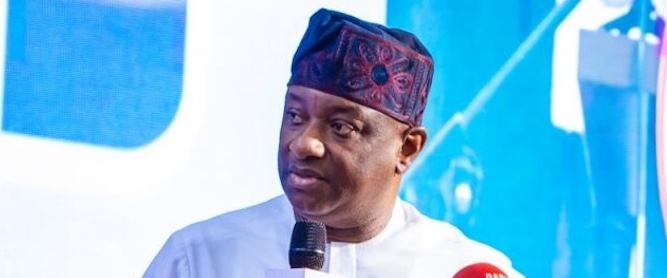
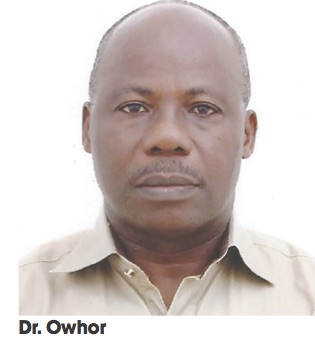
Dr. Nathan Owhor, a political economist recently spoke on the economy of palliatives run by Nigerian government since the outbreak of the COVID-19 pandemic and the collapse of Small and Medium Enterprises (SMEs) in the country.
His conclusion was that an economy driven by palliative measures for the masses is a faulty policy option that will not serve the best interest of the Nigerian masses, but would rather undermine the productive spirit of genuine investors.
According to him, Nigerians do not need the economic virus called palliative as a national policy option. What they need are socio-political guarantees that will enable SMEs thrive from their current dwindling fortunes.
Instead of palliative to the informal sector, he urged the government to address key elements oiling and providing the fertile grounds for palliative, which is gradually replacing the fuel subsidy, saying if the conditions lubricating the wheel of palliative in the economy are not urgently tackled, it will surely destroy SMEs and lead to massive unemployment with attendant poverty, hunger, insecurity and accompanying unpleasant consequences.
Excerpt…
Informal sector
Nigerians who are major players in the informal sector of the domestic economy are hardworking and enterprising with creative business ideas.
The informal sector therefore, sufficiently provides for large number of families with diverse businesses. Every day, the people roll-up their sleeves, skirts and wrappers, fully engaged in their farms, markets, shops, kiosks and artisanal workshops.
The mobile traders, taxis, bus drivers and others in varied economic ventures, pleasantly define the domestic economy.
Goods and services are abundantly provided and sold. At the end of the day, families have food on their tables. The people are happy and fully engaged, providing for themselves and families from productive activities. There is a sense of pride and fulfilment.
Nigerians are not beggars. Clearly, begging is indeed alien to the Nigerian spirit of excellence and dignity in labour. We are a proud people, providing for ourselves in diverse ways. But governments over time have failed the Nigerian people. The leaders we have entrusted with our common patrimony have abysmally disappointed the masses.
The socio-political environments have become utterly dysfunctional such that Nigerians are now desperate, angry and now live in fear. We are now afraid to go to the farms, markets and even to travel. We are afraid to open our shops, go school and even places of worship. The fear and uncertainty in the land have made the informal sector of the domestic economy; once rich and vibrant, very unproductive. Nigerians who are in the informal sector of the economy have been made poor and helpless by government’s deliberate ineptitude.
The enormous fear in the society today has denied Nigerians their enterprising and productive edge.
The erstwhile business activities which truly defined who we are as a people and which fuelled the domestic economy have apparently disappeared. The collapse of these SMEs has serious implications for the economy.
Nigerians now have a palliative economy
Palliative as a socio-political tool for the welfare of the citizens and to show that the government cares is now gradually replacing the over rated and abused oil subsidy regime in the economy. I just hope that someday soon, palliative will not become a national budget item; I hope it is not already there, now that the oil subsidy is becoming unfashionable in our politics and governance.
Palliative for the masses is a huge sea mammal like a whale, washed ashore by the tidal waves of corruption from the deep oceans of wealth. It is largely a conduit pipe for dispensing political patronage in the economy for some privileged Nigerians. The apparent absence of an empirical data, open to public scrutiny to support the distribution of this huge cost outlay across the sub-national entities lays credence to this conclusion. But this is not the focus of this discussion.
Nigerians do not need palliative measures as a national policy option. What is needed are socio-political guarantees that will enable the SMEs to thrive rather than their current dwindling fortunes.
An economy based on palliatives cannot endure. It is not sustainable and does not make any rational economic sense for government to routinely give small cash or feeding money or food items to persons they consider vulnerable in the society.
An economy driven by palliative measures for the masses is a faulty policy option that will not serve the best interest of the Nigerian masses. It will no doubt undermine the productive spirit of Nigerians in this income bracket and promote a culture which tends to define who we are not. In any case, how long will the palliative last for most families? How many Nigerians actually have access to the palliative as a government welfare package?
The government should rather address key elements oiling and providing the fertile grounds for palliatives which is gradually replacing the fuel subsidy. Government must deliberately address some fundamental issues slowing down the development of the economy and release the innate energy and potential of Nigerians for self-actualisation. Nigerians can create and multiply wealth effortlessly given the right economic and political environments. There is no question about this, knowing who we are as a people.
What issues should be addressed by government
Government must seek urgent ways to develop the power infrastructure. This will stimulate and release the creative edge of Nigerians in the informal sector of the economy.
The current cost of energy is a huge burden on small businesses which has the capacity to provide employment to most Nigerians. In the organised private sector, energy is also essential for the manufacturing industries. The collapse of most manufacturing industries because of poor power supply has unfortunately led to job losses.
Over the years, the erstwhile bread winners have become impoverished and their families have swelled the rank of palliative seekers. The government must take steps to reverse this trend by providing energy such that the industries once again will begin production instead of funding the palliative project.
Government must also focus on the road and rail infrastructure as they have the capacity to increase the easy movement of goods and services. Those who are in the transportation and haulage sectors of the economy will have reasons to lower costs. The farmers and traders will also find it easy to move their wares and produce to destinations of choice at cheaper costs and earn the much-needed income rather than queue for palliative. A good road and rail infrastructure therefore have the capacity to drive down the overall cost of goods and services and enhance the purchasing power of the people.
The current palliative economy is also fuelled by insecurity across the country. The ravaging insecurity has negatively affected businesses and trade. Government can deal with the insecurity induced palliative by tackling the security challenges. The farmer in most parts of the country is afraid to go and cultivate the land. All those who are engaged in one farm business or the other have been forced to abandon their businesses. Even interstate travels for trade and businesses have become impossible due largely to insecurity along the roads and highways. The rank of Internally Displaced Persons (IDPs) are growing by each passing day and their camps are now near permanent abodes. The few bands of criminal elements cannot hold the larger members of the society hostage. It is grossly unacceptable and the government must urgently reverse the trend as no society will allow criminals to determine and shape the life and movement of her people.
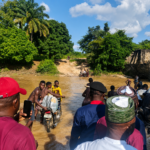
Akin to this, is the palliative arising from flood disaster, which has destroyed homes, farmlands and critical infrastructure in most states of the Federation. The 2012 and 2022 flood disasters in some parts of Nigeria, did not only create a pool of palliative seekers, it also gulped huge sums of scarce resources to repair damaged critical national assets. The disasters were aggravated by the massive depletion of the mangrove forest because of climate change. The massive deforestation has moved the top soil and deposited same on the sea beds. This has created very shallow water ways thereby enabling massive flooding of low land areas by the over flow. The immediate solution is to build dams and dredge the water ways such that deep depths are achieved and maintained and the overflowing waters are confined within the dams and river banks. This will be a more sustainable response to flood disaster induced by the climate change than create a financial pool for palliative.
Another condition that promotes the palliative culture is unemployment. This development has been sustained by the deliberate failure of governments over the years to see the enormous opportunities in the textile industry for example. The garment and textile sub-sectors of the economy has the capacity to employ large number of skilled and unskilled labour in the economy.
It is the shortest route to large scale employment and a source of huge revenue for developing societies. To significantly reduce unemployment in the society, the textile industry must therefore be developed because of the multiple layers of activities in its value-chain.
The huge population is a ready market for the sector. I have in the past suggested that an Executive Bill mandating all uniformed agencies to compulsorily buy their uniform materials locally should be sent to the National Assembly. This will rekindle and restore hope in the textile industry, stimulate economic activities and substantially eliminate the new economic virus called palliative.