Follow Us on Google
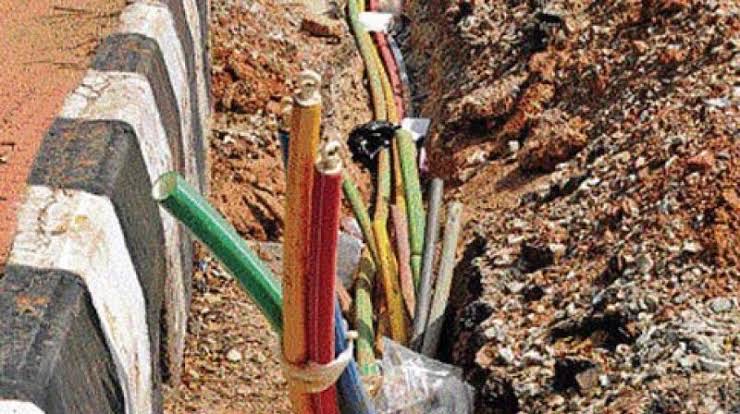
- How vandalism, theft, fibre cuts threaten Nigeria’s over $10b telecom sector



By Chinenye Anuforo
It was a busy Friday morning in Lagos. For Mr. Kelechi Aniekwe, a small business owner, the day began with frustration. His Point of Sale (PoS) terminal, his lifeline for transactions, was down.
The bank’s customer service was no help, and his customers were growing impatient. Unknown to him, a few miles away, a group of vandals had just cut a fibre optic cable, plunging not just his business but an entire community into a digital blackout.
Aniekwe’s story is a familiar one in Nigeria, where the multi-billion-dollar telecommunications industry is under constant threat from vandalism, theft and illegal access. This persistent problem, often dismissed as petty crime, is costing the nation over $10 billion and jeopardizing its digital future.
Nigeria’s telecom sector is the backbone of its digital economy. It contributes over 14.4% to the nation’s GDP, according to the Nigerian Communications Commission (NCC), and underpins essential services from banking and healthcare to security and education. However, the very infrastructure that supports this growth is being systematically dismantled.
According to the NCC last week during the Critical National Information Infrastructure (CNII) & Sustainability Conference 2025 in Lagos, organized by the Nigeria Information Technology Reporters Association (NITRA) and the Association of Licensed Telecommunications Operators of Nigeria (ALTON), the telecom industry faces an average of 1,100 fibre cuts, 545 access denials, and 99 theft incidents every single week. The NCC explained that these disruptions affect everything from quality of service to local business operations, as a stolen battery or a cut cable directly impacts a community’s access to finance and information.
Major telecom operators are bearing the brunt of this crisis. MTN Nigeria reported suffering over 13,700 fibre cuts between January and June 2024 alone, an average of 145 incidents daily. According to the company’s Chief Technical Officer, Yahaya Ibrahim, the company spent a whopping N17.6 billion in 2024 to repair these damaged cables.
This is in addition to a budget of N26.3 billion for relocating its network infrastructure to safer areas. Similarly, Airtel Nigeria has reported an average of 43 fiber cuts daily on its network, totaling over 7,700 cases in just six months. The financial strain is immense; an industry-wide report revealed that repairs and lost revenues from damaged cables cost Nigerian telcos almost N27 billion ($23 million) in 2023, with MTN and Airtel bearing most of the burden. Funds that could have been used for network expansion are instead being redirected to costly repairs.
Indeed, the federal government, through a planned $2 billion investment, is set to deploy an additional 90,000km of fibre optic by the last quarter of 2025, hoping to significantly boost the country’s connectivity. However, this promising expansion is being threatened by the escalating sabotage. For instance, between May and July 2025, a destructive wave swept across cell sites in key states including Rivers, Ogun, Osun, Imo, Kogi, Ekiti, Lagos, and the Federal Capital Territory Abuja, among others. These acts of sabotage have not only disrupted network services but also caused widespread connectivity blackouts, severely impacting millions of subscribers. Beyond deliberate vandalism, the equally damaging issue of fibre cuts during road construction and civil infrastructure projects along major highways and urban roads has led to significant service outages and financial losses for operators.
These disruptions have far-reaching consequences. Fibre cuts lead to widespread blackouts, affecting voice calls, SMS, USSD codes (crucial for banking and financial transactions), and mobile data services. This directly impacts personal communications and business operations. Essential services like banking, digital payments, government services, and emergency responses heavily rely on telecom infrastructure and suffer severely during outages.
The ripple effect on the business community, which thrives on internet connectivity, is dire, impacting national security and the output of businesses whose progress runs largely on the wheels of telecommunications.
Also, monitoring from the NCC has shown disruptions across numerous states, including Rivers, Katsina, Lagos, Enugu, Benue, Anambra, Imo, Abia, Akwa Ibom, Kebbi, Sokoto, Zamfara, Borno, and Adamawa, impacting major operators like MTN, Airtel, 9Mobile, and Globacom. Beyond the statistics, Nigerians are also bearing the impact of these infrastructure failures. On social media platforms like X (formerly Twitter),
Nigerians showed their frustrations. User @SerrCoker_1 recounted a recent ordeal: “Last week, my MTN WiFi was so slow I felt like I was sending emails via pigeon at 22KB/s. I couldn’t upload content. Reply or get on X. Couldn’t attend meetings. Even WhatsApp texts were loading like it was 2004.”
This user lamented that such bad service is fast becoming normal for a lot of people here. And it’s exhausting. The sentiment underscored a deeper issue: “Every week, young people in this country are expected to compete globally while working with infrastructure that constantly fails them.”
Another user, @nuel_idu, reiterated this concern, stating, “Until there’s intentional investment in digital infrastructure across Africa, these frustrations will only keep cycling. No one can build anything sustainable on shaky foundations.”
The direct impact on daily digital life is further highlighted by @ozenua_, who complained, “Do you know that with @AirtelNigeria you can’t access up to 80% of websites you try visiting because they seem to have blocked all the IPs.
This is also alongside their super troublesome internet service that serves you a whooping maximum of 5MBPs.” Similarly, @olumoko_funmi expressed disbelief: “I’m not sure Nigerians know how bad we’ve got it. MTN 4G is giving me single digit traffic. Single digit, my God.
This is supposedly the best network in the country.” The financial burden on consumers is also evident, as @Nee_Agric shared: “I’d been experiencing back and forth with @AirtelNigeria on issues related to non existent/poor Internet access for quite awhile recently and the issues still persist though they had promised sorting it out. But then I’m not getting value for the money spent on subscription charges.”
These personal accounts painted a clear picture of a digital economy hampered by unreliable connectivity, directly attributable to the ongoing challenges of fibre cuts and vandalism.
And so, Gbenga Adebayo, Chairman of the Association of Licensed Telecom Operators of Nigeria (ALTON), emphasized that the damage goes beyond just the cost of replacement stating that telecommunications infrastructure is the backbone of Nigeria’s digital economy, yet it’s constantly threatened with theft, vandalism, negligence, and weak enforcement.
Adebayo, therefore, outlined five key layers of protection that he believes are essential for the sustainability of Nigeria’s digital economy. According to him, the telecom industry must lead by example.
Operators must secure their own installations with basic measures like perimeter fencing, access control, and surveillance. He criticized the vulnerability of some sites that lack even simple locks or fences, stating: “We can’t expect external parties to protect our assets if we aren’t taking these basic steps ourselves.”
He stressed the importance of community involvement stating that local communities must understand that this infrastructure is vital to their own well-being.
“By raising awareness, people will recognize the consequences of sabotage, such as a loss of connectivity, and be less likely to tolerate such acts.”
The ALTON Chairman also highlighted the need to address the gray market for stolen parts. He noted that stolen generators, batteries, and solar panels are often sold openly, making the public complicit in economic sabotage when they buy these components.
Adebayo urged security agencies to target the cartels that facilitate this illegal trade and called for the public to stop buying from questionable sources.
He pointed out the need for better coordination between government infrastructure projects and telecom operators. He cited incidents where road construction and other projects have accidentally damaged fiber optic cables, emphasizing that such incidents should not happen.
Adebayo called for a robust system of law enforcement and punishment. He asserted that a lack of serious consequences for those caught stealing or vandalizing infrastructure only encourages more crime. He concluded that a system that doesn’t effectively punish violators will only encourage more violations, and stressed the need for prosecution and imprisonment for offenders.
Also commenting on the same issue, Nigeria Information Technology Reporters Association (NITRA) President Chike Onwuegbuchi emphasized the urgent need to address the widespread issue of infrastructure vandalism, which he described as a grave threat to essential services.
“As journalists, we frequently report on the vandalism of these vital assets. The question is: how widespread is this issue?” Onwuegbuchi asked, emphasizing the need to focus on the impact on local communities.
“I want to focus on how this vandalism affects local communities and the delivery of essential services.”
Onwuegbuchi expressed disappointment with a perceived lack of collaboration among stakeholders, including operators, creditors, and the public. He noted that some individuals see these assets as a quick source of income, without understanding the significant consequences.
“An individual who doesn’t understand the importance of a network infrastructure might simply vandalize it for profit,” he explained.
He also criticized what he sees as a lack of commitment from telecommunications operators, who he said appear to be waiting for the NCC to take the lead.
“I have noticed that many operators are not fully committed to this issue. They seem to be waiting for the NCC, Onwuegbuchi stated, reminding them that the NCC is a regulator, not a security force. “If the infrastructure fails, operators are the ones with service level agreements to uphold. This lack of engagement is disappointing.”
To combat the problem, Onwuegbuchi suggested the creation of a trust fund specifically for the protection of telecom infrastructure. He believes a model similar to the government’s security trust fund could be used to provide dedicated support for law enforcement and bolster security efforts.
“We cannot rely solely on security agencies,” he said, highlighting the success of other similar funds.
The NITRA President stressed that public education is crucial to address the issue. He announced that the NITRA CNII event is the first of many such events and vowed to continue efforts to educate communities and use mass communication to raise awareness about the importance of protecting these assets.
“We need to do more to educate communities and use mass communication to raise awareness,” he concluded.
In response, the NCC revealed that the President has designated telecommunications infrastructure as Critical National Information Infrastructure under the Cybersecurity Act, a move that places a shared responsibility on all stakeholders, including the government, operators, and the public. The Executive Vice Chairman, NCC, Aminu Maida called for a multi-stakeholder approach to address these challenges through public awareness campaigns, improved collaboration, and stronger enforcement mechanisms.
He also emphasized the need for punitive measures against culprits to deter future acts of sabotage, which have significant socio-economic and security implications for the country.
While government and industry leaders work on policy and enforcement, a more grassroots and technological approach is also taking shape. IHS Nigeria is leading the charge with innovative solutions. Sadisu Jibrin, Director of Administration Operations at IHS detailed how the company is deploying advanced security technologies, including real-time monitoring and artificial intelligence, to protect its sites.
“With artificial intelligence, we can predict when a site needs maintenance and when there is an attempt for unauthorized access. This technology allows for smarter network management, reduces the need for physical site visits, and provides an extra layer of protection he explained.
Beyond technology, IHS is also focused on community engagement. The company has deployed community protection initiatives, engaging local farmers and youths to act as the first line of defense for critical sites.
“Our dream is that once we can instill a sense of local ownership among those local communities, we are more likely to accept this infrastructure as our own national heritage,” Jibrin said.
He stated that, IHS has signed a memorandum of understanding with the Nigerian Civil Defense Corps for enhanced site surveillance and emergency response. Furthermore, they have partnered with security firms to deploy 650 rapid response patrol vehicles across the country. These vehicles are in constant communication with the central network operating center, allowing for a swift response to any security breach detected by the remote monitoring systems.
The path to a secure and sustainable telecom sector in Nigeria is complex, but the recent push for collaboration, technological innovation, and community involvement offers a glimmer of hope. By working together, the industry, government, and citizens can turn the tide against vandalism and build a resilient digital future for the nation.