Follow Us on Google

By Merit Ibe [email protected]
Economic experts have urged the Federal Government to appraise its intervention strategies geared towards economic recovery to come up with stronger plans.
They urged government to take practical steps to review its economic growth strategies to avoid being victim of an imminent global recession.
Aside the Nigerian economy being hit by the global crisis, the worsening security situation, high inflation, high cost of living, unprecedented crude oil theft, Russian-Ukrainian war, free fall of naira, unemployment, poverty, high inflation and huge debt overhang were listed among other factors , that could possibly lead the country into recession, hence the call for action to tackle them.
President of National Association of Chambers of Commerce, Industry and Mines (NACCIMA), Chief John Udeagbala, expressed the view that if right policies were not put in place to improve economic growth, the country might head into a recession soon
He urged the Federal Government to sit up to avert a looming recession that can cripple the economy.
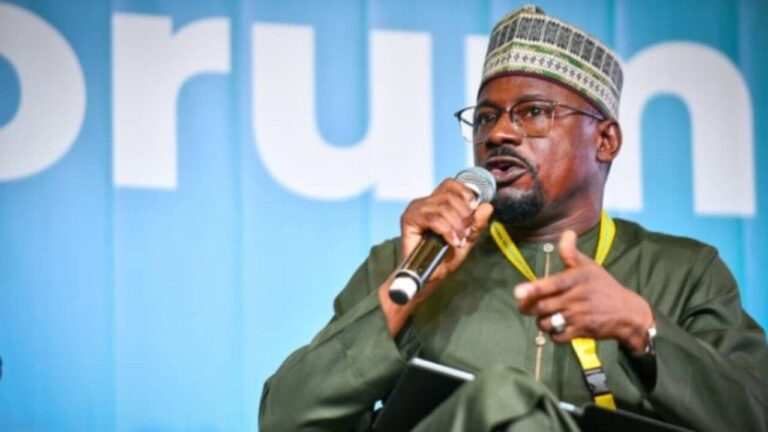
Founder /CEO, Centre for the Promotion of Private Enterprises (CPPE), Dr Muda Yusuf, stated that the bigger issue to address was not the abstract concept of recession, but the impediments to productivity and welfare.
He noted that Nigeria’s economy is characterised by diverse economic vulnerabilities, which have had devastating effects on businesses.
He listed such headwinds with terrible effects on the economy; to include unprecedented surge in energy prices with huge adverse effects on economic players across all sectors; as well as high levels of currency depreciation and currency volatility; as well as increasingly weak fiscal space; acute foreign exchange scarcity with very profound effects on investors across all sectors.
Yusuf said above all, Nigeria’s rising public debt and debt service burden; worsening security situation as well as elevated political risk as a result of political transition processes and activities were not helping the nation’s recovery strategies.
“These adverse development are further compounded by growing fuel subsidy burden; weak infrastructure; falling investors’ confidence and depressed purchasing power.
“Players in the economy are more concerned about what can be done to moderate energy cost, stabilise the exchange rate and improve the security situation in the country. There are also human capital development issues which require a lot more attention.
“So, for sustainable economic recovery, government needs to accelerate the activation of critical reforms. This would be in oil and gas, especially the full implementation of the Petroleum Industry Act (PIA), the foreign exchange policy and trade facilitation issues.”
For his part, Frank Onyebu, Chairman, Manufacturers Association of Nigeria (MAN), Apapa branch, the economy is actually wobbling.
Factors responsible for this, he said are numerous and include a hostile investment environment, complete dilapidation of infrastructure, insecurity and corruption to mention but a few.
“The economy can best be retooled by the creation of an enabling environment for businesses to thrive. The government should start by investing massively in infrastructure. The government may choose to concession some of the infrastructure since it doesn’t have currently enough resources.
“The worsening insecurity in Nigeria is a major problem for investors in the economy. Many industrialists especially those who are in the agro-allied sector are grappling with challenges getting raw materials from the crop producing areas of our country.
This has continued to negatively impact capacity utilization, turnover, cost of production and the value delivery to shareholders. Some now source raw materials from neighbouring West African countries.
“Insecurity has also created a very serious country risk and reputational problem for our country.
The government will have to go out of its way to stave off this imminent recession – not by the usual aimless spending jamboree but by a deliberate, structured expenditure pattern that targets the real sector of the economy.
“It is quite apparent that Nigeria is headed for another recession. All available indices support this assertion.
“The government should create a deliberate policy to support agriculture as well as manufacturing. These sectors, if given the required support, have the ability to lift our economy out of any potential recession. The support should come in the form of massive investment in infrastructure, preferential credit availability as well as FX allotment, tax holidays and a deliberate improvement of the Ease of Doing Business policy put in place by the Muhammadu Buhari administration. “At the same time, the government should, as a matter of policy, reduce the high cost of governance while tackling the high prevalence of corruption as well as insecurity.”
He said if these measures are properly implemented, they have the combined potential of not only sustaining existing investments in agriculture and manufacturing but would, in the longer term, attract a lot more investments. The enormity of jobs created would surpass any short-term shortfall in government revenue.
“The budget would definitely be reduced to a manageable level if corruption and high cost of governance are controlled. That is why the government has to do something about the current unsustainable high cost of governance.
“Unfortunately we have borrowed so much that we have fallen into the category of highly indebted countries. We are obliged to service our debts. We can renegotiate the debts, but a large chunk of our budget would still go into debt servicing. We could, of course, call for debt cancellation, but that would be very difficult to achieve without a deliberate effort to fight corruption.
Chairman, financial group of the Lagos Chamber of Commerce and Industry LCCI, Obinna Anyanwu, said
developed economies have a way of tracking the rate of economic growth, which we should do in Nigeria.
From observation, most SMEs run their businesses on loan facilities and the situation impedes their capacity to service these loans effectively, so government intervention is required to forestall massive business shut down.
Key sectors like manufacturing, maritime, aviation, education, hospitality, financial services and the creative industry, need target bail-outs, relief and supports to stimulate the economy to avoid business closures and huge job losses. Further more, to assist and support the real sector at this time, regulators and tax authorities can also come up with critical policy actions and economic palliatives to keep businesses in operation.
“As a nation, we can leverage and emulate the United Arab Emirates which diversified their economy by reducing dependence on oil receipts from100 per cent to only 35 per cent by considering investments and expansion of their service, tourism, real estate and smart industries. In Nigeria, some sectors can be considered to diversify our revenue base, they include – agriculture, transportation, information technology and digital economy.
“If put in place it will reduce millions of dollars if not billions spent yearly on importing basic goods and food commodities that can grow locally. Further attention should equally be given to our trade policy and SMEs which are the bloodline of most economies.
Having and strengthening a strong trade policy will help create millions of jobs, grow local industries and expand the economy. In simple terms, it will help with the industrialisation of the country and rejigging the economy in the long term.
Though the ease of doing business initiative is essential, the rule of law and efficient legal and regulatory system is also required for simple contractual disputes to be resolved. Investors, both local and international, will not likely consider investing in a country where simple contractual disputes take between 2 to 15 years to resolve.