Follow Us on Google
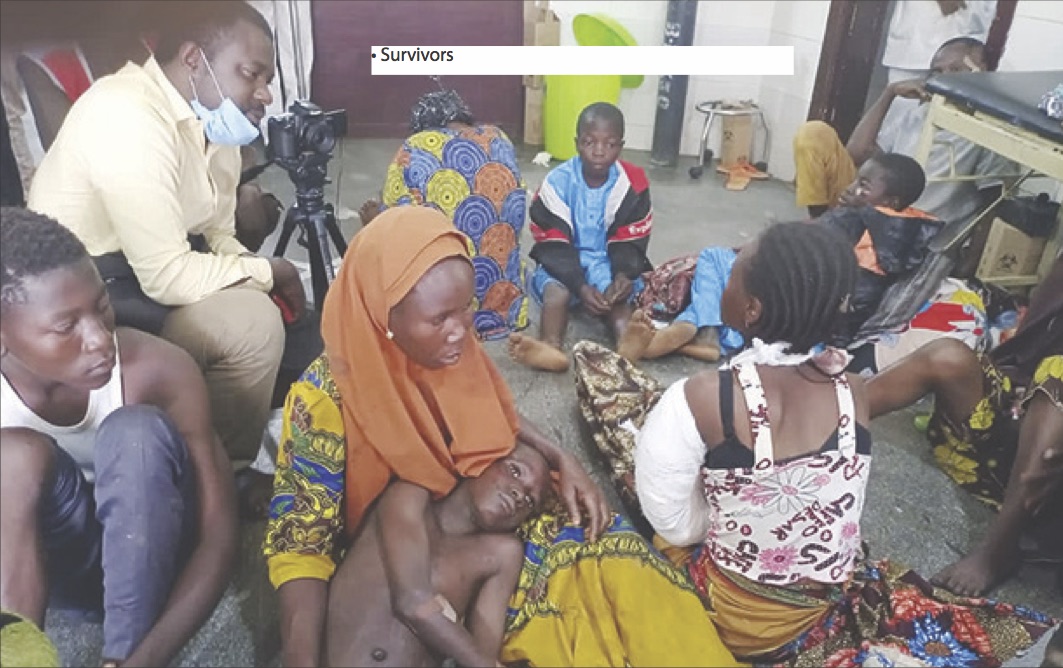
• Nigerians harp on compensation for victims
From Noah Ebije, Kaduna
On the night of December 3, 2023, while the residents of Tudun Biri, Igabi Local Government, Kaduna State, were celebrating the birthday of Prophet Mohammed, a drone belonging to the Nigerian Army mistakenly struck, killing over 100 persons and injuring several others.
For many Nigerians, the drone represents a tragedy on many fronts. Apart from the unwarranted loss of lives of innocent souls, the dark tragedy has since exposed the non- committal disposition of the federal and state government to rural communities.
The consensus is that, like the error bombing of Tudun Biri, many such communities and their rural folks are cut away from the presence of government and may have to wait for their own tragedies to earn the attention of the governance actors.
Tudun Biri, situated kilometres away from the city of Kaduna, has been neglected by successive administrations as a result of which they had limited access to basic amenities such as potable water, healthcare services, quality education and other basic infrastructure.
Spokesperson of Northern Elders Forum (NEF), Abdul-Azeez Suleiman, told Daily Sun: “These communities are often overlooked in government development plans and resource allocations. While this is disheartening, we must also understand the underlying dynamics at play.
“By acknowledging the systemic issues that perpetuate the marginalisation of such communities, we can advocate proactive measures to address their needs.
“It is unfortunate that incidents or crises are necessary for communities like Tudun Biri to receive attention and support from the government. It is, however, important to acknowledge the underlying reasons for this phenomenon.
“The argument here is not to justify the neglect of these communities but to shed light on the systemic issues perpetuating their marginalisation.
Firstly, incidents or crises draw media attention and public outcry, forcing the government to respond. The media plays a crucial role in highlighting the plight of marginalised communities.
“Incidents often serve as triggers for increased media coverage. This heightened attention creates pressure on government to address the issues faced by these communities promptly.
“Secondly, incidents can expose the government’s failure to fulfil its responsibilities towards marginalised communities. When a crisis occurs, it becomes evident that the government’s neglect has contributed to the severity of the situation.
“This realisation can lead to public outrage and demands for immediate action, forcing government to provide social amenities and support to rectify the situation.
“Thirdly, incidents can serve as wake-up calls for policymakers and government officials. They provide an opportunity for reflection and re-evaluation of existing policies and practices.
“By recognising the failures that led to the crisis, policymakers can develop more inclusive and proactive strategies to prevent similar incidents in the future. This can result in long-term improvements in the provision of social amenities and government support for marginalized communities.
“Governments should prioritise the equitable distribution of resources and ensure that marginalised communities receive the necessary support without having to endure crises. By doing so, we can work towards a more inclusive society where all citizens have access to social amenities and government goodwill, regardless of their geographical location or social status.”
National Publicity Secretary, Arewa Consultative Forum (ACF), Tukur Muhammad-Baba, said the nation’s military apparatus has sufficient training and equipment to serve the country and the citizenry. He however, wondered: “Why officers and men of the Nigerian military perform better on international engagements, but back home, they become ineffective, lacking intelligence gathering in their operations.
“Members of the Armed Forces with their basic and advanced training know what needs to be done. They have the equipment. Generous budgetary allocations go to them. State governments allocate additional resources to them.
“They enjoy goodwill from the average citizen. They excel whenever they are sent overseas on peacekeeping missions. There is no reason for them to do any less back home.
“When they go for training overseas, they compete with the very best from elsewhere and in the process give very good account of themselves. Only that back home, one will wish to see that they should be allowed to do their work without political interference.
“With the recent experience at Tudun Biri, one will like to see vast improvement in intelligence data gathering, processing and utilisation of same for precision hits. In other words, more professionalism, efficiency and effectiveness
“Of course, it’s entirely plausible that bandits and terrorists hide inside populations as camouflage, renting houses, running businesses, observing congregational religious rites and engaging in general community social activities. But then, is it not the duties of the security forces to fish them out and deal with them?
“Besides, this isn’t exactly the character of the present-day bandits who live in makeshift camps in the bush, away from population centres or settlements, going to great lengths to obscure their real identities. Also, from crude propaganda video and audio clips made and circulated by bandits, they are easily identifiable by their dialectical speech accents when they speak or make demands.
“Listen to any such clip and you will hear that they are foreign to the areas they operate, even if they know the terrains very well. It is not a rocket science. The security forces know what I am talking about. This is why solid and actionable intelligence must be included in the arsenal of the security forces.
“Communities can and must be discretely trained to be on the lookout for and pass on information about the presence of bandits and terrorists in or around their localities.
“So far, the federal, state and local governments’ reaction to the horror at Tudun Biri has been very good and commendation, even as there is room for more. But what remains critical is especially on the part of the Federal Government is to keep promises made for compensation and assistance to the people.
“President BolaTinubu has vowed that whoever is found wanting in the error drone bombing will be punished accordingly. The president has also assured that all the victims will be taken well care of under the FULAKO Initiative, which will commence by this month.”
According to the president: “Under the initiative, we are going to build houses, clinics, schools, veterinary hospitals, empowerment initiative, solar energy and so on. It is a complete package of solution; a non-kinetic response to the problems of banditry and kidnapping in the North West.
“The FULAKO Initiative will be kick-started here in Kaduna State, and Tudun Biri would be the first beneficiary community.”