Follow Us on Google
• How we lost our mothers to lung disease, asthmatic conditions
– Victims’ children
• DUFUHS, Equi-Resp Africa Research Project, AE-FUTHA to the rescue with free medical outreach
From Uchenna Inya, Abakaliki
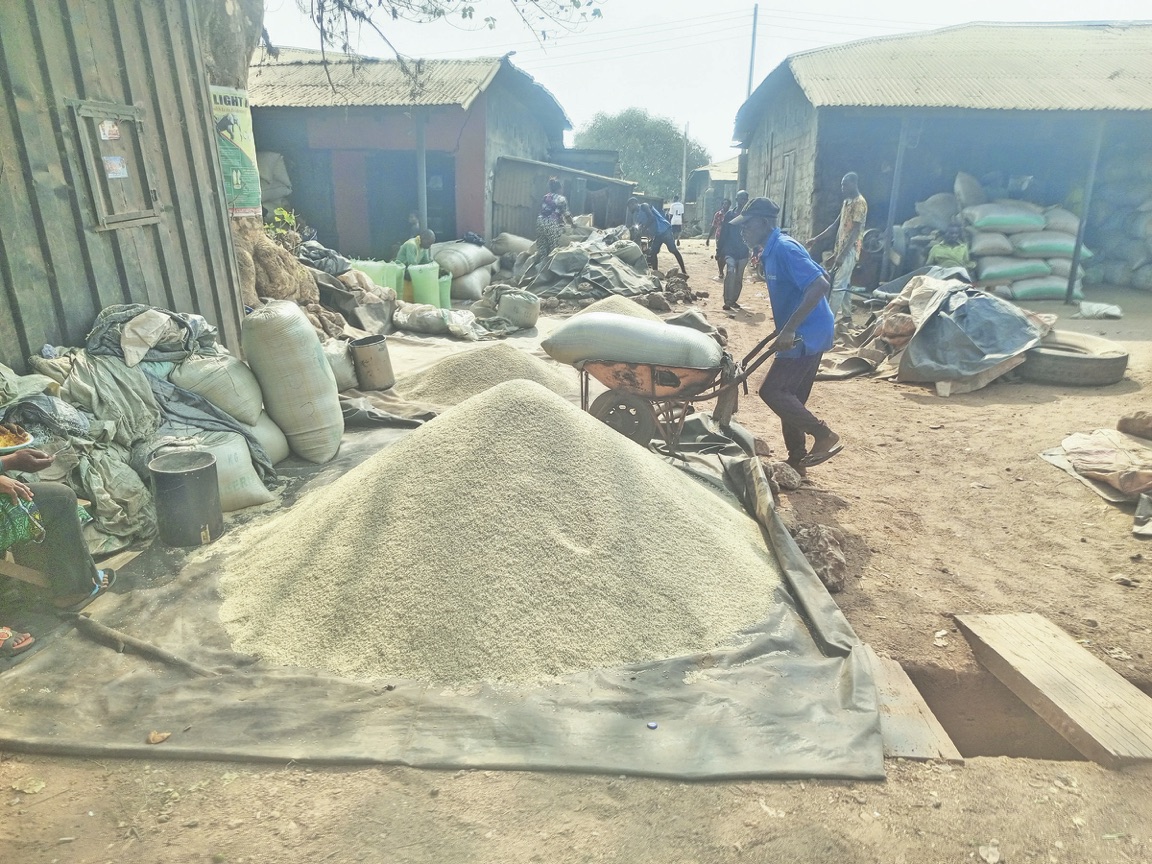
The Abakaliki rice mill industry, located at the Ebonyi State capital in the northern part of the state, is a historic and major hub for rice processing which has been operating since 1967 when it was established. .
The facility has continued to be a central player in Nigeria’s agricultural sector, with ongoing efforts to improve efficiency and modernise processing techniques.
It serves as a major agricultural engine for Ebonyi State, reducing reliance on imported rice and supporting livelihoods.
The mill acts as a central hub for rice paddy traders, haulers, stunners, sorters, and machinery technicians. It processes locally grown, high-quality, organic, and nutritious rice.
It is the largest rice mill in Nigeria, with over 7,000 workers across the value chain, processing high-quality, organic local rice.
Major varieties processed in the mill include FARO 1, FARO 44, FARO 57, NERICA 19, and local strains like “Brown” and “Ofada” rice.
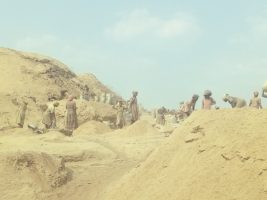
An iconic, massive pile of rice husks (chaff) has accumulated at the site since the 1960s which is a by-product of the intense milling activity.
The industry combines traditional methods with modern machinery, often relying on diesel generators, which leads to high costs and environmental concerns.
The site is famous for its massive, long-accumulated mountain of rice husks, highlighting its high-volume production, though it faces modernisation challenges.
A lot of women are earning a living in the massive pile of rice husks at the mill without any protective devices against respiratory diseases which most of them have been suffering from. Some of them have succumbed to the ailments.
Those working on the rice husks inhale the husks and the smoke from the milling machines at the factory because of lack of protective devices.
Nwiboko Sunday, whose mother, Augustina worked on the mountain of rice husks for 20 years narrated how he lost his mother to respiratory diseases.
He told Saturday Sun that the mother suffered the ailment for years before she died four years ago.
“My mother was working in the rice mountain husks in the Abakaliki Rice Mill. A lot of women who are from poor backgrounds or who have lost their husbands have been working there. The women sieve rice from the husks, take the lowest quality, sell some of them and use the money to buy ingredients to cook the ones they didn’t sell and feed their families.
“The women do this daily and my mother was one of them. She worked in the rice husk mountains. She was always weak each day she returned from the job. She coughed, had lung issues and other health issues and there was no money to take care of her health because my father was very old and couldn’t afford money to take her to the hospital.
“The respiratory diseases worsened and she was taken to a private clinic where she passed away. She suffered a lot and she was our breadwinner. A year after her death, my father died. My father and my mother were too close and my father was always lamenting my mother’s death till he joined her and left me and my siblings as orphans,” he said.
The story of Angela Nweke, a 26-year-old woman is even more pathetic. Five years ago, the young woman also lost her mother who was working on the rice husks. And she has been doing same work since then.
She nurses an eight-month-old baby. Nweke usually comes to the rice husks with the child. She said no one cares for her since the demise of her mother and instead of being idle or engaging in a crime, it is better for her to do the work.
“This is my fifth year of working in this rice husk mountains. My mother was working here and she died five years ago. When she was alive, I used to follow her to work, I assisted her. We suffered at that time because things were so hard for us.
“When she died, things became worse and I looked around and thought of what to do to survive. Is it prostitution that I will do? Should I steal? There was nothing that I didn’t think of doing because working on the rice husks is very tedious. It is very dangerous for health and it contributed to my mother’s death because she was having respiratory issues and she didn’t treat herself because of lack of money. When she became very sick, she couldn’t survive it.
“So, one day, I made a decision that I must be working here and I have been working here for five years. I nearly gave birth to my baby here the day I was having contraction. I was rushed to a nearby health facility by my fellow women working here where I gave birth. My baby is now eight months and I come to this rice husks with her because nobody will take care of her at home.
“Yes, I do experience pains; eye pains, nose issues and cough after work. Sometimes I go to a patent medicine dealer to mix drugs for me to have strength and continue the work each time these pains become very serious,” she narrated.
For Regina Ogbonna, an old widow who is over 70 years old and has been working in the rice husks mountains for 15 years, she is coping with the respiratory diseases without treatment because of lack of money to buy drugs or go for medical treatment.
“I have been doing this rice husks job for 15 years. It causes body pains to me and I don’t know what to do to avoid this work.
“I feed from this rice husks job. My five children and 1 feed from it. I lost my husband 15 years ago and nobody cares for me and my children. This is why I do this work for survival and each time I do it, I have waist pains, headache and breathing issues. But God has continued to protect me.
“I have never bought drugs for the treatment of these issues I usually have because I don’t have money for drugs, I don’t have a husband or anyone taking care of me and my children. We survive through this job and it has become part of those of us working here.
“As you can see, there are young and old women working here, including girls. These are people who have no one catering for them and instead of stealing, they have decided to be working here despite the hazardous nature,” she told the reporter.
Jacinta Nwodom, a young woman in her 20s, described the rice husks work as dangerous to health.
She said the women are not supposed to do such work but because no one cares for them, they are doing it instead of stealing or engaging in other ‘bad work’ which will bring shame to them and their families.
“This rice husks job is very dangerous to our health. It affects our health a lot. I have been having issues since I started this job. I have cough, persistent cough, waist pains, headache and other issues.
“We need help, we are not supposed to be doing this work because of its health implications but we don’t have anyone who cares for us, we don’t have hope, we don’t have work. Our only means of survival is this rice husks work and we can’t leave it because we have no alternative to it.
Other News
“We are suffering, hunger is dealing with us seriously and that’s why we are doing this work because we don’t want to steal or do anything that will bring shame to our families. It is better we are doing this
“Government should build a hospital here where we can check our health and treat the diseases we contract here. We also need safety kits.
Nkechi Sunday, another young woman working on the mountain of husks, narrated her own health issues as a result of the work thus: “Yes, there are diseases in this rice husks work but what can we do? Should we steal? We are in this work because we don’t know what to do, we don’t have any alternative to it
“I have had serious health issues in this work, I have been having frequent headaches, body and chest pains and if I complain, I will be told that the rice mill husks work is the cause and I should stop it. But if I stop, who will care for me and my children? Who will train them? “
The story of the young lady is not different from that of Solomon Onu, a miller at the rice mill.
He said each day he closes from work, he coughs persistently which prevents him and some other workers from staying in the mill regularly.
“This rice milling business affects my health seriously. Each day, I have cough, serious cough after work and that’s why some of us don’t stay here all the time because both the rice husks and smoke from the milling machine are very dangerous for our health.
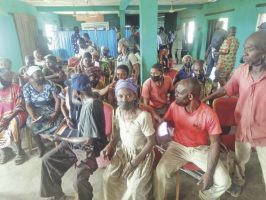
“We like this free health intervention for us by David Umahi Federal University Health Sciences today, and that’s why you see this crowd here , we have never seen this type of thing before and it is free of charge”, he said.
Worried by the plight of the rice mill workers, the David Umahi Federal University of Health Sciences, Uburu (DUFUHS), offered diagnosis and free treatment to 200 of them.
The health intervention was organised by the Equi-Resp Africa Research Project and the university in collaboration with Institute of Child Health (ICH) Alex Ekwueme Federal University Teaching Hospital, Abakaliki (AE-FUTHA).
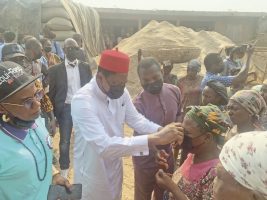
Vice Chancellor of the university, Professor Jesse Uneke who went round the rice mill during the intervention, expressed concern over the environmental condition of the mill
“The Abakaliki rice place is very, very critical to the economy, not just Ebonyi State but Nigeria. There is no place in the country where you don’t hear about Abakaliki rice. But we must not forget that these men and women that are here labouring to provide good rice for Nigerians, that their health is also very, very important.
“And so we considered the contribution that the operators of this Abakaliki rice mill have contributed to the development of this country economically. And that is why we decided to come here to carry out this intervention to improve the quality of their health so that they can continue to provide rice, good rice, sweet rice for Nigerians. That’s the reason we came here to carry out this intervention on respiratory diseases.
“We came here to do some screening and everyone that we identified with respiratory disease, we treat free of charge. And then we also do sensitisation.
“And you can see we went to the place where the rice husk is assembled. And you see a lot of women there. These women are playing a very critical role in the advancement and the progress of the economy.
“And they must not be forgotten. So that’s why we are here to encourage them to come and do their respiratory screening. So that any of them that we find to be having any respiratory disease, we treat them free of charge.
“We made arrangements for complete treatment for the first 200 people. Well, of course, there are thousands of people here.
“But then, it is not every one of them that likely has a respiratory disease. But the first 200 that we are able to diagnose with respiratory disease, we treat them. So we have free treatment drugs for the first set of 200 persons that we present with respiratory diseases,” Uneke said.
He revealed that the Equi-Resp Africa Research Project was also monitoring the air quality in the rice mill, apart from the free screening and treatment for the respiratory disease patients.
The Vice Chancellor said the air quality monitors determine the level of risk associated with the rice mill industry.
“If you say that this place is heavily polluted and you don’t have the data to prove that, you may not be able to do any policy that will be very, very context-specific. So the idea behind us coming here with air quality monitors is for us to be able to determine the quality of air here.
“And then to be able to ascertain the level of pollution in this place and we quantify the level of risk. That’s the essence of doing that,” the Vice Chancellor said.
He explained that the project was generating evidence that government ministries can use to formulate policies that are context specific and policies that can address peculiar health challenges as far as the rice mill is concerned.
The Director, Institute of Child Health (ICH), Alex Ekwueme Federal University Teaching Hospital, Abakaliki (AE-FUTHA), Professor Techla Ezeonu said many people in the rice mill have suffered one form of respiratory diseases or the other which necessitated the health programme in the mill.
“We have the intention to bring about equitable healthcare or access to healthcare. We felt that it is important that we reach out to the people of the rice mill community.
“It is really important because their health is necessary. They are working for us, feeding us with rice, but we must also bring healthcare to them. So we are here on a medical outreach to propagate the message of how to prevent respiratory diseases. We also need to possibly diagnose those who have a respiratory disease.
“This rice mill is a place that generates a lot of dust. Dust from rice, smoke, heat, from the process of cleaning the rice. And it is clear, and we know as healthcare workers, that there are a lot of health, ethical, occupational hazards from working in the rice mill.
“And most of these hazards affect the respiratory health of the people who work here. We don’t have statistics, but we know that many persons have suffered one form of respiratory disease or the other because they’ve been working in the rice mill.
“We also need to possibly diagnose those who have a respiratory disease. We are working with machines, particularly the spirometry machine that will help us to assess the number of patients. For those who have a faulty lung function, we have also free medications for them to treat this disease.
“We also have some other medications to treat some other respiratory diseases, because their health will surely be their wealth. If they are not healthy, they might die too soon, and it will affect production. So we are here to ensure that the people of the rice mill community are healthy,” she said.
The Permanent Secretary, Ministry of Health in the state, Ezeogo Lawrence, said anyone that works in a dusty environment must suffer respiratory diseases.
He said the workers do not care for protective devices against such diseases, a situation that has continued to expose them to respiratory issues.
He commended the David Umahi Federal University Health Sciences for the health intervention in the factory.
Ezeogo said the intervention will help the workers to keep fit and prevent diseases. He encouraged them to always wear protective devices while working.
He said “once you work in a dusty environment, you must come down with obstructive airway diseases or asthmatic conditions. What we need to do is to teach our people about preventive measures.
“We are wearing nose masks here but if you go up there where artisans and labourers are working in the rice husk mountains, you will find out they are not wearing anything. They work in the environment without taking care of themselves and the environment.
“Recently, we had a meeting in Abakaliki where we talked about one-health, where we talked about activities about agriculture, environment, Ministry of Agriculture, Ministry of Environment and Ministry of Health as it pertains to the health of our people and we are happy that today, the environmental aspect of the one-health is being done in the rice mill.
“The David Umahi Federal University Health Sciences has come to look at the activities of the health workers in this rice mill and the way they handle the dust and the effect it has on their health.
“So, the government is truly happy about this development because it will help our people to prevent all preventable diseases. This screening will help us know who is going to have a problem tomorrow, obstructive airway diseases and it will be prevented earnestly before it degenerates to a very serious problem.”