Follow Us on Google

Offices, hotels, event centres reactivate hygiene measures as Nigerians shun handshakes, hugs
Minister briefs Gbajabiamila, urges vigilance, dismisses panic • Patient develops multi-organ failure • NASS demands emergency funds, five states tighten surveillance
By Beifoh Osewele, Desmond Mgboh, Kano; Ndubuisi Orji, Fred Ezeh, Adesuwa Tsan and Juliana Taiwo-Obalonye, Abuja; Abdulrazaq Mungadi, Gombe
Growing public distrust of official information about Nigeria’s confirmed Ebola case is emerging as an additional challenge to the Federal Government’s containment efforts, even as offices, hotels, event centres and health facilities reactivate hygiene measures, Nigerians increasingly avoid handshakes and the National Assembly demands emergency funding to strengthen the response.
The concern comes amid demands for accountability over the N10 billion reportedly approved by President Bola Tinubu in June for Ebola preparedness, questions about the infected patient’s travel history and disclosures that her condition has deteriorated into multi-organ failure.
Against the backdrop of rising anxiety, Coordinating Minister of Health and Social Welfare, Ali Pate, yesterday briefed the Chief of Staff to the President, Femi Gbajabiamila, on containment efforts, assuring Nigerians that the government had activated its emergency response mechanisms and was working with Uganda to prevent the infection from spreading.
Pate appealed to Nigerians to remain vigilant without panicking and to rely on verified information rather than rumours that could undermine public cooperation with health authorities.
“Nigerians should be reassured. We must be vigilant, but not panic, and people should respect public health information from trusted sources, and not spread misinformation and false rumours,” he said.
Although health authorities have not announced evidence of widespread community transmission, the confirmation of the infection in Abuja has revived memories of the 2014 Ebola outbreak and heightened concerns about the country’s preparedness.
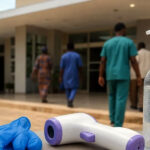
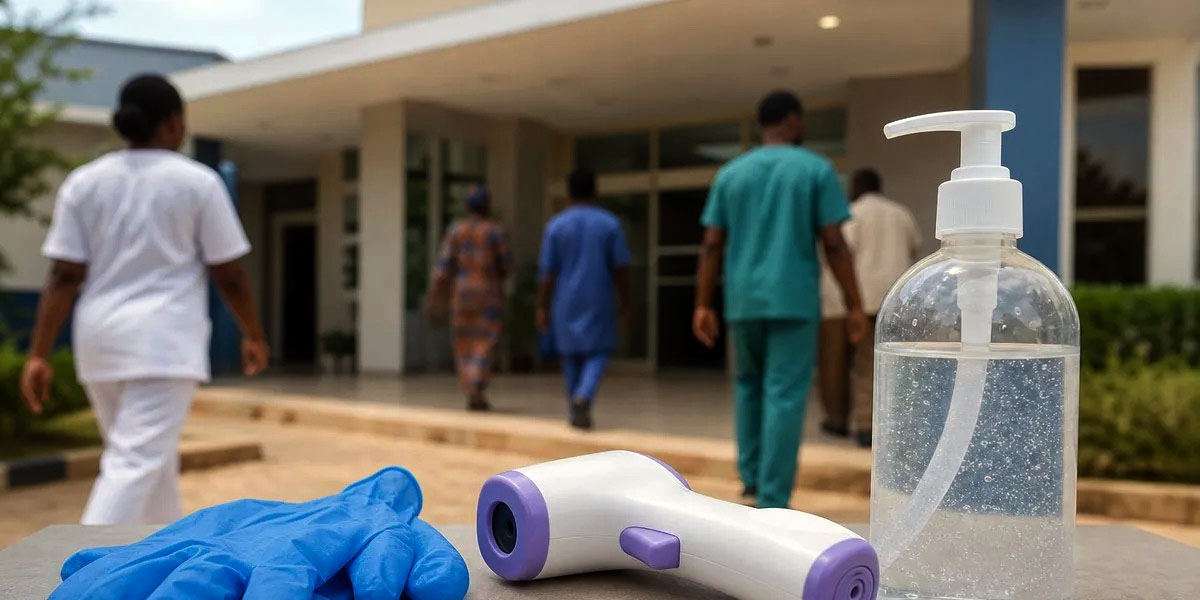
A visit to public facilities in the Federal Capital Territory (FCT) on Wednesday showed renewed attention to hand hygiene, with sanitisers returning to entrances of event centres, hospitality establishments and other locations.
At the Shehu Musa Yar’Adua Centre and Nigerian Army Conference Centre, where several events were held, hand sanitisers were provided at entrances. Other locations visited included Transcorp Hotel and Abuja Continental Hotel, while hospitals in the FCT were also reported to have reactivated handwashing and other infection prevention measures.
Shops selling hand sanitisers have witnessed increased patronage as residents seek additional protection for themselves and their families.
The renewed caution has extended to government offices, airports and other public places, where some Nigerians are becoming reluctant to exchange handshakes or embrace acquaintances. Even at the National Assembly, some lawmakers reportedly avoided handshakes and maintained distances from colleagues.
However, conversations with FCT residents and reactions on social media revealed suspicion about the government’s handling of the infection, with some questioning the timing and credibility of the announcement.
Others expressed unsubstantiated suspicions that the outbreak could provide opportunities for the diversion of public funds or financing of political activities, reflecting a trust deficit that some residents linked to controversies surrounding emergency spending and restrictions during the COVID-19 pandemic.
Although no evidence was presented to support the allegations, their circulation highlights the difficulty authorities could face in persuading a sceptical public to accept health advisories, report possible exposure and cooperate with contact-tracing teams.
Pate, speaking after his meeting with Gbajabiamila, sought to reassure the public that the government was working to prevent further transmission.
“All I can tell you is that we are collaborating with our sister African nation of Uganda. What is important is that we have found this one case. We are doing contact tracing, and we are putting containment measures to ensure that it doesn’t go into our population,” he said.
The minister disclosed that the Nigeria Centre for Disease Control and Prevention (NCDC) had activated its incident management system, with response teams working round the clock and the relevant task force coordinating containment efforts.
“They are working 24/7, and the task force is also active. So we have things in place that gives us confidence that Nigeria can weather through this public health crisis.”
He maintained that Nigeria possessed the institutions and expertise to respond effectively, drawing on its experience in managing previous health emergencies.
Pate assured Nigerians that the government would continue monitoring developments and provide updates as verified information became available. “If the situation changes, we’ll come out and inform Nigerians.”
The assurances came as fresh details emerged about the infected patient, identified by a health official as a diplomat.
During an emergency incident management meeting in Abuja, NCDC’s Director of Public Health Laboratory Service, Olajumoke Babatunde, disclosed that molecular investigations had identified the Bundibugyo strain of Ebola.
“We did three levels of tests, but all were molecular. The strain was Bundibugyo,” Babatunde said.
Another official disclosed that the patient’s condition had deteriorated into “multi-organ failure,” although no further details were provided about her diplomatic assignment.
The patient reportedly arrived in Nigeria on October 5, developed symptoms on October 7 and sought treatment at a private health facility in Abuja on October 11. The Federal Government publicly confirmed the infection on October 20.
Health authorities said she had been isolated and was receiving medical attention, while 44 close contacts had been identified for monitoring.
The Bundibugyo virus causes a severe form of Ebola virus disease for which there is currently no approved vaccine or specific antiviral treatment. Early detection, isolation, supportive clinical care and contact tracing remain essential to limiting transmission.
Meanwhile, Uganda’s Ministry of Health has challenged suggestions that the infection originated in the country simply because the patient travelled through it.
In a statement dated October 20, Uganda’s Director-General of Health Services, Charles Olaro, said preliminary investigations indicated that the woman was a Nigerian national who had travelled to eastern Democratic Republic of Congo (DRC) for business before transiting through Uganda.
According to the ministry, she passed through Uganda without symptoms and developed signs of illness after arriving in Nigeria.
“Travel through Uganda does not establish that infection occurred here. The location of exposure remains under investigation,” the ministry stated.
“We wish to clarify that, as at the time of this statement, Uganda has NO confirmed active Ebola cases.”
Ugandan authorities said Nigeria had yet to provide detailed information about the patient’s travel itinerary and clinical history to assist investigations.
The clarification raised questions about the patient’s movements before arriving in Abuja, although travelling through Uganda does not establish that she contracted the infection there.
The uncertainty has added to demands for greater transparency over the government’s handling of the outbreak and the reported n10 billion Ebola preparedness fund.
Former Vice-President and African Democratic Congress (ADC) presidential candidate, Atiku Abubakar, challenged Tinubu to account for the money reportedly approved in June to support the NCDC and other emergency preparedness measures.
In a statement issued by the Director of Strategic Communication of the ADC Presidential Campaign Council, Phrank Shaibu, Atiku demanded details of the amount disbursed, payment dates, contracts awarded, recipients and equipment or services delivered.
“Ebola is a grave public health threat. Nigerians deserve urgent action, competent leadership and the truth. Instead, the first confirmed case in Abuja has exposed unanswered questions about preparedness, surveillance and the protection of health workers. Tinubu must account for the N10 billion he said would be released immediately in June.
“Where is the money? Publish the amount actually disbursed, the dates of payment, every contract awarded, every recipient and every item delivered. If the money was not released, Tinubu must explain why he announced emergency funding that never reached the people responsible for protecting Nigerians. A press statement cannot replace an audit.”
Atiku also questioned the interval between the patient’s arrival, the onset of symptoms, her presentation at a private hospital and public confirmation of the infection.
“The timeline is damning. The patient arrived in Nigeria on October 5, developed symptoms on October 7 and sought care at a private hospital on October 11. The government did not confirm the case publicly until October 20, nine days after she sought care.”
He alleged that the 44 close contacts were left unmonitored during the period and that private health workers attended to the patient without adequate protective equipment.
The allegations have not been independently established, and the identification of 44 contacts does not indicate when monitoring commenced.
Atiku demanded disclosure of the screening procedures conducted when the patient entered Nigeria, when contact tracing began and what protective measures were provided for medical personnel.
He also questioned the structure of the Federal Government’s Ebola response, arguing that medical experts rather than political appointees should direct containment operations.
“Political titles cannot trace contacts, equip hospitals or save lives,” he declared.
The former vice-president further raised concerns that public health restrictions could be used to discourage campaign rallies or voter participation ahead of the 2027 elections, although he provided no independently verifiable evidence to substantiate the allegation.
His demand for accountability coincided with concerns raised by senators over whether the N10 billion reportedly approved for Ebola preparedness had been released.
During debate on an urgent motion, some lawmakers said the National Assembly had received no official confirmation of the approval or disbursement.
Ali Ndume argued that funds already approved should be released immediately, while Adamu Aliero insisted that Nigeria could not afford to wait for fresh budgetary provisions.
The Senate consequently urged the Federal Government to release emergency funds from the Service Wide Votes to strengthen surveillance, screening, isolation, treatment and other containment measures.
The resolution followed a motion sponsored by Francis Faduyile, who warned that weaknesses in health screening at international airports and other entry points could allow an imported infection to spread.
Lawmakers called for compulsory screening of international passengers arriving through airports, seaports and designated land borders, with enhanced surveillance for travellers who had visited or transited through affected areas within the preceding 21 days.
They also demanded adequate protective equipment, thermal scanners, trained Port Health personnel and functional isolation facilities at entry points and treatment centres across the 36 states and FCT.
Senate President ,Godswill Akpabio, expressed concern over reports that a traveller arriving from Kenya had passed through an airport without temperature checks or other screening procedures.
The Senate further called for the repeal and re-enactment of the Quarantine Act of 1926 to provide a modern legal framework consistent with the International Health Regulations of 2005.
However, lawmakers rejected a proposal for inspection visits to major entry points, preferring to mandate relevant committees to engage government agencies and report back within four weeks.
Similarly, the House of Representatives urged the Federal Government to activate emergency measures and mobilise federal, state and private health institutions to strengthen preparedness.
It also called on the Federal Ministry of Finance to release outstanding appropriated funds to relevant health agencies.
The resolutions followed a motion sponsored by Chairman of the House Committee on Infectious Diseases, Amobi Ogah, who warned that delays in identifying suspected cases, laboratory investigations, isolation and contact tracing could increase the risk of transmission.
“Any delay in identifying suspected cases, conducting appropriate laboratory investigations, isolating confirmed cases, tracing contacts, or providing timely medical care could increase the risk of transmission and place additional pressure on the country’s healthcare system,” Ogah warned.
Meanwhile, Enugu, Oyo, Niger, Gombe and Kano states have intensified surveillance and emergency preparedness to prevent the infection from spreading beyond Abuja.
In Enugu, Commissioner for Health, George Ugwu, said the government had strengthened its Public Health Emergency Operations Centre and intensified surveillance across the state’s 17 local government areas.
He disclosed that screening arrangements around Akanu Ibiam International Airport were being strengthened in collaboration with Port Health Services and other agencies.
“There is currently no confirmed case of Ebola in Enugu State, and the measures being taken are precautionary,” he said.
In Oyo, Commissioner for Health, Oluwaserimi Ajetunmobi, said no case had been recorded but surveillance had been activated across the state’s 33 local government areas.
She said the state began preparations in May following reports of Ebola cases in DR Congo and had strengthened its response through an integrated approach involving health institutions and other relevant agencies.
“Our people should not panic. They should not spread rumours, and they should not ignore signs and symptoms when they see one,” she said.
In Niger, Commissioner for Health, Murtala Muhammad-Bagana, said the state had activated its Public Health Emergency Operations Centre because of the frequent movement of people and goods between Niger and Abuja.
He said no case had been detected, but public and private health facilities had been directed to report suspected infections immediately.
In Gombe, Commissioner for Health, Adamu Danladi Bojude, said the state had activated its emergency response mechanisms and was receiving daily updates from the NCDC.
He said no person of interest had been identified, but the state was working with the Abuja emergency operations centre to identify anyone who might have visited health facilities attended by the patient from October 7.
Identified persons of interest would undergo 21 days of monitoring, while those developing symptoms would be isolated at the Federal Teaching Hospital, Gombe.
In Kano, the Kano Centre for Disease Control directed health facilities to strengthen infection prevention and control measures and maintain heightened vigilance.
Its Director-General, Muhammad Adamu Abubakar, demanded “zero-compromise compliance” with infection prevention protocols and urged clinicians to promptly report suspected cases.
The Nigerian Supreme Council for Islamic Affairs (NSCIA) has also mobilised religious leaders nationwide to support public enlightenment and disease prevention.
In an advisory signed by its Secretary-General, Is-haq Oloyede, the council urged Chief Imams, Islamic scholars and Muslim organisations to use Friday sermons and community engagements to educate Nigerians on Ebola prevention.
It warned against misinformation and stigmatisation, urging cooperation with contact-tracing teams and advising suspected patients to refrain from congregational prayers pending medical assessment.
The developments have revived memories of Nigeria’s 2014 Ebola outbreak, which began when an infected traveller from Liberia arrived in Lagos on July 20.
The outbreak spread to Port Harcourt, producing 19 laboratory-confirmed cases, one probable case and eight deaths.
Health authorities monitored 894 contacts before the World Health Organisation declared Nigeria free of Ebola transmission on October 20, 2014, following 42 days without a new case.
According to WHO, Ebola has an incubation period of two to 21 days and spreads through direct contact with infected blood, other bodily fluids or contaminated materials. Infected persons do not transmit the virus before developing symptoms.
While the renewed use of sanitisers and other precautions indicates that some residents and institutions are responding to the government’s announcement, the persistence of public suspicion presents a challenge to effective containment.
Pate’s assurances that response teams are working round the clock may help address public anxiety, but questions about the patient’s travel history, the timing of detection and the utilisation of emergency funds remain matters requiring clear official explanations.
For the Federal Government, the immediate task is not only to contain the infection through surveillance, contact tracing and clinical care, but also to sustain public confidence through transparent communication, regular updates and demonstrable accountability for resources committed to preparedness.