Follow Us on Google
By Benson Michael
In the heart of Mushin, Lagos, a young boy named Seyi stands barefoot beside his mother’s pepper stall, fanning flies away from a bowl of garri.
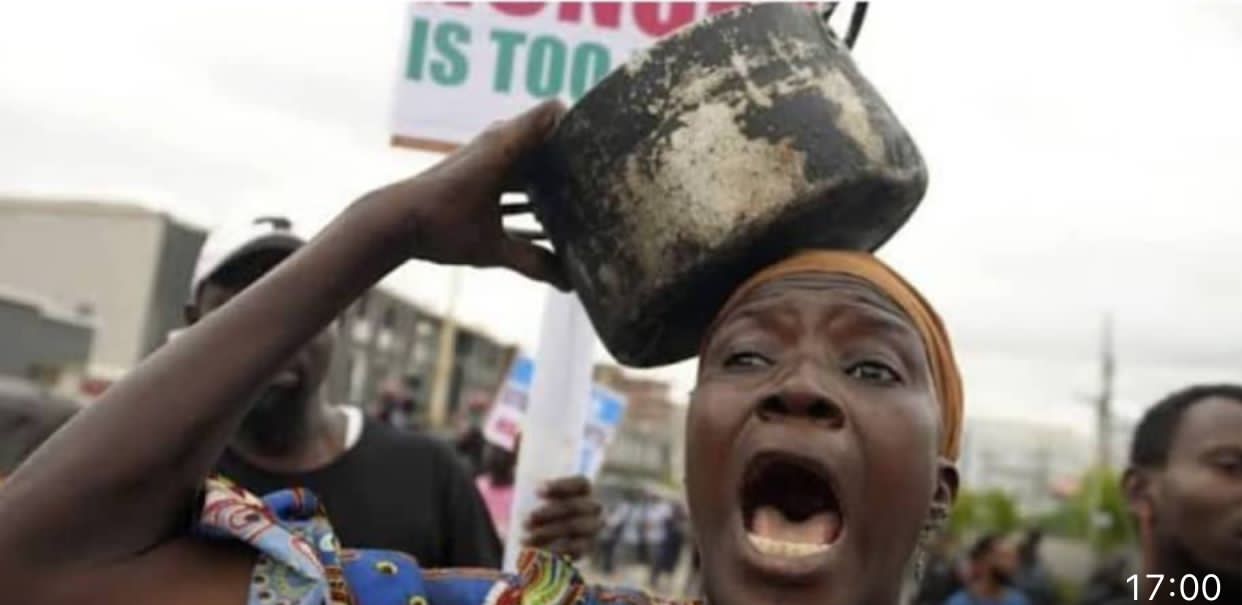
“Mama, I dey hungry,” he says, not with drama, but with the quiet desperation of a child who has learned that hunger is not an emergency; it is routine. His mother, once a proud trader, now measures her day in teaspoons of survival. “Na hunger dey humble lion,” she mutters, echoing a street proverb that has become gospel in today’s Nigeria.
This is not an isolated tale. It is the national mood. According to the World Bank’s October 2025 Poverty and Equity Brief, 139 million Nigerians now live below the poverty line – 61% of the population. In rural areas, 75.5% of residents are affected, while 41.3% of urban dwellers struggle to survive. Average consumption has dropped by 6.7% since 2019, a decline that translates into empty plates, shuttered dreams, and a generation growing up on the margins of hope.
President Bola Ahmed Tinubu’s administration has introduced sweeping economic reforms; fuel subsidy removal, naira floatation, and a 15% fuel import duty; framed as steps toward fiscal recovery. But for many Nigerians, these policies feel like a betrayal wrapped in economic jargon.
Inflation has surged to 31.5%, with food inflation at 37.2%. Petrol now sells for over ₦650 per litre, up from ₦185 in May 2023. Transport fares have doubled, and small businesses report fuel costs consuming up to 60% of their operating budgets. The reforms may be numerically sound, but they are spiritually deaf.
In the markets of Ibadan and the motor parks of Onitsha, the economy is not discussed in percentages. It is felt in stomachs. Traders now sell in cups what they used to sell in bags, and customers haggle not for discounts but for dignity. A bag of rice that once cost ₦8,000 now hovers near ₦50,000, and many families have resorted to skipping meals.
“Na beg we dey beg now,” says a bus driver whose fuel expenses swallow half his daily income. The streets are filled with quiet compromises, where survival is a daily negotiation and hope is rationed like kerosene.
Other News
Dr. Muda Yusuf, CEO of the Centre for the Promotion of Private Enterprise, has been one of the most consistent voices urging caution. He acknowledges the necessity of reforms but warns that “the economic conditions of citizens must be factored into the timing and sequencing of policies.” In a May 2024 interview, he emphasized that while the reforms may be fiscally necessary, they have imposed “severe hardship on households and small businesses” and must be accompanied by targeted relief. Civil society organizations like BudgIT have echoed this concern, stating in their 2025 policy brief that “without transparency and social cushioning, subsidy removal will deepen inequality and erode public trust.”
Even within government circles, unease is growing. Reports from policy analysts and leaked internal memos suggest that ministries are flagging rising malnutrition, school dropouts, and declining access to healthcare. Yet, policy recalibration remains slow. The disconnect between reform architects and street realities has never been wider. While spreadsheets show progress, the streets show pain. And in that widening gap, the soul of the nation trembles, not from lack of patriotism, but from the absence of relief.
Social media has become the nation’s confessional yard, where citizens pour out their frustrations in 280 characters. @64yomide tweeted, “If this is renewed hope, e don expire before it start.” @dunni05 lamented, “Every time I go to the market I just weak. Things that used to be normal are now luxury.” @remzsx wrote, “Nigeria is killing her own citizens. We make money daily yet feel so poor.” And @simplyTEEWHY captured the mood: “Instead of fixing insecurity and hunger, FG dey sponsor propaganda.” These voices are not just complaints, they are chronicles of survival.
The government’s mantra of “sacrifice for a better tomorrow” has lost its rhythm. Sacrifice, when unending, becomes suffering. Fuel, once a basic necessity, is now a taxable privilege. Governance has turned into a numbers game, where citizens are reduced to economic data points. The Nigerian Labour Congress reports that over 40% of workers earn below the minimum wage, while youth unemployment exceeds 50%. These figures are not just alarming, they are indictments.
Contrast this with the legacy of Obafemi Awolowo, a man who believed that the state’s resources should uplift the people, not burden them. His administration introduced free primary education, healthcare for children under 18, and infrastructure projects that laid the foundation for regional development. Under his leadership, literacy rates in the Western Region rose from 35% to over 70%, and child mortality dropped significantly. Awolowo once said, “The worst crime is poverty in the midst of plenty.” Today, that crime is being committed daily.
Insecurity has become a second plague. Over 10,000 deaths have been reported in the past year due to kidnappings, banditry, and communal violence. Even international observers have taken notice. U.S. President Donald Trump recently described the situation as a “slow-motion genocide” targeting Christians in Nigeria. Whether one agrees with the phrasing or not, the global spotlight is now fixed on Nigeria’s unraveling.
The contrast between policy and reality is no longer theoretical, it is visceral. While government officials tout macroeconomic indicators and fiscal discipline, the average Nigerian is measuring progress in skipped meals and unpaid school fees. The disconnect is not just economic; it is moral. And in this widening gap between reform and relief, the question grows louder: who is Nigeria’s progress really for?
The 15% fuel import duty is more than a fiscal policy; it is a moral test of leadership. It forces the question: how much more can Nigerians endure in the name of reform? The cries of #Ebinpawa are not just trending. They are trembling. They are a demand for empathy, for accountability, for policies that reflect compassion and not just calculation. If leadership does not listen, the reform they call progress will become the ruin the people call betrayal. And in that betrayal, history will not remember the spreadsheets, it will remember the sufferings souls lying down on many bedsheets in across our land.