Follow Us on Google
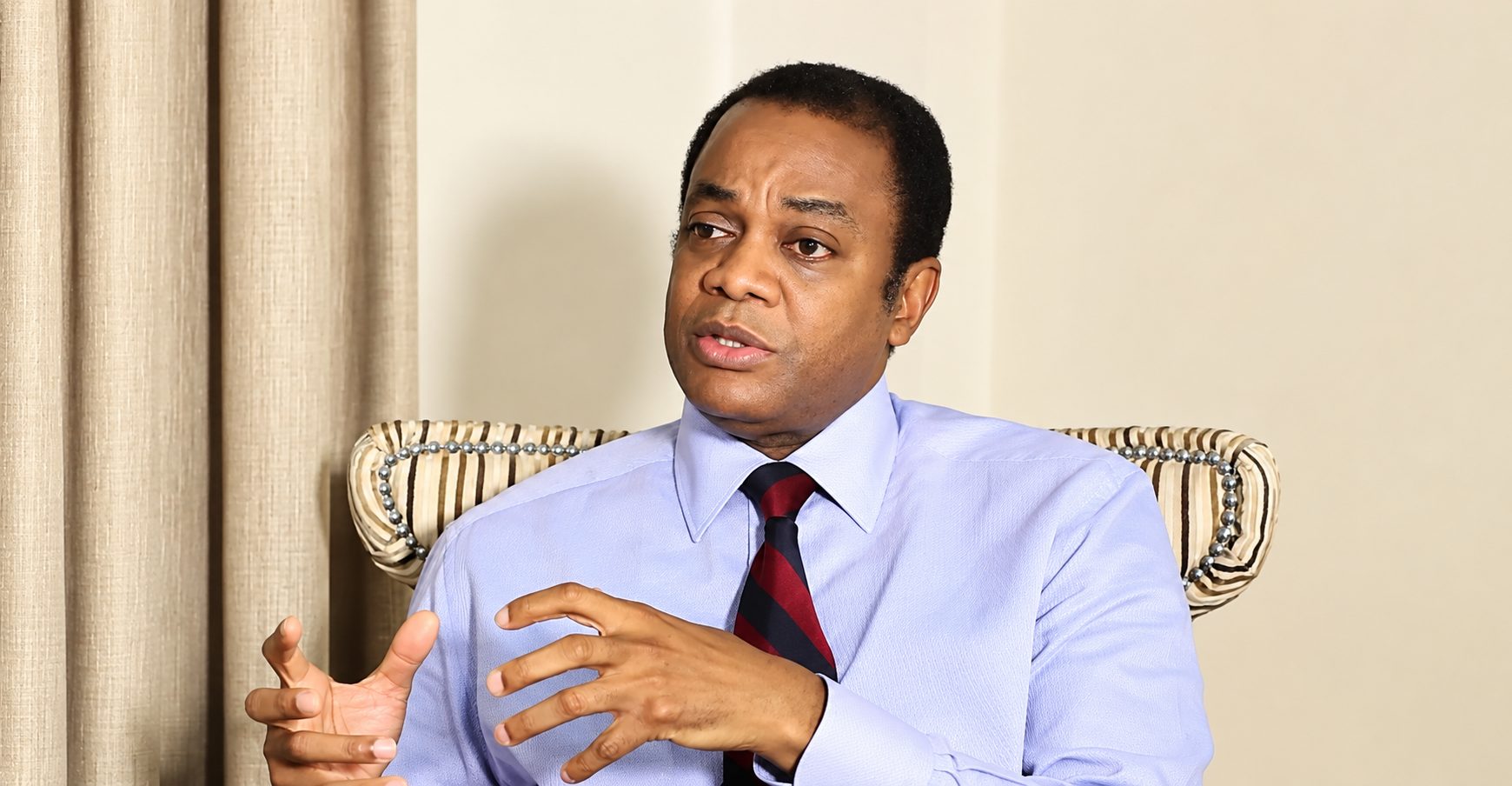
Former Cross River State governor and Peoples Redemption Party (PRP) presidential candidate, Donald Duke, has called for a review of Nigeria’s constitutional requirements for electing a president, arguing that the winner should represent the choice of a majority of voters.
Duke warned that a fragmented opposition could again produce a president who secures more votes than individual rivals but lacks the support of most Nigerians who voted, describing this as a fundamental weakness in the country’s electoral arrangement.
Speaking in an interview, he said the prospect of winning the presidency without a majority mandate made constitutional reform necessary ahead of the 2027 elections.
“This is why we really need to revisit the constitution, because those who put it together probably didn’t understand these fundamentals.”
His position echoes calls by Cardinal John Onaiyekan and the Nigerian Guild of Editors (NGE) for a review of the presidential election requirements to ensure that the winner reflects the choice of a majority of voters.
Citing the outcome of the 2023 presidential election, Duke warned that divisions among opposition parties could produce a similar result in 2027.
“It will still be a minority government. It won’t get the majority of the votes cast on election day. Last time we had about 36–37 per cent. So that scenario may replay itself. It may even be less.”
He argued that a candidate could emerge victorious by finishing narrowly ahead of each rival, even without securing a majority of the overall vote.
“It doesn’t need to get eight million votes. It could just get 10 votes more, five votes more than every other person. And that is one of the faults with the electoral system. It’s not designed for a presidential system.”
Duke said Nigeria’s political actors had not sufficiently understood the differences between presidential and parliamentary democracy, particularly how those differences should shape electoral competition.
“Those of us in the democratic space in Nigeria today really don’t understand how it works. There are different ways of expressing yourselves democratically,” he said.
Explaining the distinction, he said parties without enough parliamentary seats to govern alone could combine their strength to form a government under the Westminster model. “The presidential is different,” he said.
Duke argued that a presidential system worked better with two major political blocs — an incumbent and a united opposition — warning that splitting the opposition vote strengthened the incumbent’s chances. “The important thing is that if you want a proper presidential system of government, you ought to have only two major parties.”
He maintained that an opposition divided among competing platforms would struggle to dislodge the party in power.
Beyond the number of parties, Duke said the absence of clear ideological differences had reduced political organisations to platforms for seeking office and encouraged politicians to move freely between them.
“We don’t have any ideological stance in our politics. They’re just platforms. We have not developed to the point where we stand for certain ideologies. So these platforms are not ideologically based. And that’s why you have people swarming back and forth.”
Other News
He recalled the Social Democratic Party and National Republican Convention experiment of the aborted Third Republic, saying there was “some philosophical correctness” in having two broad political blocs, although he faulted their creation by the military government.
“Normally, parties form governments. But in this case, the government formed the party.”
Duke said electoral reform should be accompanied by a clearer understanding of the purpose of government, which he identified as making citizens productive within a secure and orderly society.
Explaining his affinity with the PRP, he said the party articulated his longstanding belief that “the main essence, the main function of government is the optimal productivity of our citizens within a safe and orderly environment.”
He argued that government should go beyond administering or supervising people and create the conditions in which they could earn a living and prosper.
Education, healthcare and infrastructure, he said, should consequently be treated as investments in citizens’ productive capacity.
“That’s why we send kids to school. That’s why we send them to hospitals. We build infrastructure. All towards the productivity of our citizens.
“That is the mission statement of the government. It changes the way we see the dynamics of government.”
Duke said the same principle should guide the development of Nigeria’s states, with each building an economy around its strengths rather than functioning principally as an administrative unit.
Recalling his tenure as Cross River governor between 1999 and 2007, he said: “We wanted to prove a point that it could happen. We wanted to prove that every federating unit in this country could also be an economic unit.”
He said his administration identified agriculture and tourism as areas in which the state could develop its economic potential.
“We took a low-hanging fruit like tourism, which everyone thought wouldn’t work. And it worked spectacularly. It can be done. That can-do spirit has been proven before.”
Reflecting on one of his administration’s flagship projects, he said: “Tinapa was one thing that we built in Cross River. It was a dream. To the extent that it was commissioned a month before I left office, it was successful.”
Duke maintained that the value of any legitimate economic activity should be measured by its capacity to meet demand and improve people’s living conditions.
“Once you have something that legitimately others want — and the word here is legitimately — then you’re productive. If by preparing Afang soup, we can get our people living a good life, not below the poverty level, go for it.”