Follow Us on Google

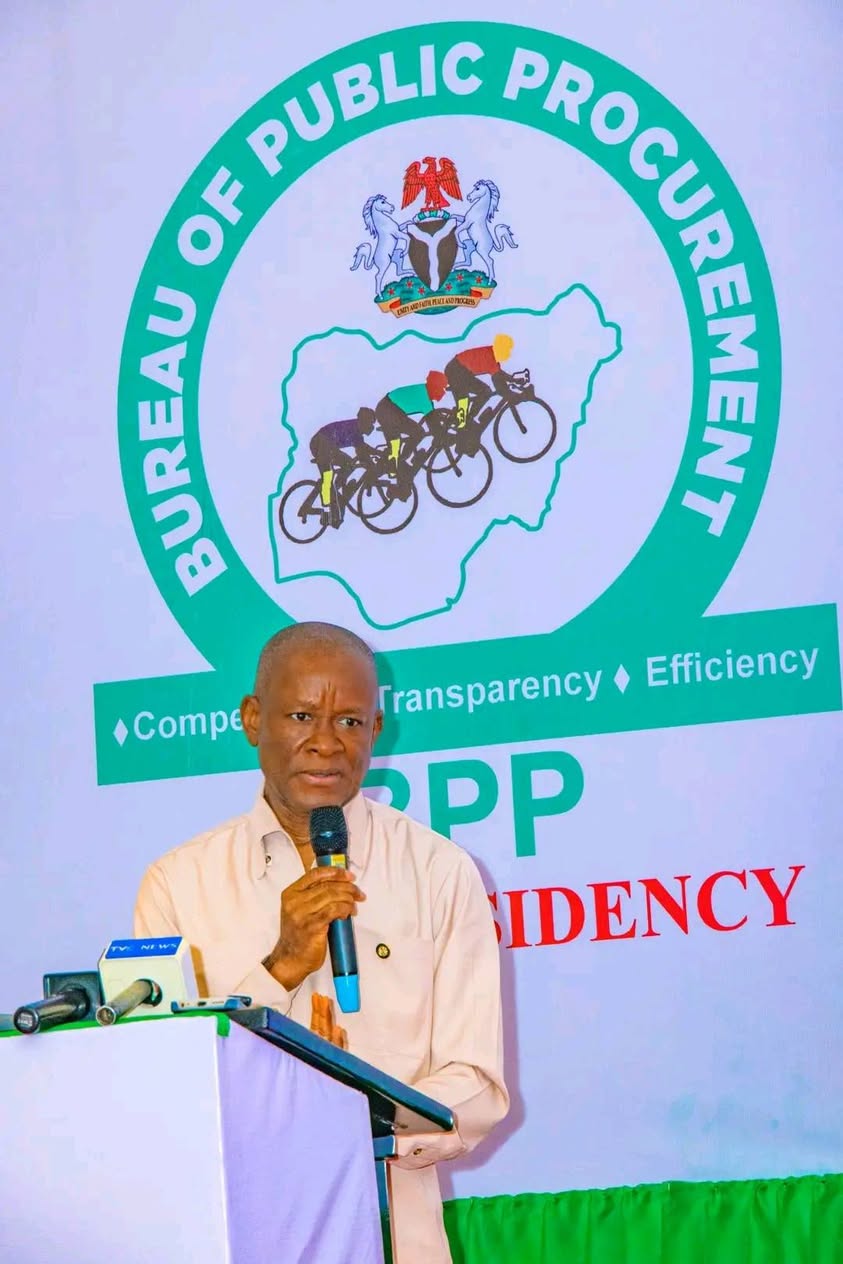
From Okwe Obi, Abuja
The Federal Government has claimed that it lost an estimated ₦17 trillion to abandoned projects.
The Minister of State for Industry, Trade and Investment, John Owan Enoh, represented by the Permanent Secretary of the ministry, Dr Chris Osa Isokpunwu, described project management as indispensable to translating government policies and development strategies into tangible results.
The minister raised the alarm at the 8th annual induction and conference ceremony of the Chartered Institute of Project Managers of Nigeria (CIPMN).
He said Nigeria’s recurring problem of abandoned and uncompleted projects had continued to tie down enormous public resources that could otherwise have been invested in infrastructure, industrial development, employment generation and social services.
According to him, CIPMN has estimated the value of abandoned projects across the country at over ₦17 trillion, while the House of Representatives has also raised concerns over abandoned federal government properties and projects estimated at over ₦20 trillion.
He further cited the findings of the Presidential Projects Assessment Committee, which identified 11,886 ongoing federal capital projects in its 2011 assessment, with an estimated financial commitment of approximately ₦7.78 trillion.
He noted that the figures were drawn from different assessments and periods but collectively demonstrated the scale and persistence of the country’s project implementation challenges.
He stressed that the consequences of abandoned projects extended beyond financial losses, affecting access to essential services, community development and the overall quality of life of Nigerians.
“These are not merely statistics. These represent hospitals that never opened, schools that never welcomed students, roads that never connected communities, and power projects that never met a single goal,” he said.
The Permanent Secretary added that the resources committed to such projects could have transformed lives, created jobs, strengthened local industries and contributed significantly to economic prosperity.
He observed that the inability to complete projects often reflected weaknesses in planning, supervision, accountability and implementation, stressing that the country needed to place professional project management at the centre of its development agenda.
According to him, the challenge confronting Nigeria is not necessarily the absence of policies or development plans but the difficulty of translating them into practical outcomes.
He said the Federal Ministry of Industry, Trade and Investment, under the leadership of President Bola Tinubu, was committed to accelerating industrialisation and steering the country towards a $1 trillion economy.
Isokpunwu explained that the ministry’s strategic priorities were built around four key areas: expanding demand for Nigerian products and services, strengthening domestic industrial capacity, attracting strategic investments, and leveraging data, artificial intelligence and digital infrastructure.
He, however, warned that the objectives could only be achieved if government policies were supported by effective project execution and measurable outcomes.
“Policies alone do not build economies. Projects do,” he said.
He explained that industrial strategies would remain mere aspirations unless they were translated into physical infrastructure, operational factories, functional systems and verifiable results.
He maintained that professional project managers had a critical role to play in ensuring that government investments delivered the expected economic and social benefits.
The Permanent Secretary also underscored the importance of establishing effective project management structures across ministries, departments and agencies to ensure that projects were properly planned, monitored and evaluated.
He said the Federal Ministry of Industry, Trade and Investment had adopted a 90-day implementation reporting cycle as part of efforts to strengthen accountability and track progress in the execution of its programmes.
According to him, the approach was intended to promote regular assessment of project performance, improve transparency and ensure that implementation challenges were identified and addressed promptly.
Isokpunwu said the government expected CIPMN, as the professional body responsible for regulating project management practice, to play a more active role in improving standards across both the public and private sectors.
Earlier, the Registrar of the Chartered Institute of Information and Strategy Management (CIISM), Adelanke Oyintoke, said the collaboration between his institute and CIPMN was aimed at producing competent, ethical and professional chartered managers capable of translating development plans into successful projects.
Oyintoke said the partnership was founded on a shared commitment to professional excellence, integrity and effective project delivery, adding that Nigeria needed more than people with professional qualifications.
According to him, the country requires competent practitioners who possess the technical knowledge, discipline and ethical values to execute projects successfully.
He described the conference theme as timely, given the challenges confronting Nigeria’s industrial and infrastructure development.
Oyintoke argued that the country’s development challenges were not primarily caused by a lack of policies but by weaknesses in execution and implementation.
“Nigeria does not lack policies; we lack execution and excellent project delivery. Every abandoned road, every delayed factory and every failed initiative reflects the consequences of poor project management,” he said.
He maintained that effective project management was essential to ensuring that public and private sector investments achieved their intended objectives.
Oyintoke said the collaboration would help equip professionals with the knowledge and practical skills required to deliver projects on schedule, within approved budgets and in accordance with established quality standards.
He told participants that the training programme was designed not merely to improve their professional knowledge but also to strengthen their capacity to contribute to national development.
“For the next four days, you will not just be trained; you will be transformed. You are being equipped to become the solution Nigeria has been waiting for, the men and women who will ensure projects are delivered on time, within budget, at the right quality, at the right place and at the right time,” he said.
Oyintoke urged the inductees to uphold the values and professional standards of CIPMN, noting that the credibility of any professional institution depended largely on the conduct and performance of its members.
He said the new chartered managers had a responsibility to demonstrate professionalism in their respective workplaces and ensure that projects under their supervision met the required standards.
The CIPMN Registrar-General, Ifeanyi Mbadiwe, said the institute would heavily clamp down on fake people parading as professionals in project management.
Also, the CIISM registrar commended CIPMN for its reported digital transformation, particularly the digitisation of its operational systems.
He described the development as a significant milestone in professional institute administration and an example that other professional bodies could emulate.
Oyintoke expressed appreciation to the leadership of CIPMN for the collaboration with CIISM, as well as to members who made time to participate in the conference despite their busy schedules.
He expressed confidence that participants would find the programme beneficial and urged them to apply the knowledge gained to improve project delivery and strengthen professional practice in Nigeria.
The discussions at the conference highlighted the importance of bridging the gap between policy formulation and implementation, particularly at a time when Nigeria is pursuing industrial expansion, infrastructure renewal and increased private sector investment.
For government projects, these processes are particularly important because delays and abandonment can increase costs, undermine public confidence and deprive communities of essential services.