Follow Us on Google
By Chinelo Obogo
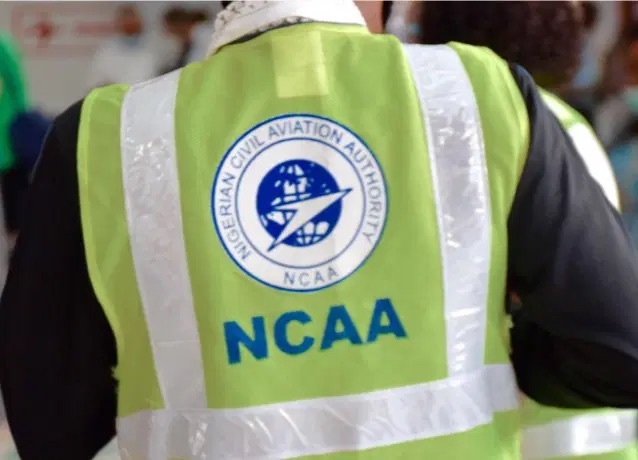
The Nigeria Civil Aviation Authority (NCAA) has debunked concerns raised by Senator Orji Uzor Kalu on the floor of the Senate regarding alleged inadequacies in pilot preparation, claims of substance use among flight crew and lapses in the Authority’s oversight responsibilities.
The Authority in a statement signed by the Director General of the Nigerian Civil Aviation Authority (NCAA), Capt. Chris Najomo, said that while it holds the Senator and the National Assembly in the highest esteem, it was necessary to provide factual clarifications in the public interest.
NCAA said that contrary to the impression created, the regulatory agency maintains a “rigorous and internationally recognized” system for certifying and monitoring the medical and professional fitness of all pilots operating in Nigeria. It said no pilot is permitted to operate a Nigerian-registered aircraft without holding both a valid pilot licence and a current medical certificate, as required by the Nigeria Civil Aviation Regulations (Nig. CARs) Part 8.4.1.4.
It also stated that holders of Commercial Pilot Licences (CPL) and Airline Transport Pilot Licences (ATPL) are, by the provisions of Nig. CARs 2.3.5.1 and 2.3.7.1, required to possess a Class 1 Medical Certificate before they are allowed to operate. These medical certificates, it said, are issued only after comprehensive aero-medical evaluations by NCAA Authorized Aviation Medical Examiners (AAMEs) followed by approval of the medical report by NCAA’s in-house aero-medical assessors.
“The scope of these examinations is extensive. It covers cardiovascular, neurological, psychological, metabolic, respiratory, and visual assessments to ensure that the pilot is fit to operate an aircraft safely. Nig. CARs Part 2.11.2.6(b) details the physical and mental requirements that must be met before a medical certificate is issued.
“The regulation makes it clear that an applicant must not suffer from any disease or condition that could suddenly render them unable to perform flight duties safely. It also screens for the use of psychoactive substances, mental or behavioural disorders, abnormal blood pressure, heart or lung diseases, neurological disorders, and other physiological conditions that could affect safe performance,” NCAA said.
The Authority further clarified that medical certificates are valid for 12 months for pilots under 40 years of age and six months for those aged 40 and above and that at the expiration of these periods, pilots must undergo a new series of medical tests before their certificates can be renewed. In addition to this, , NCAA said that Nig. CARs Part 8.5.1.5 explicitly prohibits any crew member from acting as a flight crew member within eight hours after consuming alcohol, while under the influence of alcohol, or while using any psychoactive substance that could affect alertness, judgement, or performance.
Other News
“In accordance with this regulation, NCAA carries out on-the-spot alcohol or drug testing when there is reasonable suspicion of intoxication. It further authorizes random and unannounced testing for crew members and allows the results of such tests to be used as legal evidence. Beyond the medical certification process, NCAA inspectors conduct daily ramp inspections at airports across the country. These inspections are not limited to aircraft alone; they include direct engagement with flight crew.
“During these inspections, inspectors verify crew licences, medical certificates, and general fitness for duty. Any irregularity is immediately addressed, and appropriate enforcement action is taken in line with the Authority’s zero-tolerance policy for safety violations. Only recently, in August 2025, the NCAA suspended the licence of a ValueJet pilot for initiating departure procedures without proper clearance, an example that underscores the Authority’s uncompromising commitment to safety and discipline. It is therefore inaccurate to suggest that pilots operate under the influence of substances or without adequate checks. The processes in place are not only thorough but also consistent with global standards prescribed by the International Civil Aviation Organization (ICAO),” NCAA said.
The National Association of Aircraft Pilots and Engineers (NAAPE) also waded into the controversy expressing concern over claims made by Senator Kalu.
NAAPE said in a statement on Thursday that the claims are an attack on the reputation of Nigerian aviation professionals and is a misrepresentation of the rigorous safety standards that govern Nigerian aviation operations.
NAAPE said that as the professional body representing all licensed pilots and aircraft engineers in Nigeria, it considers safety as the foremost priority in all aspects of aviation practice. It said that any isolated case of misconduct by an individual, if established, is swiftly met with disciplinary and regulatory action by the relevant authorities.
Speaking on behalf of the association, President of NAAPE, Captain Bunmi Gindeh, stated: “Our members undergo some of the most rigorous medical, psychological, and professional screening anywhere in the world. To broadly generalise and suggest that Nigerian pilots operate aircraft while under the influence of drugs is not only false but deeply unfair to the thousands of disciplined professionals who dedicate their lives to ensuring safe skies. We take great pride in our safety record and remain committed to maintaining the highest standards of professionalism. It is unacceptable to make unsubstantiated claims against a community of professionals. The burden of proof lies with whoever makes such an allegation, and it must be supported by evidence or withdrawn with a public apology.
”The association further invites the distinguished Senator and members of the National Assembly’s Committee on Aviation to engage with NAAPE and other stakeholders to understand the comprehensive safety framework that governs pilot training, certification, and operations in Nigeria.We remain committed to upholding the highest professional standards among our members and will continue to collaborate with regulatory agencies, operators, and international partners to advance safety, discipline, and excellence across all aspects of Nigerian aviation.The travelling public is assured that Nigerian pilots remain among the most competent, disciplined, and safety-conscious professionals globally.”
The body further said that every pilot in the country is bound by strict regulatory, medical, and ethical standards established by the Nigerian Civil Aviation Authority (NCAA), in line with International Civil Aviation Organisation (ICAO) requirements. These standards, it said, prohibit the use of any psychoactive substances and subject pilots to regular and random drug and alcohol testing as part of their medical certification and recurrent assessment processes.
”It is inaccurate to suggest that pilots routinely engage in drug use or report to duty under the influence of such substances. Aviation operations in Nigeria involve multiple layers of oversight, including pre-flight medical checks, recurrent simulator training, random toxicology screening, and continuous monitoring by both operators and regulators. The suggestion that aircraft are being flown by intoxicated pilots undermines public confidence and the hard-earned integrity of Nigerian aviation professionals,” NAAPE said.