Follow Us on Google
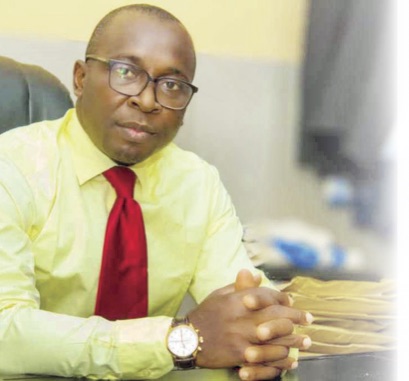
Dr. Joseph Ugboaja is the Chief Medical Director (CMD), Nnamdi Azikiwe University Teaching Hospital (NAUTH) Nnewi, Anambra State. An Associate Professor of Obstetrics & Gynaecology, Ugboaja, a Fellow of the Institute of Management Consultants of Nigeria (FIMCON), is the youngest CMD of NAUTH. He was Chairman, Medical Advisory Committee (CMAC) of the hospital until 2021 when he assumed office as the acting Chief Medical Director.
In this interview with ALOYSIUS ATTAH, Dr Ugboaja talks about the importance of having a strategic vision and commitment to deliver in an institution, the values of team work and staff motivation as well as the place of partnerships and collaboration all geared towards achieving organisational goals and vision.

How has it been driving your vision as CMD of NAUTH?
Our vision when we started was to make NAUTH rank among the top five in the country, but we have changed from that because of the speed at which we have progressed. Our current vision is to be the best in Nigeria and among the top three in Africa by 2030. This vision, like a house is anchored by nine Pillars which we refer to as our strategic pillars
Can you let us into what these strategic pillars are all about?
Our strategic pillars include Infrastructural development, strategic human capital development, acquisition of state-of-the-art equipment and modern technologies, strong corporate governance structure as well as robust financial management. Others include staff welfare and development, partnerships and collaborations, Use of ICT and E-medicine and research and innovation.
We’ve consistently worked along these lines since my assumption of office as the Chief Medical Director. We started by putting together, a strong team comprising individuals with the requisite knowledge and disposition to effect change. This is both at the top management and mid management levels. Our strategic objectives were very clear.
An elaborate discussion on our strategic pillars will not be possible here but I will briefly discuss 2 key pillars. These are infrastructural development and strategic human capital development.
Under infrastructural development, our goal was to muster the infrastructure that will enable us achieve our vision. Basically four types of infrastructure are involved. These include the physical infrastructure, the power infrastructure, digital infrastructure and the transport and utilities. The physical infrastructure creates the ambiance necessary for the attainment of our goal and includes the buildings, the roads, drainages, green areas, parks. As you must have seen, the permanent site is laid out in the form of a medical megacity different from the traditional hospital setting. It’s design that makes the hospital look more like a home both for the patients and the care givers. The well laid out lawns, roads and buildings also provides a good ambiance both for healing and for the optimal performance of the staff.
The strategic objective in our power infrastructure is to deploy an efficient power solution that will guarantee sufficient power supply to the site in a sustainable and cost effective manner. We are working along four thematic areas. These include augmenting the supply from EEDC, procurement and installation of a gas turbine; power production from diesel generators as well as captive energy solutions as sun exposure is high at the perm site. The objectives of our Human Capital Development pillar is to recruit, train and retain the staff needed for the execution of this vision. These include both the clinical and non-clinical staff. We recognise that human resource is the greatest asset for any organisation. The idea of building a medical megacity is to serve as a centre for medical tourism. This requires therefore, the acquisition of the relevant skills and knowledge to distinguish the centre from the other hospitals. The permanent site will be run on the basis of centre of excellence to offer topnotch services in selected areas of practice. In addition to the training and retraining of our staff to acquire up-to-date knowledge and skill to do their job, there will also be leadership and management training to boost the capacity of the management staff towards the execution of the vision. There will also be regular training for the staff on attitudinal change and related topics. On Human Capital Development, to me, the best asset any organisation can have is the human capital. This is because If you get all the machines , build all the infrastructure and the human beings are not giving you the commensurate services, you will not succeed because that is all about what the patient goes home with. So for that reason, we are paying close attention to human capital development which starts with recruitment. Our policy in human capital management is to recruit them, develop them and try to retain them So far, we have recruited over 700 staff including consultants and we have conducted a lot of capacity building trainings and workshops for them.
The permanent site project is a humongous project which your predecessors could not achieve. What gave you the conviction that it was doable within the shortest time frame?
Sometimes I pause and ask myself such questions too, but I think the basic thing is to have a vision as a leader. If you have vision as a leader a whole lot of things will fall into line but if you don’t have a vision, it becomes difficult because the challenge as you said is humongous, intimidating and daunting but being visionary has a way of generating positive energy and enthusiasm. The truth of the matter is that I know we are going to make progress but if I tell you that I had envisaged the rate of progress to be like this, then I’m not telling you the truth. I never believed that in less than two years into that office, we will be commissioning the permanent site with all those buildings in place.
But that is where the God factor comes in, when you think that something is not feasible, God comes in and gives you the way. That is essentially what happened in this case. A large part of our success story comes from collaborating and partnering with individuals and agencies, and most of these are provided by God. That is the honest truth.
The other point that has helped us is that we have a good team. People who understand the vision and have the capacity, knowledge and disposition to achieve this vision.. I’m lucky that I have men on ground who are as passionate, if not even more passionate, than I am about that permanent site, starting from the physical planning unit, clinical services, works dept and others. That is why I talk about strong corporate governance structure. Once you have the will, there will always be a way. I’ve been in the management even before the last administration and I’ve seen the whole place and what it is and I know it is not something that is not doable. All we need is the will, the hard work to grind it out and of course God, and it happened. I also think that God saw our hearts and the genuine intentions of improving the place and he caused a whole lot of things to happen for us. I also believe that, just as it is in the Bible, there comes a time when God wants his people to move and He will bring people from the North, South, East, and West to assist them. I think the permanent site and the new NAUTH is God’s project and we remain eternally grateful and return all glory to him.
How much do you value team work?
You cannot prosecute a vision without a team. Team work is at the heart of successful execution of any vision because a vision must have to be shared and like I always say, a vision that is not shared is a dead vision. You have to share that vision with your team. As a visionary leader, I cannot even do without a team but the major thing is how well is your team working and how well are you organising the team? These are dependent on your style and other factors. Team dynamics are not easy too but once you understand that you need a team and you have to work with a team, you try to keep that team together. Then of course as a leader, we try to listen because if you listen, it’s better for you and all that. I believe in team work and of course, we couldn’t have achieved what we have today without a team. In the health sector, we are a heterogeneous people and there is need to involve everybody. Like I told you earlier, one of the first things we did was to put together a strong team for the execution of this project. Within the team are members of management, clinical and non-clinical staff, Engineers, architects, quantity surveyors, builders, horticulturists, etc. We equally engaged qualified and capable consultants.
How have you been able to attract corporate bodies and public-spirited individuals into your projects?
One of our strategic pillars is partnership and collaboration. The strategic objective of this pillar is to mobilise stakeholders, partners and agencies towards the achievement of our vision. This may be by way of resource mobilisation, donation of projects, equipment or technologies or assisting us in skill acquisition. Having done our stakeholders and agency mapping, all we needed to do was to muster the right strategies to engage them. Again, God did for us.
You have a smooth working relationship with your Board Chairman and other board members unlike in some places where it’s a ding-dong affair. Is this also part of your success strategy?
The Board is the foremost stakeholder in the hospital and then highest decision making body. So I prioritised the engagement with, and support of the board as a strategic tool. As a Chief Executive Officer, if you don’t have the support of the board, you may not be able to do much. The strategy is to get the board on the same page with us in our quest to achieve this vision. We are lucky to have a Board Chairman who is equally passionate about the movement of the hospital to the permanent site. So that made it easier for both of us to forge a good working relationship and we’ve become more like family and blood brothers instead of working partners and it’s been so good and cool working with him. The Board Chairman, Chief Ezekiel Afukonyo is a good man and I give it to him. I’ve enjoyed the cooperation of the other board members and have had a good relationship with them.
One very big minus in public health institutions is the seeming lackadaisical attitude of some health workers. Some do the work as every man’s business without commitment. How did you overcome that in NAUTH?
There was a time the narrative in town about our hospital wasn’t good at all. In fact if you say then that you want to take somebody to this place, the person might choose to die at home than come here. It was that bad before we came but now the narrative has changed sufficiently and I will tell you how and what changed it. When I came, I noted two things- the working condition in the hospital was very harsh on the staff, secondly, staff welfare was at the lowest ebb. There were many of our people who have gone ahead to acquire higher degrees but they were not converted many years after getting the degrees. The person is sad, his friends are sad likewise his relations because of the situation. So, we addressed those two points immediately by ensuring that some of them who are due were promoted. We tackled the physical environment, put the air-conditioners in the right places and made the environment better and conducive for the staff. But the game changer was their welfare. We had to identify those people who had additional qualifications but have not been able to move on, including those due for promotion, and we effected those change of levels. That opened a new vista of opportunities and their morale was boosted. They became happy and they identified with the system. What happened before was a case of lack of ownership. There was a detachment, in fact, opposition in the system because then, they saw the system as oppressing them and were opposing the system. But when we addressed their pains, brought them back into the system through the conversion, the system accommodated them, improved their welfare and with the promotions, they became happy and in turn they identified and integrated into the system and so the attitude to work became a lot better. Nothing beats a staff that is motivated. And when they went to permanent site and saw what was happening there, they became happy and have hope too that this particular management is moving them to a new positive dimension. There is a new feeling among staff which also bears on how they do their work now. I’m not saying that all of them are now saints but generally speaking what we have done as a management is to put a team monitoring to ensure that they do what they are supposed to do. But my approach as a leader usually is to give them the best first before you even expect them to give you the best. You don’t give them stress when you know you’ve not done anything to improve their lot. Usually we give you everything you need, make you comfortable, and then we now demand that you do your job very well by monitoring you. For now, if you are not doing your job properly, you don’t have any excuse because the system has tried to help you. In fact, promotion we do now is point to point promotion in so far it is covered by the public service rules. The narrative and the attitude is changing. But like I said, we need to train them the more because if you must become the best in the country, it’s not a mean feat as everybody has to be on his feet. A whole lot of trainings will come up this year in terms of attitudinal change, performance enhancement, patient management and communications skills etc.