Follow Us on Google
By Damiete Braide
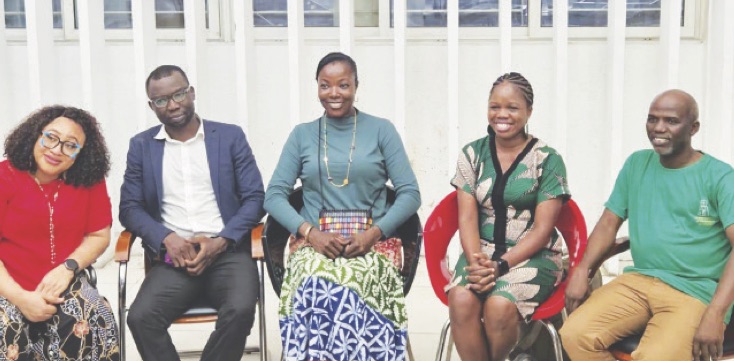
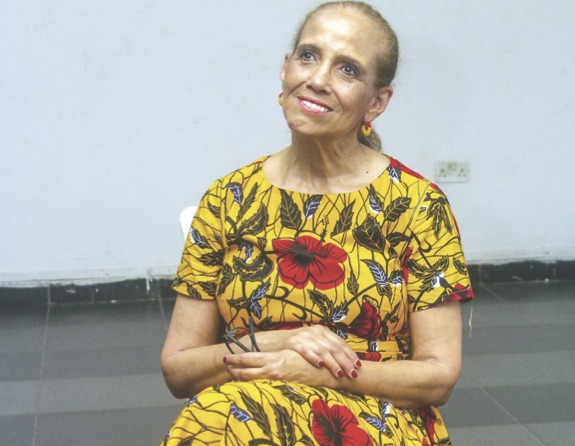
At Freedom Park, a historic cultural hub on Lagos Island, art, history, and memory converged as Dorothy Davis, daughter of renowned photographer, Griffith J. Davis, engaged students and members of the creative community in a deeply personal and reflective conversation. The occasion was her exhibition, Walking Towards Freedom and Independence Across The Diaspora (1940–1961), a curated collection of her father’s powerful photographs documenting pivotal moments in African and diasporic history.
Speaking in an interview with Damiete Braide, Dorothy Davis shared vivid recollections of her childhood, her experiences during the Nigerian Civil War, and her ongoing mission to preserve and promote her father’s extensive archive of historical works.
Childhood across continents
Dorothy Davis describes herself as a global citizen shaped by a childhood that spanned continents. Born in Liberia while her parents were stationed there, she later lived in Tunisia, the United States, and eventually Nigeria. Despite being an American citizen, her upbringing was far from conventional.
Her father, Griffith Davis, was not only a pioneering African American photographer but also one of the first Black officers in the United States Foreign Service. His career took the family across regions, exposing Dorothy to diverse cultures from an early age.
“We first lived on Awolowo Road in Lagos,” she recalled, referencing one of the city’s prominent neighborhoods. “That was my introduction to Nigeria during the war.”
Her memories of Lagos during the civil war years remain vivid and, at times, surreal. One morning, she woke up to find part of an aircraft wing in her backyard, an image that captured the stark reality of a country at war, even for a teenager.
“There were checkpoints everywhere. Soldiers with loaded guns would search our car. It was frightening,” she said. To ease tensions, her father often carried cigarettes, offering them to soldiers as a gesture of goodwill to ensure safe passage.
Due to the war, normal life was disrupted. Dorothy and her siblings were unable to attend school in Nigeria, prompting their relocation to Switzerland. Travel itself became complicated, as flights could not land in Lagos at night. The family would journey through Accra, spending the night before continuing to Lagos the next day.
Despite the upheaval, she maintained connections with Nigerian friends and communities. Her father insisted on cultural immersion, discouraging any sense of detachment or superiority tied to their American identity.
“He told me, ‘If I wanted you to be American, I would have left you in America. I want you to meet people and make friends,’” she said.
War, identity and perspective
Dorothy’s experience during the Nigerian Civil War profoundly shaped her worldview. She recalls listening to broadcasts by the late Chukwuemeka Odumegwu Ojukwu, whose voice became a defining feature of that turbulent period.
As a young person, she struggled to understand the complexities of geopolitics and economics, including why the US dollar held more value than the Nigerian naira. These questions sparked an early curiosity about global inequalities and power structures.
Her exposure to colonial dynamics also left a lasting impression. Encountering British expatriates in Lagos influenced her perception of colonial attitudes, leading her to question historical narratives and global power relations.
“I felt the war was prolonged by outside forces,” she noted, adding that such reflections shaped her political consciousness around issues of oppression and communal identity.
Returning to Nigeria decades later, Dorothy says she feels a deep sense of belonging. “I feel at home here. The energy of the people is the same. The traffic is heavier now, and there are more high-rise buildings, but the spirit remains. I feel more comfortable here than I do in the United States.”
Preserving a legacy
Dorothy’s current visit to Nigeria is driven by a singular mission: to preserve and showcase the life’s work of her father. Since his death in 1993, she has dedicated herself to organizing and interpreting an archive that spans decades and continents.
“I discovered the breadth of his work and realised how historically significant it was,” she said. “These photographs tell stories of countries, people, and events that shaped our world.”
Without substantial financial backing, the task has been daunting. Yet, her commitment remains unwavering. She views the archive not just as a family inheritance but as a global historical resource.
Among the discoveries that fueled her journey was a letter from Kwame Nkrumah, Ghana’s first president, addressed to her father. That moment underscored the depth of Griffith Davis’s involvement in documenting Africa’s independence movements.
Since then, Dorothy has painstakingly worked to arrange her father’s materials, photographs, writings, and correspondence, while preserving his original organisational system to better understand his thought process.
Untold stories of the Diaspora
The exhibition at Freedom Park highlights what Dorothy describes as the “untold stories of the diaspora.” Through her father’s lens, audiences encounter a visual narrative of Africa’s journey toward independence, as well as the broader struggles of Black communities worldwide.
Griffith Davis’s work extends beyond photography; it is a fusion of visual storytelling, journalism, and diplomacy. His images are often accompanied by written reports and articles that provide context, enriching their historical significance.
“These photographs are not just images,” Dorothy explained. “They are part of a larger narrative that includes correspondence and documentation. Together, they tell a more complete story.”
Her ability to interpret this archive is deeply personal. Having grown up alongside her father, she understands the context in which many of the photographs were taken.
“I can connect the dots because I lived through some of those experiences,” she said. “It allows me to bridge the past and present.”
A life behind the camera
Griffith Davis’s journey began in Atlanta, where he was born on the campus of Morehouse College. Growing up in the segregated American South under the Jim Crow laws, he witnessed firsthand the realities of racial discrimination.
Photography became his voice during a time when speaking out could be dangerous. As Dorothy noted, “He used his camera to say what he could not say openly.”
During World War II, he served as a photographer for his infantry unit, capturing images that documented the war from a unique perspective.
After the war, he pursued further education and eventually enrolled at Columbia University Graduate School of Journalism. At the time, the institution admitted only one Black student per year, making his acceptance a significant achievement.
His career took a pivotal turn when he became the first roving editor for Ebony Magazine, a role that allowed him to document key moments in the civil rights movement.
He maintained close ties with influential figures such as Langston Hughes, who not only mentored him but also supported his academic pursuits. Through these connections, Davis gained access to historical moments and personalities that would define his career.
Documenting Independence
One of the highlights of the exhibition is Griffith Davis’s documentation of Africa’s independence movements, particularly in Ghana. His photographs capture Ghana Independence, offering rare insights into the celebrations and political developments of the time.
Dorothy recounted a remarkable journey her father undertook at the invitation of Liberia’s president, which brought him into close contact with Kwame Nkrumah. The resulting photographs reveal a more intimate side of the Ghanaian leader, showing him relaxed and candid, images rarely seen by the public.
The exhibition also features moments involving global figures such as Richard Nixon and Martin Luther King Jr.. One notable photograph captures an early interaction between Nixon, then US Vice President, and King —an encounter that held significant political implications during a time of racial tension in the United States.
Dorothy explained that some of these images were suppressed or underreported due to their sensitive nature. “These moments would not have been easily accepted at the time,” she said. “But my father documented them.”
The message behind the exhibition
The title Walking Towards Freedom and Independence Across The Diaspora reflects a broader theme of resilience and transformation. Dorothy intentionally selected photographs that depict key figures before they became globally recognised leaders, offering a more nuanced understanding of their journeys.
Her father’s work includes images of Nnamdi Azikiwe during the early stages of Nigeria’s political development, as well as documentation of constitutional conferences that shaped the country’s path to independence.
“These photographs show history in the making,” she said. “They capture moments before they become monumental.”
In addition to visual materials, the exhibition incorporates written documents, including speeches and reports, providing audiences with deeper insight into the historical context.
Continuing the Work
Despite the progress made, Dorothy estimates that she has only processed about 10 percent of her father’s archive, which includes approximately 55,000 images across multiple categories.
Her goals moving forward are threefold: securing funding to complete the archival work, educating younger generations about historical narratives, and sustaining the project through exhibitions and sales.
“I want young people to understand their history,” she emphasised. “At many levels, we are not taught the full stories of our countries.”
Beyond preserving her father’s legacy, Dorothy is also building her own path. Through her company, she continues work in international development communications, drawing inspiration from her father’s approach to storytelling.
“The two connect,” she said. “I take what he did and apply it to what is happening now.”
A Living Archive
While Dorothy does not consider herself a photographer, her life has been shaped by the medium. With a background in broadcasting and film, she understands the power of visual storytelling and documentation.
“I may not take photographs like my father, but I document in my own way,” she said.
Her work ensures that Griffith Davis’s legacy remains alive—not just as a collection of images, but as a dynamic archive that continues to inform and inspire.
At Freedom Park, as visitors move through the exhibition, they encounter more than photographs. They engage with history, raw, complex, and deeply human, seen through the eyes of a man who used his camera as both witness and weapon in the fight for freedom.
And through Dorothy Davis’s dedication, those stories, once hidden in boxes, are finally finding their place in the world