Follow Us on Google
•Nigeria yet to adopt 25% reduction policy after 6 months
By Chinelo Obogo
In June 2025, the Economic Community of West African States (ECOWAS) took a decision to reduce passenger and aviation security charges by 25 per cent following surging air ticket prices across the region. Earlier on, the African Airlines Association (AFRAA), released the report of a study in 2024 which ranked the continent as the most expensive in the world to fly from, with international departures averaging $109.5 in taxes, charges and fees, and Nigeria featuring in the global top 10 most expensive countries on this measure.
At its 68th ordinary session held in Abuja in December 2025, ECOWAS took the June 2025 decision further by formally directing member states to enforce the cut. In its communique, the body said member states must eliminate ticket, tourism and foreign travel tax, and cut the Passenger Service Charge and the Security Charge by 25%.
Any Supplementary Act from ECOWAS should ordinarily be binding once adopted, but member states of which Nigeria is one, still need to amend their laws and policies to ensure uniform application, and airlines are expected to pass the savings on to passengers through lower fares. Implementation is then monitored through a new Regional Air Transport Economic Oversight Mechanism.
On paper, ECOWAS’s reform took effect January 1, 2026, but six months later, many member states have still not integrated the Act into their laws and without that, airlines can’t push the changes into their pricing systems. Though countries like Côte d’Ivoire have formally written the 25% reduction into their laws, the likes of Ghana and Nigeria haven’t implemented it. In fact, at the Annual General Meeting in Brazil this month, the International Air Transport Association (IATA), the Regional Vice President for Africa and the Middle East, Kamil Al-Awadhi, said Nigeria is one of the most expensive and challenging countries in the world for airline operations, citing high taxes, charges, and other operational costs that continue to weigh heavily on the sector. He noted that despite reform efforts led by the Minister of Aviation and Aerospace Development, Festus Keyamo, excessive charges and tax burdens across the aviation value chain have made it difficult for airlines in Nigeria to remain competitive, profitable, and sustainably viable.
IATA named Nigeria alongside Angola, DR Congo, Ghana, and Kenya as countries where aviation-related charges remain above the global average. It said the high cost of aviation charges has pushed up airfares, weakened demand, and limited connectivity across African aviation markets, urging full implementation of the ECOWAS December 2025 decision to eliminate aviation taxes and cut select charges by 25%
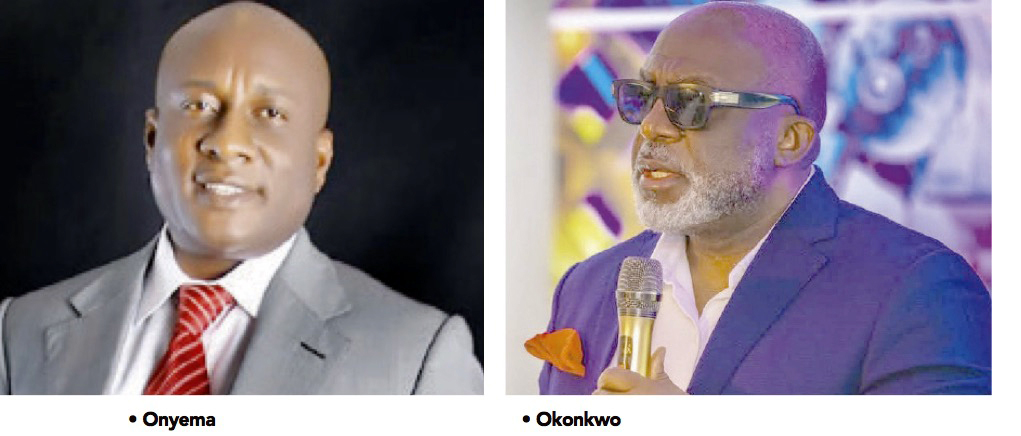
IATA’s comments align with what Nigerian airlines have long railed against. For the longest time, the Airline Operators of Nigeria (AON), has spoken out over the charges and taxes they have had to pay, urging the federal government to cut them down so airlines can become more profitable. Again, this stance was reiterated by the Chief Executive Officer of Air Peace, Allen Onyema, who aligned with IATA’s stance that one of the toughest places to open an airline is Nigeria.
In an interview on Arise TV this week, Onyema said over the years, airlines in Nigeria have been crying to governments to cut down on what he described as excessive charges. He said the problem with Nigeria is that since the deregulation of the airline industry in the early 80s, people have come to look at airline owners as those who are just there to make money and that they think if they make business easier, the airline owners will make more money.
He said: “Aviation is a catalyst of national strategic importance. There is no UAE without Etihad and Emirates. They might not be making money for themselves, but they are doing other things that engineer the ecosystem to make money for the country.
“That’s what they are doing. Every country does that. They support the airlines. During COVID, America donated billions of dollars to its airlines. Maybe the least any airline got was about $5 million, just to help them recover. For the entire 34 airlines in Nigeria, we are given N4 billion, that is less than $2 million dollars for all the airlines in Nigeria. Some airlines got only N8 million, so tell me what you’re going to do with that.
“Over 70 airlines have come and gone in this country. Nigeria has the highest mortality rate of airlines worldwide. That’s not complimentary. We keep on complaining, and nobody is listening to us. Thanks to this government, which has at least come in to do this Cape Town thing. The government is trying to establish a leasing company now. Thanks to President Bola Tinubu and the aviation minister, Festus Keyamo who is working around the clock to make that happen.
Other News
“But the way it is now, if those charges are not reviewed, airlines will continue to struggle in this country. The International Civil Aviation Organization rules that it must be cost recovery. They don’t use airlines to raise revenue for the nation. Airlines are not used to raise revenue directly, but indirectly. Taxing airlines directly to raise revenue for the government is something that is very bad.
“The time has come, and I believe this government will listen. We are seeking an appointment with the president, and we think the president should see us and hear from us. We appreciate what this government has done for us, but it needs to listen more to us and get to know the pain points that are hitting these airlines. If any airline goes down, banks will take a hit, and it will create massive job losses. A lot of people will be thrown into the unemployment market, and, of course, you don’t know who will be the next robber, the next suicide bomber, the next kidnapper, and all that. You’ll be promoting insecurity the other way.
“We need to sit down with Mr. President and tell him face to face what our problems are. We don’t want anybody to go between us and him. We want to sit with our minister, who is very progressive, then sit down with the president, and tell him the honest truth. What is the truth? The truth we have to tell the president is this: the five percent passenger TSC that they charge the airlines, they will tell you, “Oh, it’s the passengers that pay it.” We refuse to accept it. We refuse to accept it.
“If I charge N100,000, the NCAA will take five percent, if I charge N200,000, the NCAA will take five percent of N200,000. I didn’t set up business with you, because aviation itself does not yield a five percent profit margin, but they tell you, “Oh, it’s the passengers that pay it.” No, they take it from the passengers. We want Mr. President to set up an aviation taxes and charges review committee. It is very important so that it doesn’t look as if we are trying to fool the government. Let the government select technocrats, people from aviation, and then some of us from the airline industry.
Set up an aviation taxes and charges review committee to look into the charges that airlines have long complained are responsible for the demise of airlines in this country.”
Onyema who is the Vice President of the Airline Operators of Nigeria (AON) is not alone in his plea for a review of the taxes and charges that airlines pay and for more support for operators. The executive chairman of United Nigeria Airlines, Prof. Obiora Okonkwo, who is the spokesperson of the AON also echoed the same sentiments. At the unveiling of two of the airline’s newly acquired Boeing 737-800NG aircraft in Lagos, he called for improved access to affordable financing for domestic operators, saying that borrowing at high interest rate constrains expansion and fleet acquisition efforts.
“We would like to see policies that provide access to single-digit interest loans for aviation operators. As things stand today, loans from commercial banks are extremely expensive, making it difficult for operators to invest and grow their businesses,” he said.
He also appealed for revenue generated from aviation agencies to be left alone which he said would help address longstanding operational and infrastructure challenges. According to him, the current practice where aviation agencies remit 50 percent of their earnings to the federation account, leaves regulators and service providers with insufficient resources to carry out their responsibilities effectively.
“We are telling the government that until aviation revenues are retained within the aviation agencies, the sector will continue to face serious challenges. The money accrued to the NCAA should remain in NCAA accounts. The money accrued to FAAN should remain in FAAN accounts. I say this because it is no secret that a significant percentage of the revenue generated by these agencies is remitted to the Federal Government. This leaves the agencies with limited resources to perform their duties and develop critical infrastructure,” he said.
He further noted that aviation contributes far beyond passenger transportation as the industry supports strategic sectors that are vital to the Nigerian economy.
“Consider the role aviation plays in the economy. Much of the oil and gas industry, particularly offshore operations, depends on aviation services to transport personnel and equipment. Without aviation support, many of these activities would be difficult, if not impossible, to sustain.
“When we talk about aviation, we are not merely talking about the business sector. We are talking about a critical component of national development. This includes all the operators and service providers whose activities support key sectors of the economy. If these issues are addressed, the aviation industry will be in a much stronger position to contribute to economic growth and national development,” he said.