Follow Us on Google
• CBN injects $250m; naira dips 0.1% w/w • Reserves hit $45.44bn
By Chinwendu Obienyi
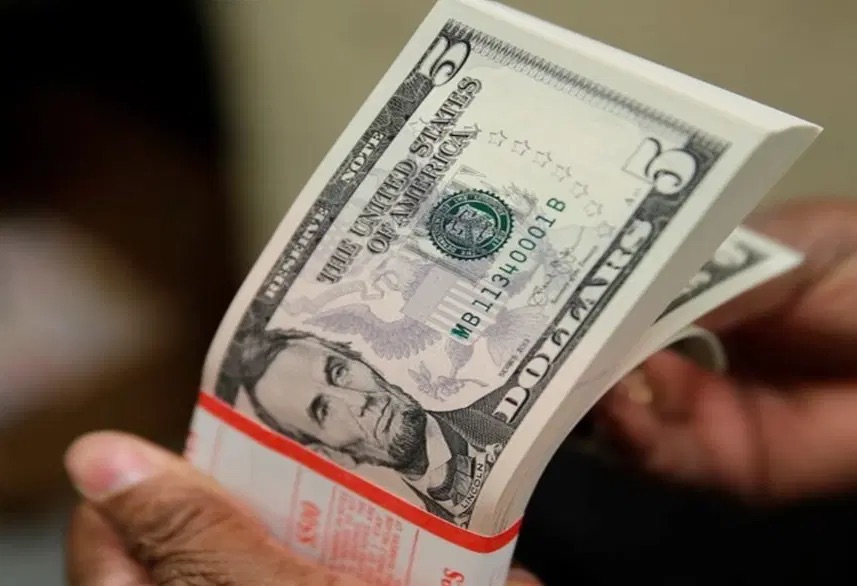
Dollar demand in Nigeria’s foreign exchange (FX) market has risen as year-end “Detty December” spending intensified, exerting mild pressure on the naira despite sustained interventions by the Central Bank of Nigeria (CBN) and rising external reserves.
The naira depreciated by 0.1 per cent week-on-week to N1,456/$1, as demand pressures offset a $250 million FX injection by the apex bank and inflows from offshore investors.
Data from the apex bank showed that Nigeria’s gross external reserves increased for the 25th consecutive week, rising by $396.84 million to $45.44 billion as of December 11, reinforcing investor confidence and strengthening the country’s external buffers.
In the forwards market, the naira rates depreciated across the 1-month (-0.4 per cent to N1,485.97/$1), 3-month (-0.5 per cent to N1,536.28/$1), and 6-month (-0.9 per cent to N1,599.70/$1) contracts, while it appreciated on the 1-year (+0.3 per cent to N1,726.89/$1) contract.
Market analysts attributed the renewed pressure on the naira to seasonal dollar demand associated with holiday-related imports, increased international travel and year-end corporate settlements, a trend typically observed during the festive period popularly referred to as “Detty December.”
A report by the Financial Markets Dealers Association (FMDA) research unit noted that while December often sees heightened FX demand, it could also provide support for the naira through improved foreign-currency inflows. The report highlighted increased diaspora remittances, inbound travel and tourism spending as factors expected to enhance FX liquidity and exert mild appreciation pressure on the currency later in the month.
The foreign exchange market posted mixed performance in November, with the naira depreciating by 1.73 per cent month-on-month (m/m) at the official window to close at N1,446.74/$1, compared with N1,421.73/$1 at the end of October. Analysts said the reversal followed a period of relative stability driven by improved FX supply and easing inflationary pressures, but was undermined by rising seasonal demand and external headwinds.
External factors, including a stronger US dollar amid renewed US–China trade tensions and tariff expectations, further compounded pressure on emerging market currencies, including the naira.
The weakening occurred despite supportive domestic measures. The CBN retained the Monetary Policy Rate at 27.0 per cent at its November Monetary Policy Committee meeting in a bid to anchor inflation expectations, while the Nigerian National Petroleum Company Limited continued its rollout of naira-denominated crude oil sales to local refineries, a policy aimed at reducing dollar demand in the domestic market.
In the parallel market, the naira weakened to N1,476/$1 by late November from N1,456/$1 in October, leading to a slight widening of the premium between the official and parallel market rates. However, analysts noted that convergence between the two markets remains relatively narrow, supported by steady diaspora remittances and moderated import demand.
The naira is currently experiencing one of its most stable periods in recent years, following a sharp devaluation about two years ago that wiped out nearly 70 per cent of its value. Over the past year, the currency has strengthened by N215.73 in the official market, coinciding with the rollout of the CBN’s Electronic Foreign Exchange Management System, which has improved transparency and price discovery in the FX market.
CBN data show that the naira appreciated by 14.93 per cent to N1,445.39/$1 on December 2, 2025, from N1,661.12/$1 a year earlier. Nevertheless, analysts cautioned that the sustainability of the naira’s current stability remains fragile, given Nigeria’s structural external sector weaknesses and continued volatility in global oil markets, the country’s primary source of foreign exchange.
“The global environment remains supportive of net capital inflows amid ongoing global monetary easing and reduced geopolitical tensions, while a positive current account position and rising external reserves continue to underpin investor confidence.
Furthermore, the pace of growth in goods import demand remains relatively slow, helping to contain demand pressures. Therefore, we expect the naira to remain broadly stable over the near to medium term, driven by strong net FX liquidity”, analysts at Cordros Research said.