Follow Us on Google

From Okwe Obi, Abuja
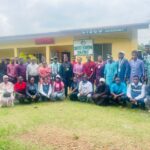
The Federal Government has organised a two-day training for community emergency response teams in the North.
Minister of Humanitarian Affairs, Disaster Management and Social Development, Sadiya Umar Farouq, her welcome address, yesterday, said 40 participants from Ministries, Department and Agencies (MDAs) involved in humanitarian emergency response and rescue operations in the 19 states of the North.
Represented by the Deputy Director, Disaster Management, Dr Abubakar Sulaiman Umar, Farouq noted that “Government has been proactively reviewing the existing legal frameworks, mapping the stakeholders and designing a framework for the coordination of disaster management.
“The Ministry is coordinating all activities necessary to build, sustain and improve the capacity to prepare for, protect against, respond to and recover from threatening or actual natural or human-induced disasters.
“Furthermore, the Ministry is enhancing the safety and security of organisations providing humanitarian services across the country.”
She further explained that the mandate of the ministry is to amongst other
things, provide effective coordination of National and International humanitarian intervention, ensure strategic disaster mitigation and preparedness to response in partnership with Mzury Nigeria Limited.
“We have organized this training for the purpose of guiding you to Identify the consequence of disaster on migration, understand the roles and responsibilities of first responders towards mitigation of migration due to disasters, to understand the effects of disasters on migration and how to mitigate such and to also acquire the ability to appropriately respond to migration resulting from disasters.”
The facilitator of the training, Rev. Fr. Emeka Xris Obiezu, described the training “as very apt” considering the various and complex humanitarian crises experienced in different parts of the country.
Fr. Obiezu said that the sessions of the training were interactive and enabled experience sharing among the participants under the guide of the facilitators.
He said: “The result of the group work and the pre and post evaluation tests bore witness to an increased capacity of the participants, which is an indicative that the goals of the training were achieved.
“It is hoped that at the end of the training, participants will be able to assess the nature and scale of disaster emergencies, understand migration as a consequence of disaster, provide search and rescue assistance as well as basic care immediately after disaster emergencies.”