Follow Us on Google
By Juliana Taiwo-Obalonye
In Nigeria, climate change is unleashing devastation that shatters families, wipes out livelihoods and threatens national survival. From deadly floods displacing millions to droughts fuelling hunger crises, recent data paints a grim picture: the World Meteorological Organisation projected 2025 as Nigeria’s second-hottest year on record, with experts warning of unusual 2026 rainfall patterns leading to intensified flooding, heatwaves and food insecurity.
Journalists play a pivotal role here—bridging victims’ cries with policymakers—yet many lack the skills to humanise these stories effectively, making training like the recent two-day workshop, themed “Media Strengthening Intervention to Amplify Voices, Strengthen Journalist Capacity and Enhance Visibility”, essential to drive accountability and action.
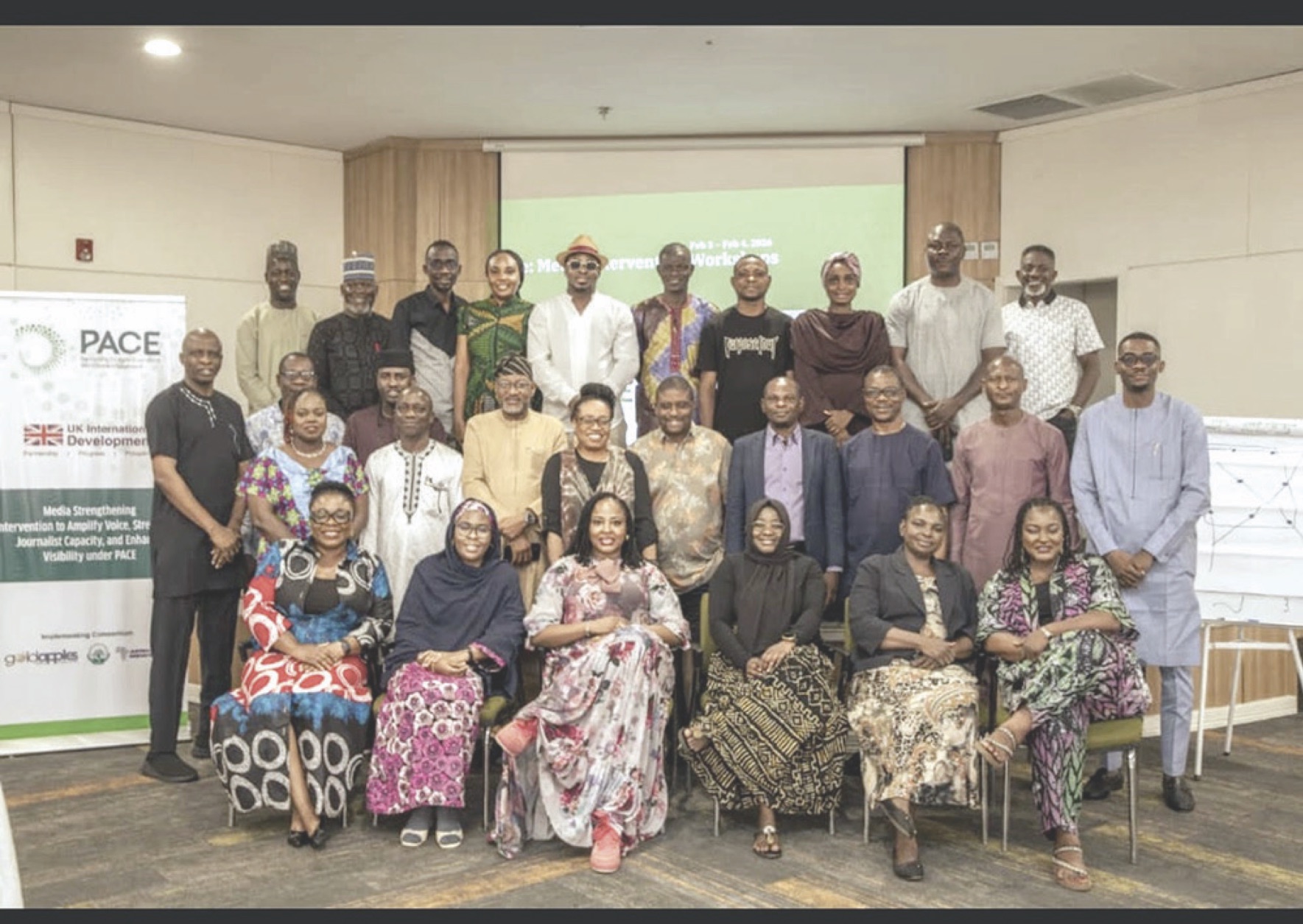
Nigerian journalists from radio, TV, print and digital outlets gathered in Abuja in February for the workshop, organised by a consortium led by Goldapples Media Associates, alongside Climate Africa Media Initiative and Centre (CAMIC) and African Newspage; the event equipped 20 participants with tools for human-focused climate reporting. This followed similar sessions in Kano, Kaduna and Jigawa, training 40 more journalists, emphasising solutions journalism that ties environmental crises to governance and everyday struggles.
The workshop addressed a critical gap: climate coverage in Nigeria remains underreported compared to politics or entertainment, despite its infiltration into every sector. Participants pledged to boost the “quality, scope, frequency, and momentum” of their climate and governance stories, deploying new skills to reshape narratives on government accountability. Hands-on sessions by facilitators used Nigerian case studies—like floods disrupting markets or waste mismanagement in estates—to teach captivating intros, ethical framing, and audience engagement.
Consider Mama Aisha, a yam farmer from Benue State, whose fields vanished under 2025 floods that killed over 200 and displaced 1.6 million nationwide, according to SocioAfrica warnings. Or fishermen in Bayelsa whose nets come up empty amid rising sea levels and erosion, pushing families into slums.
The World Bank estimates climate disruptions could shave 6% off Nigeria’s GDP by 2030, costing millions of jobs in agriculture – already vulnerable with crop yields down due to erratic rains. In northern states, desertification has shrunk Lake Chad by 90% since 1960, sparking conflicts over resources and displacing herders like those in Jigawa.
Health crises compound the misery: floodwaters breed cholera outbreaks, while heatwaves exacerbate malaria, with Nigeria recording over 100 million cases yearly, according WHO data.
Urban dwellers in Lagos face “permanent humanitarian emergencies” from perennial flooding, destroying homes and inflating food prices amid malnutrition spikes—children and pregnant women hit hardest. These aren’t abstract stats; they’re stories of resilience tested daily, where governance lapses amplify suffering.
Journalists aren’t mere observers; they’re the fourth estate of the realm, aggregating citizens’ voices for accountability. Ayo Makinde, CEO of Goldapples Media Associates and consortium lead, explained: “Climate impacts should not be treated as distant environmental concerns but as daily realities shaped by governance systems, policy decisions and institutional performance. Reporting climate change as a human issue strengthens accountability and improves public understanding.”
His words emphasised the training’s core: reframe climate as a people story, not jargon-heavy science.
Without skilled reporting, victims like Mama Aisha remain voiceless, policymakers evade scrutiny, and opportunities – like climate finance – go untapped. Nigeria’s Climate Change Act of 2021 and Paris Agreement commitments exist, but implementation lags. Journalists, armed with insight, can spotlight these gaps, urging action on nationally determined contributions (NDCs) under review.
Facilitator Aliu Akoshile, Executive Director of CAMIC, drove home climate’s ubiquity: “In every other sector, there is a climate change element… If there is flooding and there are water-borne diseases, you are talking about climate change and health. If there is flooding and the football competition could not hold, there is the climate change impact on sports.”
He stressed reporters’ duty: “Every ministry should have a climate change desk… Reporters must be able to identify those salient issues that ordinarily, policymakers may not even call attention to them.”
Akoshile also tackled funding: “There are funding organisations, both globally and within Nigeria… The Global Environment Fund… Within Nigeria, there are foundations… You as journalists must be able to identify which area are you looking at—deforestation, desertification… All these opportunities are there, but we must be prepared ahead.” Preparation, he stressed empowers journalists to pursue investigative pieces on climate finance, projected to unlock global investments for Nigeria’s green jobs.
Adam Alqali, Editor-in-Chief of African Newspage, critiqued sample stories during practicals: “What is striking is, when writing climate change stories, start with a very captivating intro, human-centered, creative nonfiction… If you’re not able to grasp, captivate your audience from the beginning, no matter how good the content is, nobody is going to waste time reading.” He praised one of the group’s efforts to write a human angle story on waste disposal awareness in an estate: “Great awareness about proper waste disposal by the community. However, he criticised their failure to highlight scalable actions, such as urging authorities to replicate the estate’s effective waste management model across other communities to prevent future floods.
“This,” he said, “is what solutions journalism is all about.”
A key focus: leveraging journalism for economic wins. Enene Ejembi, PACE Media Advisor for the UK-funded Partnership for Agile Governance and Climate Engagement (PACE), urged: “When journalists highlight climate finance opportunities and resources, they help Nigeria attract global investment, deepen existing investments, and create higher incomes and better jobs for Nigerians.” PACE, working across states, adopts a “whole of society approach,” partnering with government, civil society, and media.
Ejembi elaborated: “PACE is a UK International Development funded programme that works with the Government of Nigeria to identify governance and climate challenges and develop solutions that increase prosperity… The media is the fourth estate… Journalists play a critical role in aggregating citizens’ voices… Where are the citizens in this conversation?” She revealed the training scale: “We have trained journalists across Kano, Kaduna and Jigawa… 40 journalists… For the Abuja one, it’s 20 journalists.”
Her call to action resonates: “Approach climate and governance reporting with patriotism… What do Nigerians need to know about climate and governance? How can these lead to more investment, trade, job creation, and prosperity?”
Participants tested CAMIC’s Climate Explainer Toolkit, introduced by Ms. Helen Bassey Osijo, Project Manager and COO. This tool simplifies emissions, loss and damage, and justice debates into relatable narratives. Baseline assessments showed knowledge gains, boosting confidence in policy-human links.
Ejembi reinforced: “We are engaging with journalists… to strengthen their capacity to tell the story around climate issues… knowing the science… and governance issues that can support solutions… We want to increase the voice of citizens so that they can bring to the fore the priorities that matter to them.”
Journalists emerged transformed. Some of them noted increased confidence in “reporting climate stories that link policy, governance and human experience.”
With 2026 forecasts of warmer temperatures, variable rains and extreme events like thunderstorms and droughts (according to the Federal Government outlook), Nigeria cannot afford silence. Journalists, now tooled up, must captivate with human angles—like Mama Aisha’s flooded fields—to spur stakeholders.
As Makinde puts it, these skills will “change the course of climate change and governments’ accountability narratives.” In a nation where climate erodes prosperity, their stories could seed resilience, investment, and hope. The stakes: lives, jobs, futures. Time to amplify.