Follow Us on Google
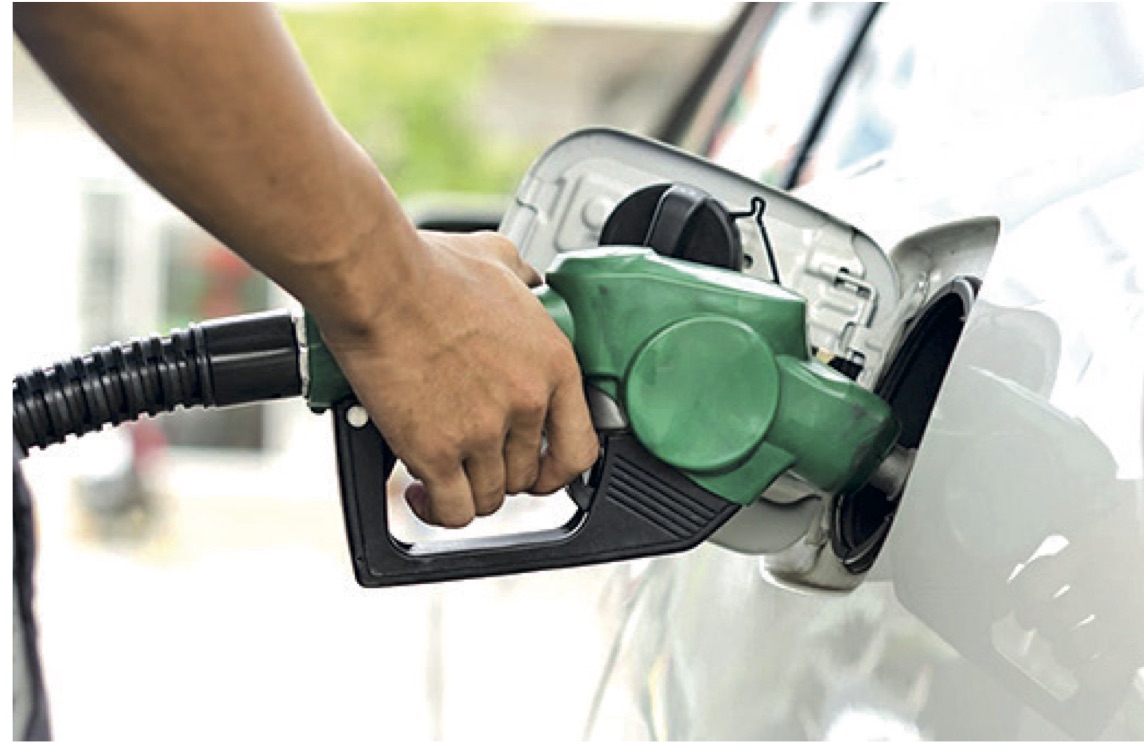
…As cost of fuel, living skyrocks without available palliatives
By Adewale Sanyaolu
The decision of the Federal Government to abolish the age-long subsidy regime no doubt has left many Nigerians in pains. The action has also pushed many into the poverty net following the spiraling effect of high cost of goods and services, leading to galloping inflation.
President Bola Tinubu had on May 29, during his inauguration speech announced the abolition of the fuel subsidy scheme.
Tinubu had declared that there would no longer be a petroleum subsidy as the current 2023 budget he had glimpsed does not contain it.
The current 2023 budget has provision for the fuel subsidy till last June.
The President stated that funds for subsidies will be diverted to other things like public infrastructure, education, health care and jobs creation.
“We commend the decision of the outgoing administration in phasing out the petrol subsidy regime which has increasingly favoured the rich more than the poor. Subsidy can no longer justify its ever-increasing costs in the wake of drying resources,” he said.
Immediately after the president’s announcement, petrol filing stations across the country adjusted their dispense meters from N165 to over N500 per litre.
The adjustment created a sort of economic imbalance in the budget of most households, especially transportation cost.
But one month after the subsidy removal, the palliatives promised by the Federal Government to cushion the effect of the subsidy removal is yet to take effect at the state and federal levels.
If feelers from the industry are anything to go by, Nigerians may have to wait for a little longer before they begin to feel the effect of the palliatives promised by the Federal Government and the private sector to cushion the subsidy removal.
Findings by Sunday Sun revealed that the recommendations of the National Economic Council (NEC) which included a proposal for monthly petroleum allowance for civil servants, ranging from N23.5 billion to N45 billion is yet to receive attention.
According to Governor Bala Mohammed of Bauchi State, the proposed N702 billion cost of living allowance and the petroleum allowance demonstrate the government’s commitment to supporting civil servants during this transitional period.
But some of those who spoke in separate interviews on the impact of the subsidy removal expressed outrage and frustration.
A clergyman, Rev. Osondu Aharika, said that his family now spends only on what is absolutely necessary.
“The more than 300 per cent hike in the price of Premium Motor Spirit (PMS), popularly called petrol, has dug a big hole in my pocket. I’m a public servant and my salary has not been adjusted to reflect the new pump price of PMS.
“Expectedly, the prices of goods and services are at the rooftop. To balance my expenditure so that I can take care of other family needs, I now buy 10 litres of fuel a week for my car. Also, we go for alternative products for the family. Instead of complete beverages for the children, we now buy the one that contains a higher quantity of milk and other ingredients for them.
“The effect of the price hike is absolute and we just have to make adjustments at the family level. The summary is that we spend on what is absolutely necessary for the family,” he said.
For Dominic Akpan, a pastor, his family has discovered how to deal with the fuel subsidy removal.
“The so-called petroleum subsidy regime was a heartless elite rip-off of the common masses. What is the guarantee that after the hardship we wouldn’t have the elite re-loot the savings from the reversal and furthermore impoverish the people?
“I have since adjusted to the new regime. I no longer run my generators, but have resorted to using rechargeable bulbs, which can give light at least for some hours after power outage and I only use the vehicle when absolutely unavoidable. As a pastor of a church, we have reduced the number and duration of weekly activities so we can cope with the exorbitant bills spent on fuel,” he said.
Inemesit Ukpong Okure, a lawyer, also spoke on how his family had been leaving their cars at home while making do with public transport.
“The high cost of petrol has really affected my activities as a lawyer and a mother. Our clients find it difficult to pay out transport fare, which is not even enough to take us to and from the courts any longer. Typing of court papers is equally expensive, but I have to use a laptop, which conserves energy, and only start generator or wait for public power supply if it is not that urgent, to print.
“Running the family has also become even more difficult. We can’t afford to provide what we used to give the children because of the high cost of food items in the market. But we have adjusted. Sometimes we take public transport since it appears cheaper than fuelling personal cars. We put on the generator at home when it’s absolutely necessary. We try to cut some of the expenses in social activities since the fuel situation has affected every aspect of our life,” she said.
Another Nigerian, Bevy Efe, an activist, said that the subsidy removal has caused hardship on him.
“There is no doubt that the hike in price of petroleum products, popularly known as PMS, has caused hardship on me as a Nigerian and Nigerians in general. The cost of transportation has geometrically increased as a result of the hike in fuel.”
Goodluck Ibem, president general of the Coalition of South East Youth Leaders, COSEYL, stated: “The sudden removal of fuel subsidy has led to hyperinflation and an increase in fuel prices from N240 to N700 per litre in some parts of the Southeast.
“The prices of other petroleum products have also increased, resulting in an increase in the prices of goods and services. Nigerians are currently facing untold hardship.”
He, therefore, urged the president to implement measures “to stop the arbitrary increase in petroleum product prices, hoarding, and other sharp practices by petroleum marketers.”
The COSEYL leader urged the Federal Government to liberalise the petroleum sector as soon as possible in order to attract more investors to build refineries for the production of PMS and other petroleum products.
On the part of the private sector, the Depot and Petroleum Marketers Association of Nigeria (DAPPMAN) had last month agreed to donate 100 Compressed Natural Gas (CNG) buses to help mitigate the effects of petrol subsidy removal.
Chairman of DAPPMAN, Winifred Akpani, who spoke in Abuja after a meeting with Tinubu, was part of a delegation of oil marketers that visited the president.
She said that the meeting was to discuss the best course of action in the post-subsidy regime, and “to express our support and to see how we can cooperate with the government”.
This, she said, is to support the Federal Government’s post-subsidy palliative measures.
“We collectively agreed that we’re going to work at providing real mass transit buses that work. The ones that run on CNG, which is a compressed natural gas and diesel interchangeably, and hopefully, we are going to start with about 50 to 100.
“And that is in the very short term. And these are locally produced, so you see that we’re also providing jobs, a lot more jobs because we are using local assembly plants, we are not importing this.
“That is less pressure on our foreign exchange, and that’s more jobs for Nigerians. And Mr. President was very happy with that,” the DAPPMAN chair said.
Some of the industry observers that included civil servants, labour and manufacturers said that they are yet to see any concrete plan of action on the modalities for some of these palliatives.
In a telephone interview with Sunday Sun, Chairman of Innoson Vehicles Manufacturing Limited(IVM), Mr. Innocent Chukwuma, said that his company is yet to get orders for the supply of CNG buses either from the federal or state governments.
‘‘What I can tell you is that the word we have got from the governments is that they are still preparing for the take-off of these mass transit buses. Not until they place orders, there is nothing much we can do.
“But as for us at IVM, we are fully prepared for the supply of the vehicles whenever they are ready,’’ he said.
It would be recalled that the Federal Government’s autogas initiative which plans to convert at least one million vehicles to run on Compressed Natural Gas (CNG) hit a brickwall.
Launched in December 2020, the national autogas initiative is aimed at reducing the country’s high reliance on petrol and promoting the use of gas as a cleaner fuel for vehicles.
However, 30 months later, the government failed to meet the target of converting one million vehicles to CNG.
A combination of infrastructure, high cost of gas, lack of proper planning, and prevailing harsh economic realities affected the implementation of the autogas policy.