Follow Us on Google
By Oluseye Ojo
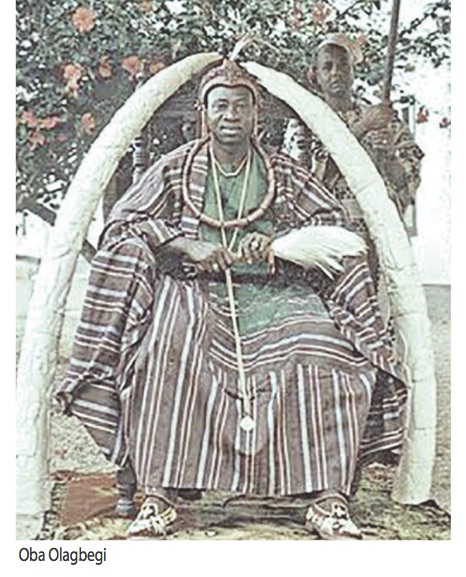
In the annals of traditional rulership in Nigeria, few tales can match the tumultuous journeys of Muhammadu Sanusi II, the Emir of Kano, and Oba Olateru Olagbegi, the late Olowo of Owo in Ondo State.
These two monarchs, separated by generations, share an uncanny commonality – they have both experienced the ignominy of deposition, only to triumphantly return to their thrones.
The recent reinstatement of Emir Sanusi II in Kano State, after a four-year exile, has once again drawn parallels to the saga of Oba Olagbegi, who suffered a similar fate decades earlier.
Both men occupied positions of immense power and influence within their respective regions, with the Emir of Kano wielding sway in the northern heartland, and the Olowo reigning in Yorubaland. Yet, their reigns were marred by political machinations that sought to subjugate their authority.
In a move that sent shockwaves through the traditional power structures, the immediate past governor of Kano State, Abdullahi Ganduje, orchestrated the deposition of Emir Sanusi II in March 2020, citing “insubordination and disrespect” towards the state government.
Sanusi, a former governor of the Central Bank of Nigeria, was known for his outspoken criticism of the government’s handling of finances and perceived corruption. His removal was widely seen as a politically motivated act, designed to curb his influence and independence.
In 1966, the then Olowo of Owo was suspended from his throne, and two years later, he was summarily deposed by the then-military governor of the Western Region, Colonel Adeyinka Adebayo.
Olagbegi’s fall from grace was precipitated by his political allegiance to the embattled Premier Ladoke Akintola, who was at loggerheads with the revered Obafemi Awolowo and his Action Group.
As Olagbegi’s cousin, the legendary Ondo State Governor Adekunle Ajasin, maintained his loyalty to Awolowo, the two scions of Owo found themselves on opposing sides of a bitter political divide.
The ensuing turmoil in the Western Region ultimately claimed the throne of the Olowo, as Olagbegi was banished to Ibadan for a quarter-century. The new Olowo was Oba Adekola Ogunoye II.
The parallels between these two deposed kings extend beyond their shared experiences of exile and reinstatement. Both Sanusi and Olagbegi were known for their outspoken nature and unwavering commitment to their respective causes.
Sanusi, as the former CBN governor, had famously locked horns with the administration of a former president of Nigeria, Dr. Goodluck Jonathan over allegations of corruption, while Olagbegi’s political associations had drawn the ire of the Awolowo camp.
In a twist of fate, both monarchs would ultimately be restored to their rightful thrones, albeit decades apart.
In Kano, Governor Abba Yusuf’s recent decision to repeal the 2019 law that had fractured the Kano Emirate paved the way for Emir Sanusi II’s triumphant return.
On Thursday May 23, 2024, Governor Abba Yusuf of Kano State announced the reinstatement of Sanusi after signing into law the Kano State Emirate Council (Repeal) Bill 2024, which dissolved the emirate councils created in 2019 in the state.
“With the full support of the kingmakers, I have approved the reappointment of Mallam Sanusi Lamido,” the governor said at the Art Chamber of the Kano State Government House on Thursday, May 23, 2024.
In Ondo, the death of Oba Adekola Ogunoye was announced in March 1993, after 25 years on the throne. It was ex-Governor Bamidele Olumilua who, later in 1993, reinstated Oba Olagbegi to the Owo throne, fulfilling what was believed to have been the prophecy of the Owo oracle that had foretold his coronation, deposition, 25-year exile and return to the throne.
The stories of Sanusi and Olagbegi have, as gathered, captivated the public imagination, sparking discussions about the delicate balance between traditional authority and modern governance.
During his 25 years in exile, Olagbegi was referred to as Sir Olateru Olagbegi. He had been knighted by the Queen Elizabeth II in 1960 for his services to the British Empire.
Oba Olagbegi reigned for five more years from 1993 until his death in 1998. His son, Olateru Olagbegi III, (SAN, CFR), succeeded him.
Oba Olateru Olagbegi, a very wealthy king, was believed to have left behind between 117 and 140 children, most of them highly accomplished professionals. It was reported that among them were 35 lawyers (with many Senior Advocates), 10 High Court judges, 25 medical doctors, 22 chartered accountants, and 23 engineers.