Follow Us on Google
By Henry Akubuiro
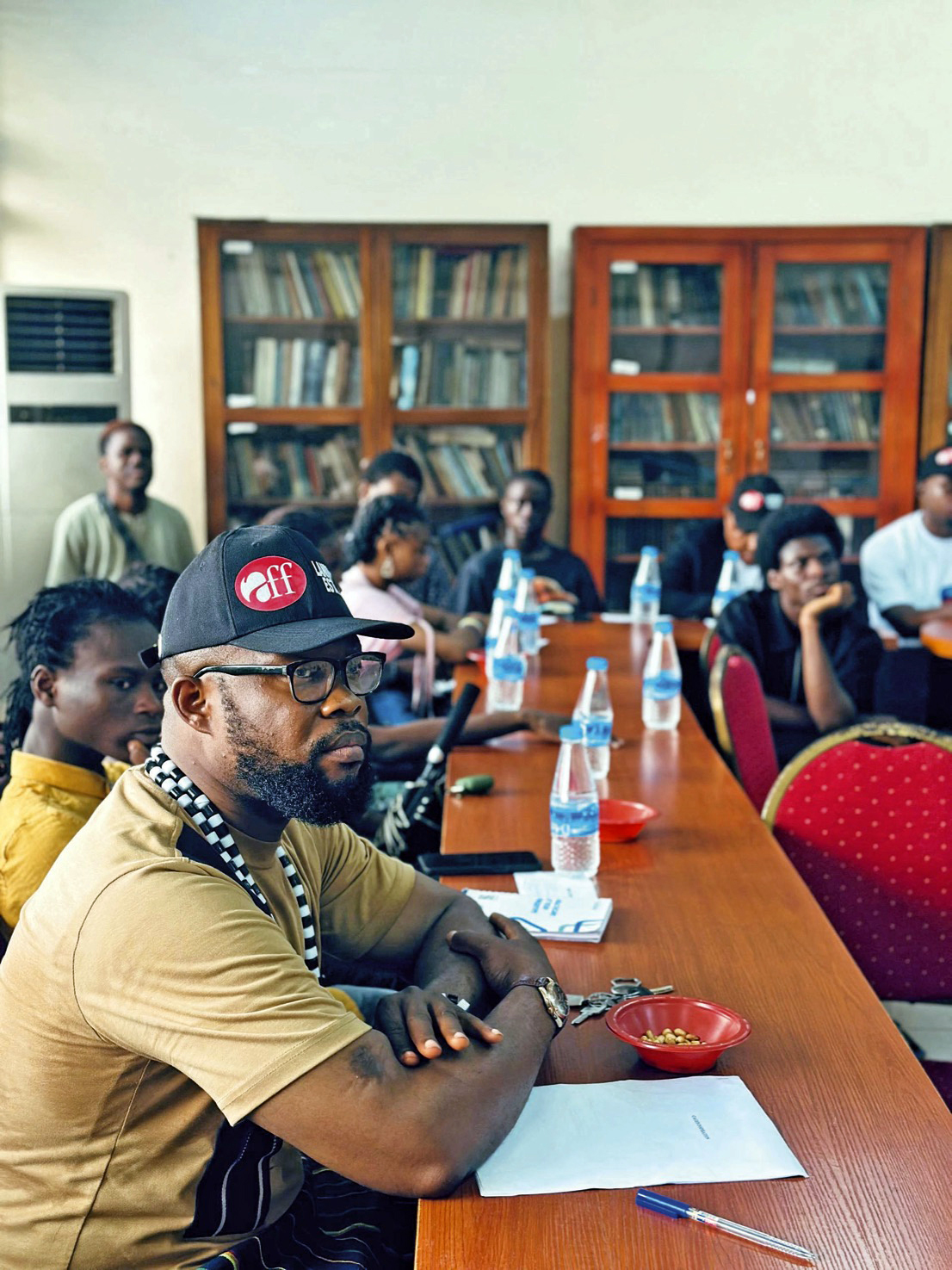
As part of activities marking Nigeria’s 2026 Democracy Day celebration, University of Lagos scholar and poet, Dr. Charles Terseer Akwen, alongside members of the Transcultural Writers’ Network (TWN), hosted a vibrant book party and poetry reading centred on Caged Inspiration, his latest collection of poems. The event, held on June 12, brought together students, writers, performers, academics and lovers of literature for an afternoon of poetry, reflection and cultural engagement. Beginning at noon, the gathering featured dramatic readings and spoken-word performances drawn from the collection, which explores the intersections of creativity, freedom, identity and social responsibility.
Speaking on the inspiration behind the collection, Dr. Akwen described Caged Inspiration as an exploration of the burden and responsibility of poetic creativity. According to him, the poems move between myth, philosophy and lived experience to interrogate the nature of artistic calling and the forces that compel creative expression. “Poetry is born from the tension between freedom and confinement, divine impulse and human limitation, silence and utterance,” he explained. “The collection reflects on the fragile yet enduring power of creativity in a society burdened by numerous contradictions.”
Beyond its philosophical concerns, Caged Inspiration engages pressing social issues, including corruption, injustice, failed governance, colonial legacies, identity crises, poverty, migration and the resilience of ordinary people. While exposing societal flaws, the collection also celebrates hope, memory, culture and artistic expression as tools of resistance and transformation. Among the highlights of the event were performances by members of the Transcultural Writers’ Network. Adeleye Aisha Adekunmi’s rendition of “The World is a Cage” portrayed the world as a vast structure sustained by systems of exclusion and injustice. The poem emphasized the persistence of hope and the capacity of poetry to challenge oppression.
Similarly, Adeshola Eniola Victoria’s performance of “In This Cage” examined a society overshadowed by fear, intimidation and institutional violence. The poem critiqued the abuse of power and the failure of justice while drawing attention to the silent frustrations of ordinary citizens. Another notable performance, “Rooms,” presented by Animasaun Esther, explored the pervasive influence of corruption on both public institutions and private lives, revealing the psychological burden of survival in a dysfunctional society.
The poem “Growing” reflected on political disappointment and public disillusionment, portraying elections as recurring cycles of broken promises and unfulfilled expectations. It highlighted the frustrations of young Nigerians who continue to inherit the consequences of failed leadership. Other performers, including Nupo Solomon, Ajayi Henry, Onifade Temilehin, Pius Jessica, Titilola Eniola, Akintoke Paul, Popoola Victoria, Oluwatosin Oluwatamilare, Soyege Iyanuoluwa and Onmeche Reginald, presented poems inspired by themes of survival, dignity, patriotism, youth unemployment, educational uncertainty and economic hardship.
Other News
A major attraction of the event was Dr. Akwen’s discussion of the symbolic significance of the “cage,” a recurring metaphor that structures the collection. He explained that the image of the cage extends beyond physical confinement to represent the economic, political and psychological limitations that shape contemporary existence. “In these poems, the cage becomes a metaphor for the modern world itself,” he noted. “It represents the structures of power, history and inequality within which individuals struggle to preserve their humanity, dignity and freedom.”
The poet further revealed that his work has been influenced by writers who approach society as a living organism whose health and survival depend on the quality of relationships among its members. Drawing from this perspective, he argued that literature should not merely entertain but should also interrogate the social, political, and moral conditions that shape human existence. According to him, poetry provides a unique space for examining the contradictions of everyday life, exposing injustice, and encouraging dialogue across social divides. He noted that many of the poems in Caged Inspiration were written from a desire to understand the tensions between individual aspirations and collective responsibilities in contemporary society.
For Dr. Akwen, the poet occupies a position similar to that of a social observer and conscience, drawing attention to both the wounds and possibilities within the human community. He described poetry as both an artistic and social intervention designed to teach, delight, inspire hope, and provoke critical reflection on the values that guide society. Through creative expression, he maintained, literature can nurture empathy, challenge complacency, and encourage citizens to imagine more humane and just ways of living together. He therefore called on young writers to embrace creativity not only as a form of self-expression but also as a means of contributing meaningfully to social transformation and national development.
The event also served as a platform to announce emerging developments in the Department of English, University of Lagos. Dr. Akwen disclosed that the department was expanding its creative writing initiatives through programmes ranging from the Postgraduate Diploma to Master’s and Doctoral degrees in Creative Writing and Rhetoric. According to him, the coming academic session would witness an increase in literary activities, creative performances and scholarly engagements designed to strengthen the university’s position as a leading centre for creative and literary studies in Nigeria. The Department of English, he said, was ready for the tasks ahead.
Among those in attendance were former and current members of the Transcultural Writers’ Network, students of the Department of English, students from the Faculty of Education, and several creative practitioners. Notable guests included immediate past Chairman of Association of Nigeria authors’, Lagos Chapter, Engr, Ifeanyi Avajah, who is also a poet and publisher, TWN’s past President, Adesakan Ridwan, Isidinma Nnamdi (Flowers), Amah T., Jimeto and other literary enthusiasts.
Dr. Charles Terseer Akwen the convener is a poet, playwright, scholar and literary organiser. He holds degrees from the University of Ibadan, University of Lagos and Obafemi Awolowo University, Ile-Ife. His poetry collections, On This Land and Tattoos of Bulletholes, were shortlisted for the Association of Nigerian Authors (ANA) Poetry Prize in 2022 and 2023 respectively. He is also the curator of The Soyinka Spirit: Global Poems on Deep Reflection and Spoken Stories, an anthology celebrating Nobel Laureate Wole Soyinka at 90. He has also written two plays, Across the Strait and Awase. He currently serves as Secretary of the Creative Writing Programme, University of Lagos, and is the founder of the Transcultural Writers’ Network.