Follow Us on Google

Nigeria’s leading industrialist and Africa’s richest man, Aliko Dangote, has unveiled N100billion annual education support that will reduce financial constraints and other barriers that force millions of young Nigerians out of school. The bold initiative will support not less than 45,000 new beneficiaries in its first year, beginning in 2026. It is expected to reach 155,000 by the fourth year and will last for 10 years. It targets 1.3 million students across all 774 local government areas in the country.
The laudable intervention comprises four programmes, each designed to address sectors where educational exclusion is most severe. Through the Aliko Dangote STEM scholars, the programme will fund 30,000 undergraduates annually in Science, Technology, Engineering, and Mathematics (STEM) in public universities and polytechnics across the country. About 5,000 students in public technical and vocational institutions will benefit annually through the Aliko Dangote Technical Scholars. This will complement the Federal Government’s free-tuition policy for Technical and Vocational Education and Training (TVET) students.
Also, the MHF (Mariya, Halima and Fatima) Dangote Secondary School Girls Scholars will provide annual support for 20,000 girls from JSS1 to SSS3, with financial assistance into tertiary education. However, states with the highest number of out-of-school girls will be prioritized. The Dangote Foundation will also commence a large-scale teacher development programme, beginning with 10,000 STEM teachers in 39 government colleges attended by MHF scholars. Later, the programme will be expanded nationwide. According to Dangote, the initiative will focus on Nigeria’s most vulnerable learners, stressing that financial hardship, not lack of ability, remains the biggest threat to retention and completion.
He explained that the project is not only charity but a strategic investment in Nigeria’s future, adding that every child kept in school strengthens the economy and reduces inequality. He noted that the Dangote Foundation’s work over the years has been driven by the belief that no nation can rise above the quality of education it offers its young people. The programme will rely on a merit-based digital system for verification and disbursement, deployed in partnership with stakeholders, such as NELFUND, JAMB, NIMC, NUC, NBTE, WAEC, and NECO.
The Programme Steering Committee chaired by the Emir of Lafia, Justice Sidi Dauda Bage, has been constituted to ensure its seamless implementation. Other members include former vice-chancellors, senior education administrators, technical advisors, and representatives of the Dangote family. Dangote pledge to commit 25 per cent of his wealth to the Foundation will support long-term sustainability, with the initiative forming part of the Dangote Group’s Vision 2030 strategy.
We commend Aliko Dangote for the far-reaching education fund. This is by far the most ambitious education fund by a single individual in the nation’s history. At a time much emphasis is placed on technical and vocational education, Dangotes’s intervention is timely and welcome. We believe that the Fund will serve as a catalyst for the development of the education sector. Instructively, the initiative covers the 36 states as well as the 774 local government areas. We laud Aliko Dangote for his vision and urge other wealthy Nigerians to emulate his shining example. Government alone can no longer fund education. The sector needs the intervention of individuals and organisations. Since education is critical in human and material development, no country develops beyond its educational level.
Unfortunately, the education sector is poorly funded by all tiers of government. Most primary and secondary schools across the country are dilapidated. Our teacher shortage from primary to basic education level is among the highest in the world. This can explain the poor quality of teaching and learning in these schools. Strike has become a norm in public universities, polytechnics and colleges of education across the country. Our national budget for education, which hovers between five and seven per cent, is far below the 15-20 per cent recommended by the United Nations Educational, Scientific and Cultural Organisation (UNESCO) to achieve global education goals like Sustainable Development Goal 4 (SDG 4).
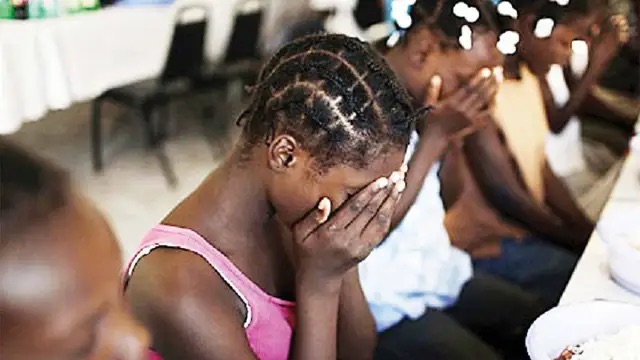
Nigeria has the highest number of out-of-school children in the world. The United Nations Children’s Fund (UNICEF) put the figure around 18.3 to 20 million children. Most of them are from the Northern regions due largely to insecurity, poverty and cultural barriers. There is need to put these children into the school system. The Dangote intervention will help to reduce the number of children outside the classroom. However, we call for its faithful implementation. Therefore, no stone should be left unturned in actualising the dream of repositioning the education sector. Dangote has set a good example in this regard for others to follow.
Nevertheless, the government should not abdicate its responsibility in the provision of quality education to Nigerian children at all levels. It is worth restating that education is a right and not a privilege. Let the government treat education as a human right and ensure that no child is left behind. The provision of quality education should be urgently prioritized. Let the Dangote initiative serve as a wake-up call on the government, affluent Nigerians and other stakeholders to readily assist in the provision of sound and pragmatic education to Nigerians.