Follow Us on Google
By Steve Agbota
The Nigeria Customs Service (NCS) said it has put measures in place reaffirmed to achieve 24-hour cargo clearance as part of its ongoing modernization project, known as B’Odogwu.
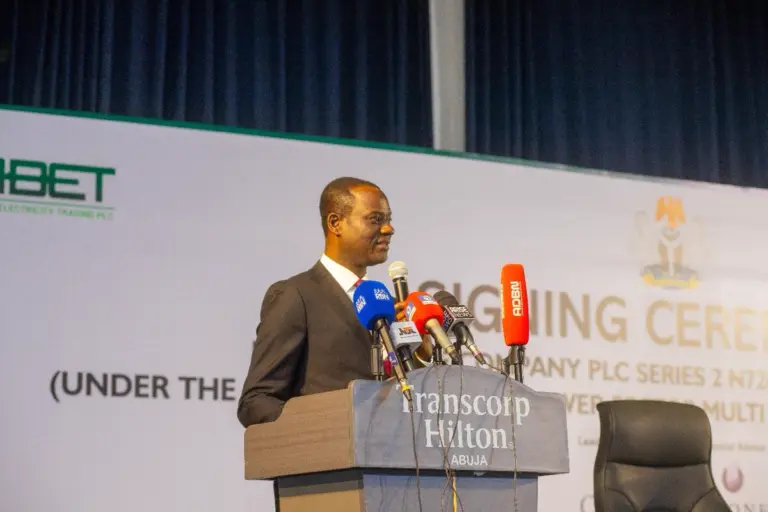
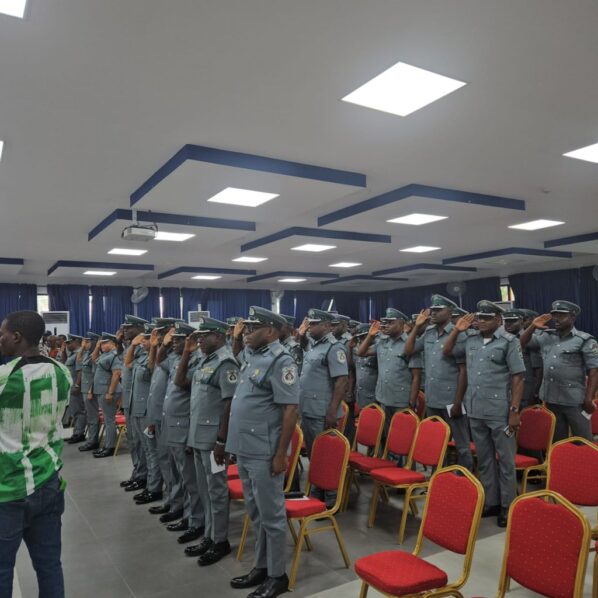
Speaking at a stakeholder engagement in Apapa on Monday, the Deputy Comptroller-General (DCG) in charge of ICT and Modernization, K.I Adeola, highlighted the progress of the initiative and pointed out its transformative impact on Nigeria’s trade ecosystem.
He added that the NCS modernization project is a bold and transformational undertaking aimed at addressing inefficiencies, improving transparency, and positioning Nigeria as a competitive player in global trade.
According to her, the initiative is built on cutting-edge technology designed to streamline processes and ensure smoother operations across ports and terminals.
Approved in May 2022 and ratified by the Federal Executive Council in April 2023, the modernization project is structured as a 20-year public-private partnership (PPP) between the Nigeria Customs Service and the Trade Modernization Project unit.
“This project is not just about deploying technology; it is about creating a robust system that enhances trade facilitation and revenue generation. We are addressing critical issues such as smuggling, administrative bottlenecks, and inadequate monitoring mechanisms,” she said.
She highlighted key deliverables of the project, including the deployment of a unified customs management system, non-intrusive inspection equipment (SCADAS), a risk control center, an electronic cargo tracking system, and infrastructure upgrades such as data centers and intelligence units.
She explained that one of the project’s significant milestones was the deployment of the B’ Odogwu system at the Port and Terminal Multi-Services Limited (PTML) in October 2024, saying this resulted in the successful processing of the first single goods declaration, valuation, and assessment, with payment completed on November 1, 2024.
Other News
“This achievement underscores the operational readiness of the system and its potential to address inefficiencies in cargo clearance,” Adeola noted.
She also acknowledged the support of the Nigerian Ports Authority (NPA) in providing critical infrastructure, particularly in major ports like Apapa and Tin Can Island, which has helped ensure seamless integration of the modernization project.
Looking ahead, Adeola announced that the deployment of state-of-the-art scanners to various ports would commence in 2025.
She assured stakeholders that the new technology would enhance cargo inspection, improve risk management, and significantly reduce clearance times to less than 24 hours.
Speaking also at the event, Dr. Jummai Zainab Umar-Ajijola, Managing Director of the Trade Modernization Project Limited, credited the success of the modernization initiative to strong coordination between the NCS and its partners.
“The partnership between the Nigeria Customs Service and the Trade Modernization Project Limited has been instrumental in driving this initiative forward. Under the leadership of the Comptroller-General of Customs and DCG Adeola, we have successfully designed and implemented a seamless system,” Umar-Ajijola said.
She emphasized that the B’Odogwu; the newly introduced unified customs system, represents “strength and resilience” and is a homegrown solution that positions Nigeria as a leader in trade facilitation.
“Our goal is not just to modernize customs operations in Nigeria but to create a model that will be adopted across Africa and beyond,” she added.
While acknowledging the progress made, some stakeholders raised concerns about potential downtime, training gaps, and the need for continuous engagement to ensure smooth adoption of the new system.