Follow Us on Google
By Steve Agbota
The Nigeria Customs Service (NCS) has assured stakeholders operating in the nation’s seaports and border stations that the Service will address the teething problems on the B’Odogwu platform to enhance trade facilitation.
The Service gave the assurance at a Town Hall meeting in Lagos, where stakeholders listed some challenges still affecting the B’Odogwu system.
They include; migration from NICIS II to B’Odogwu, banks’ inability to make amendments on B’Odogwu and classification of HS Code between the Standards Organisation of Nigeria (SON) and the National Agency for Food and Drug Administration and Control (NAFDAC).
Apart from the challenges associated with the indigenous tech, some stakeholders commended the B’Odogwu platform for improving digital tracking of transactions, transparency, and reducing the teething issues related to the NICIS II.
Speaking after a panel discussion on the issues confronting the B’Odogwu platform, the Comptroller-General of Customs, Wale Adeniyi, said that the reason for the Town Hall meeting was to give stakeholders opportunities to provide feedback on the B’Odogwu system.
“Over the last two weeks, I have had concerns about logging in, migration from NICIS II to B’Odogwu, payment problems and things like that.
We had discussions with the authorised bank ten days ago. We got feedback and commitment from them that they will address some of the issues raised,” he stated.
He said he appreciated the positive and negative feedback from stakeholders, noting that for every change processed, there could be sacrifices that would be made.
“So, as we deploy technology, we will be getting better at the balancing act, such that none of these mandates will have to suffer because we are deploying a free competition system,” he stated.
The Factory Logistics Manager, British American Tobacco, Olusina Ogunlesi, reflected on the operational difficulties encountered by the organisation during the migration process.
Other News
He stressed that beyond technical issues, a major hurdle remains the lack of institutional trust in automated processes.
“Some agencies still insist on parallel verification, which undermines the efficiency we are trying to build. We need stronger trust in the system, not just from users but also from the regulatory authorities,” he noted.
Reflecting on the transitional experience, Ogunlesi called for more proactive and continuous dialogue with institutional partners, including Customs and international trade bodies.
He cited examples from BAT’s interactions across markets, from Nigeria to Mexico, highlighting varying protocols that require harmonisation.
Offering solutions, Ogunlesi encouraged the NCS and relevant stakeholders to streamline income tax reporting and compliance frameworks, which differ significantly across jurisdictions.
He also advocated for further automation of customs notifications and alerts but urged that visibility and transparency must not be compromised in the process.
The Head of Standards Organisation of Nigeria Conformity Assessment Programme (SONCAP), Lagos, Francis Onyeji, addressed the need for timely verification of trade certifications such as the SONCAP.
“We expect that all certifications should be verified before the goods even arrive up to two years in advance, if necessary, to avoid disruptions,” he stated.
He also emphasised the importance of upholding quality standards and ensuring imported goods align with Nigeria’s regulatory framework, noting that this would protect consumers and maintain the integrity of the market.
Onyeji further called for deeper collaboration between importers, exporters, and major clients to boost productivity and strengthen Nigeria’s trade ecosystem. He emphasised that continued dialogue and stakeholder involvement are key to building a business environment that supports sustainable growth.
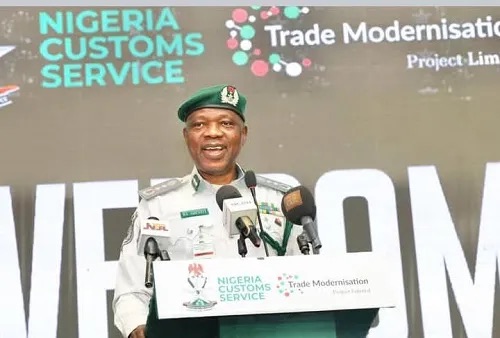
Delivering the welcome address earlier, the Deputy Comptroller-General of Customs in charge of ICT and Modernisation, Kikelomo Adeola, said since its phased deployment, the technology has demonstrated tremendous potential in enhancing clearance efficiency, improving cargo visibility, and boosting revenue generation.
She, however, acknowledged that some importers continue to face challenges navigating the system, emphasising the need for education, direct engagement, and mutual accountability to bridge identified gaps.