Follow Us on Google
From Juliana Taiwo-Obalonye, Abuja
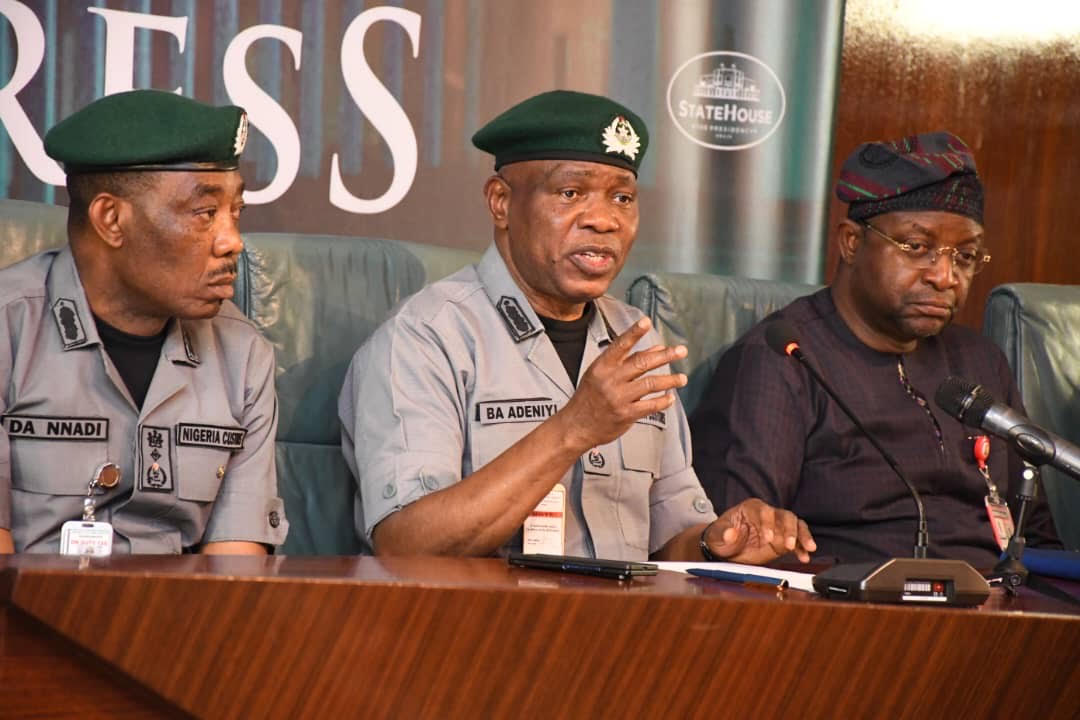
Nigeria’s Comptroller General of Customs, Adewale Adeniyi, has assured that Nigeria’s recent exit from the Financial Action Task Force (FATF) grey list on Thursday, October 24, 2025, is permanent.
Speaking at a weekend briefing ahead of the Customs PACT (C-PACT) Conference scheduled for Monday, November 17–19, 2025, in Abuja, with the theme “Breaking Barriers, Building Bridges,” Adeniyi detailed how the country succeeded in being officially removed from the grey list, emphasising that sustained reforms, technology deployment, and inter-agency coordination have firmly positioned Nigeria to never return to the grey list.
Nigeria’s removal from the FATF grey list marks the culmination of a two-year reform process after being greylisted in February 2023 due to strategic AML/CFT deficiencies. The delisting follows Nigeria’s successful implementation of a 19-point reform plan designed to bolster anti-money laundering and counter-terrorist financing frameworks, reducing the risks Nigeria posed to the global financial system.
“The grey list was an infamous list on which Nigeria was harnessed. There were a number of issues that led us into it,” Adeniyi said. “But today, through technology and coordination, we have made significant strides to avoid a return to that list.”
Highlighting technological advances, Adeniyi explained: “One of the things we have done with technology is to deploy the electronic currency declaration form. Now, you have a barcode to scan, and the form is downloaded and sent electronically to NFIU and EFCC. This has streamlined our processes and enhanced transparency.”
He also pointed to the deployment of non-intrusive scanners at key ports, including Abuja and Murtala Mohammed International Airports, as integral to combating illicit trade. “Technology helps a lot,” he stated. However, Adeniyi emphasised that critical to success has been the power of coordination, “bringing all agencies under one roof to avoid working at cross purposes.”
Other News
Addressing concerns over customs-related delays at borders, Adeniyi referenced a recent Time Release Study (TRS) at Tincan Island Ports, noting: “It is much lower than the seven days sometimes alleged. The study has been validated by operators and the World Customs Organization. The key is cooperation among all agencies to improve the experience.”
Looking to broader African trade, Adeniyi described the upcoming C-PACT Conference as a strategic platform to unify African customs administrations: “C-PACT represents what we want to achieve – improving African trade, forging partnerships, and bridging barriers. Customs is positioning itself as an agent of the African trade revolution, aligning with the President’s vision for Nigeria as the hub of trade in Africa.”
He further elaborated on intra-African trade measures: “When it comes to free trade agreements, origin is the operative word. The more transformation a good undergoes in the producing country, the less duty it attracts in the destination. Under AfCFTA, duties are progressively being reduced to zero.”
On the issue of dumping and trade fairness, Adeniyi acknowledged past delays in Nigeria’s entry to continental trade initiatives and the need for vigilance: “There are measures in agreements to manage dumping, especially through rules of origin. The challenge is building capacity among customs and economic operators on these rules.”
Discussing illicit trade and smuggling, Adeniyi underscored the importance of intelligence-led operations and technology: “We have continued to adapt strategies to combat increasingly sophisticated smuggling networks, leveraging technology and coordinated enforcement.”
He concluded with gratitude to customs officers, government leadership, stakeholders, and media partners for their roles in advancing Nigeria’s customs reforms and trade facilitation: “Your commitment continues to drive our achievements and reinforces our position as a critical institution in Nigeria’s economic and security architecture.”