Follow Us on Google
By Ifeanyichukwu K. Ibekwe
It has become extremely difficult to survive and live decently in Nigeria today as inflation and unemployment continue to bite and ravage the poor. Poverty and impoverishment of the people have become pervasive, permeating the nooks and crannies of the society, especially among the class of ordinary Nigerians. The prices of goods, particularly food items, have continued in their upward rise unabatedly, resulting in the massive fall of the standard of living of this group of people even as their cost of living has become a nightmare. The situation is made worse by the lingering fuel scarcity and the consequent unofficial increase in the pump price of the commodity, which now sells for between N350 and N500 per litre across the country.
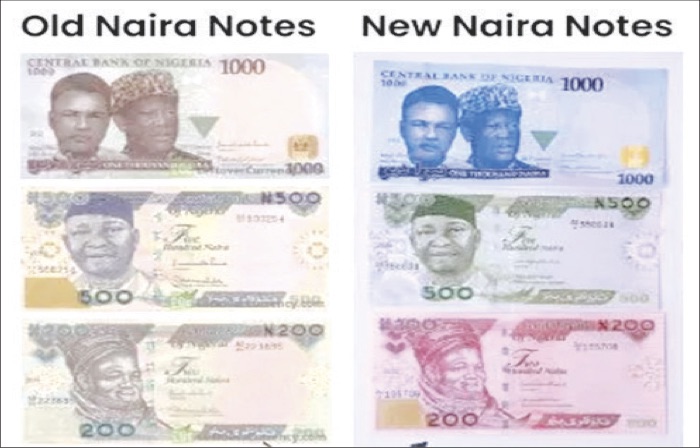
Recently, there is, undoubtedly, an intensification of the poverty and suffering, which characterize the daily living experiences of the majority of Nigerians, particularly since the introduction of the currency redesign policy of the government. The Federal Government of Nigeria, through the Central Bank of Nigeria (CBN), announced on October 26, 2022, its plans to redesign the three highest denominations of the currency notes, naira – N200, N500 and N1,000 – which together account for about 96% of the total value of the naira currency in circulation. The new notes of these denominations were to circulate pari passu with the old till January 31, 2023, when the old notes would cease to be legal tender and withdrawn from circulation.
The apex bank, which took as its legal backing for this exercise the Central Bank of Nigeria Act, 2007 (as amended), Section 18 (a) and (b), gave as its raison d’etre for the policy the following, among others:
1. To overcome the problem of currency hoarding by the public especially and by inference, politicians who are alleged to have stashed away billions of these denominations at home: buried underground, in water tanks, private offices, etc, intending to use these humongous sums for election rigging, voter/officer inducement and vote buying during the 2023 general elections. According to the CBN, about 85% or N2.56 trillion of the N3.01 trillion of the currency in circulation was outside the banking system as at December 2022.
2. To checkmate the sinister act of counterfeiting the currency as a result of enormous advancement in printing technology.
3. To comply with global best practice in currency management of changing/altering of currencies every 5-8 years, a practice in which Nigeria has lagged – the N200, N500 and N1000 notes were introduced in November 2000, April 2001 and October 2005 respectively.
4. To assist in the fight against criminality and insecurity especially the stupendous rise in kidnapping for ransom. For instance, the kidnappers of the erstwhile Prelate of the Methodist Church, Nigeria, Dr. Samuel Kanu-Uche and two others on May 29, 2022 in Abia State, demanded a ransom payment of N100 million naira cash, the payment of which sum led to their release by their abductors on May 31, 2022. Numerous other cases abound!
Accordingly, part of the solution to the kidnapping problem may be found in the
engineering of a less cash-based economy.
The macro-economic soundness of this policy and the concomitant salutary effects on the political economy of Nigeria are not controversial. However, its implementation has generated unintended challenges especially for the poor, to the extent that there is a massive heightening of their impoverishment and sufferings. The most prominent of these effects is the acute shortage of the volume and value of cash in circulation particularly against the backdrop that cash is a central component of the Nigerian economy. According to the Nigerian Economic Summit Group (NESG), about 90% of transactions in Nigeria take place with cash. It is, therefore, to be expected that the enormous scarcity of cash as presently experienced in Nigeria since the last three or four weeks will result in serious deleterious consequences not only for individual households but for the entire economy. For instance, there is an unquantifiable loss of man-hours in long and frustrating queues at bank premises in search of the elusive new bank notes. These lost man-hours negatively impact productivity and the Gross Domestic Product (GDP). There have also been cases of youth restiveness and riots in parts of the country including Edo, Oyo, Abia, etc, during which some bank branches were set ablaze and their equipment/facilities destroyed or vandalized. The shortage of cash has equally made shopping for groceries like tomatoes, pepper, palm oil, crayfish, etc. in the quantities and volumes demanded by the poor, a frustrating and near-impossible task. This is because the market women who sell these items are outside the online banking loop. Furthermore, the cash crunch has led to the rise of extremely exploitative Point-of-Sale (POS) operators (or oppressors?) who charge as much as 20 – 30% commission on cash withdrawal transactions.
The cumulative effect of these is an enormous deterioration in the living conditions of the people.
Expectedly, there has been a loud public outcry against the policy in Nigeria, resulting in the extension of the deadline from January 31 to February 10, 2023. Subsequently, the old N200 banknote was recalled and put into circulation for another 60 days, to April 10, 2023. However, the most strident of these public outbursts have come from politicians, the majority of them belonging to the ruling All Progressives Congress (APC), even as the problems linger and persist.
Presently, Nigeria is at the precipice; she is on the surgical table and in dire need of the most efficacious medications to put her back on the path to recovery. The naira redesign exercise and the drive towards a cashless society may be some of the actions needed for her to be on the road to survival. Nigerians may be required to pay the price by making huge sacrifices for her survival and are hereby encouraged to support this policy and make the sacrifices today for a better and brighter tomorrow in Nigeria.
•Dr. Ibekwe, an environmental and sustainable development expert, writes from Abia State