Follow Us on Google
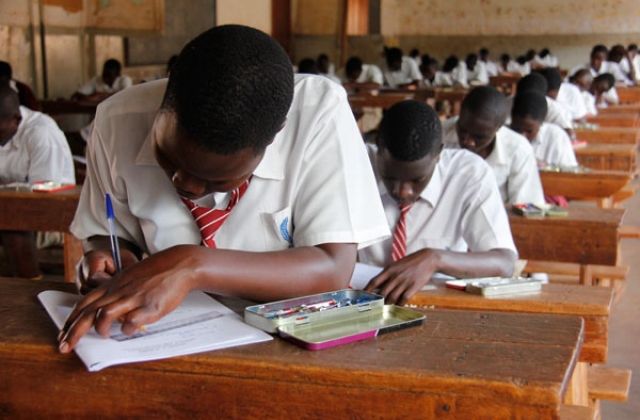
Over the years, examination malpractice has been a scourge threatening the integrity of Nigeria’s education sector and the qualification of those who passed out from different institutions in the country. In the past, the government had imposed penalties on institutions and officials found culpable of cheating during examinations. Examination malpractice occurs in virtually every level of the education system.
However, it appears that the government and law enforcement agents are more concerned with entrance and certificate examinations. For entrance to Nigerian universities, the Joint Admissions and Matriculation Board (JAMB) takes care of the examination. For the Senior School Certificate Examinations, two different bodies – The West African Examination Council (WAEC) and the National Examination Council (NECO) are responsible for conducting the examinations. Although these bodies have seemingly done well in conducting these examinations, reports of malpractices are still very high each year.
Recently, the National Examination Council (NECO) indicted 93 schools for examination malpractices and blacklisted 52 supervisors for colluding with students and their parents to cheat in the examination. The Registrar and Chief Executive Officer of NECO, Prof. Dantani Wushishi, disclosed this to newsmen while announcing the release of the 2023 Senior School Certificate Examination organised by the body.
The registrar decried the ugly development and assured members of the public that those found culpable would face the full wrath of the law. According to him, “the number of candidates with special needs is 1,542, which includes 913 candidates with hearing impairment, 162 candidates with visual impairment, 103 candidates with albinism, 61 candidates with autism, 149 candidates with low vision, and 154 candidates with adermatoglyphia, which are candidates with no fingerprints. Not less than 737,308 candidates or 61.60 per cent passed with five credits and above, 1,013,611 or 84.68 per cent of candidates, had five credits, irrespective of English and Mathematics”.
While there are many challenges confronting the educational system in Nigeria, examination malpractice seems to be the most glaring with dire consequences on the quality of those who obtain certificates from some institutions in the country. Regrettably, there are no accurate figures of those who have been made to face the law for committing or indulging in examination malpractice.
It is encouraging that there are laid down rules and punishment for those guilty of examination malpractice but because many of them are let off the hook or probably because these laws are not strictly applied, examination malpractice continues to flourish in the country. In many cases, parents connive with teachers to enable their children to cheat in the examinations under a special arrangement. Most of these parents are influential people in the society, therefore it becomes difficult for law enforcers to do their jobs effectively. When parents and school owners assure candidates of success without adequate preparation for examinations, it affects the candidates later in their future academic journey since they are not able to study on their own. Many of such candidates find it difficult to cope in the university and in most cases, the universities would advise them to withdraw.
There are also cases where some parents assist their children in examination malpractice from primary school to university levels. At the university level, some students on their own devise all kinds of techniques to compromise the system and pass their examinations without going through the required academic rigour. This can account for the production of half-baked graduates by some universities and other tertiary institutions in the country. Unfortunately, this category of graduates can hardly defend themselves in the work place. In most cases too, these half-baked certificate holders find themselves in sensitive public sectors where they exhibit their incompetence. Ultimately, it is the society that suffers.
The government should henceforth stop paying lip service to examination malpractice. Those involved in examination malpractice should be prosecuted and punished severely. That way, those inclined to engage in these criminal acts will be deterred. The examination bodies should work with law enforcement agents to ensure that their examinations are transparently conducted. Schools and their officials found complicit in these acts should be suspended and other stiffer penalties imposed on them. Examination malpractice will ruin the nation’s education system if it is not promptly curbed. Therefore, the government, the examination bodies and schools should take the fight against it seriously.