Follow Us on Google
By Bukar Usman
AJN Tremearne (1877-1915), an anthropologist and ethnographer, was a former British ex-serviceman. He served in Nigeria for seven years and wrote, among others, the following books: Hausa Superstitions and Customs (London, 1913), The Ban on the Bori Demons and Demon Dancing in West and North Africa (London,1914), and Hausa Folk-Tales (London, 1914). These can be accessed online at https://en.wikipedia.org/wiki/Arthur_John_Newman_Tremearne.
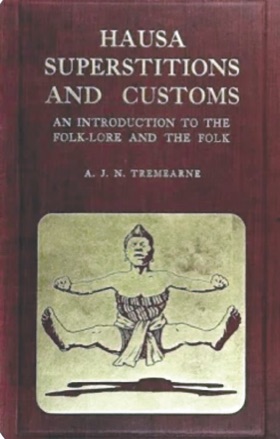
It is noteworthy that his publication Hausa Superstitions and Customs that was published in 1913, two years before his demise, contains several tales that had some similarities with tales I collected and published in Hausa Taskar Tatsuniyoyi (Littafi Na Daya Zuwa Na Goma Sha Hudu a Hade: Gidan Dabino Publishers, 2012). The similarities are in terms of themes, although the narratives and titles differ a little. For instance, tale number 94 page 428 in his book bears the title “Dan-Kuchingaya and The Witch,” whereas, in my Hausa book (Littafi Na Shida), the title of the story, as well as the title of the book is Dankutungayya. So also, tale number 86, page 408 in Tremearne’s Hausa Superstitions and Customs bearing the title “How Auta Killed Dodo” differs from mine in book (Littafi Na Uku: Yerima Da Labbi in Taskar Tatsuniyoyi TT003, 2012, P. 141) with the title of the story as “Dan’auta Da ’Yar Gwaggo”. The third comparison is with respect to tale number 43, page 274, which, although has the same theme the title is “The Maids of The City and the Unknown Youth’, while in my case the title is “Daskindaridi” in my book (Littafi Na Goma Sha Uku). Several other stories have the same themes.
Hausa Superstitions and Customs, a 548-page book, has three parts. Part I, titled Folk-lore and Folk-law, has seven chapters and runs from pages 1 to 153 while Part II, titled Hausa Tales, Parables and Variants, contain 100 tales, parables and variants from pages 183 to 454. Part III contains Notes on the tales, Hausa tribal marks and ‘bori’ dance from pages 457 to 530. The book also contains illustrations of several Hausa art works and artifacts.
Tremearne was cited in the introductory section to my book Taskar Tatsuniyoyi (Littafi Na Daya Zuwa Na Goma Sha Hudu a Hade: Gidan Dabino Publishers, 2012, P. 30) as among the early foreigners who published Hausa folktales along with F. Edgar and Rudolf Prietze in 1911, 1910 and 1904.
•Dr. Bukar Usman, former Permanent Secretary in the Presidency, Is the current President of the Nigerian Folklore Society (NFS).