Follow Us on Google

By Adewale Sanyaolu
The Independent Petroleum Producers Group (IPPG) has issued a stern warning that the Nigerian government’s recent decision to sell crude oil in naira to local refineries could severely exacerbate the country’s foreign exchange (FX) crisis, urging relevant authorities to tread cautiously to avoid overheating the economy.
The caution was delivered by the Chairman of IPPG, Mr. Abdulrasaq Isa, in a formal letter addressed to the Commission Chief Executive (CCE) of the Nigerian Upstream Petroleum Regulatory Commission (NUPRC), Mr. Gbenga Komolafe.
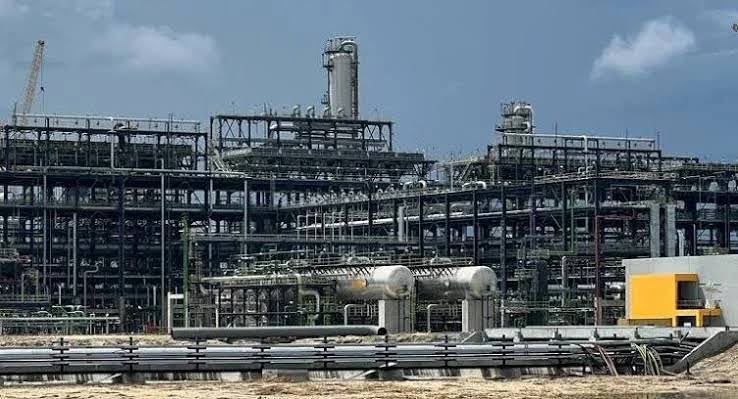
The development comes in the wake of the Federal Executive Council’s (FEC) approval, led by President Bola Tinubu, of a proposal by the Nigerian National Petroleum Company (NNPC) Ltd to commence the sale of crude oil to the Dangote Refinery and other domestic refineries in naira, effective from October 1. The decision, which aligns with demands from the Crude Oil Refiners Association of Nigeria (CORAN), is aimed at reducing the nation’s monthly foreign exchange expenditure on petroleum imports.
The Executive Chairman of the Federal Inland Revenue Service (FIRS), Zacch Adedeji, highlighted the anticipated benefits of this policy, stating that it would slash Nigeria’s monthly foreign exchange outlay on petrol imports from $660 million to a maximum of $50 million. This translates to an annual savings of approximately $7.32 billion. Moreover, the move is expected to reduce the financial costs associated with opening letters of credit, which currently stand at $79 million.
Despite these optimistic projections, IPPG has criticized the decision, arguing that it contravenes existing laws and poses a significant threat to the stability of the naira. “The proposal to sell crude in naira is inconsistent with the law and will impose a materially significant strain on the government’s efforts to manage the naira,” Mr. Isa emphasized. He pointed out that this policy could drastically reduce Nigeria’s FX receipts from its most substantial revenue source—the oil and gas industry—thus jeopardizing the government’s income from royalties, petroleum profit tax (PPT), company income tax (CIT), and hydrocarbon tax (HT), all of which are denominated in U.S. dollars.
Mr. Isa further expressed concern over recent industry developments, including the NUPRC’s domestic crude oil refining requirements and the production forecast for 2024, alongside the request for monthly crude oil quotations from local refineries. He noted that these demands, particularly those placed on IPPG members, present contractual, legal, financial, and operational challenges that must be addressed.
On August 12, the NUPRC revealed its crude oil production forecast for the second half of 2024, which mandates that producers sell crude to domestic refineries. This forecast shows a significant increase in domestic refineries’ crude requirements for the latter half of 2024, rising to 597,700 barrels per day (bpd) from 483,000 bpd in the first half of the year.
However, the NUPRC was only able to secure 177,777 bpd from oil producers in the first half, far short of the refineries’ demands.
The shortfall in crude supply has led to tensions between the 650,000-bpd Dangote Refinery and the NUPRC, as the refineries struggle to meet the increasing demand for crude. In response, Mr. Isa urged the NNPC Ltd to allocate its crude oil volumes more effectively to domestic refineries to alleviate the current supply shortages, which are affecting crude availability across Nigeria.
“Historically, NNPC has always maintained an intervention crude oil volume of 445,000 barrels per day (kbopd) to meet the nation’s domestic consumption needs. This volume has traditionally been used under various swap mechanisms to import refined products for domestic consumption,” Mr. Isa stated. He suggested that, with the advent of new domestic refining capacity, this dedicated volume should be reserved exclusively for local refineries under a price hedge mechanism, potentially facilitated by a financial institution like Afreximbank.
He also proposed that any national production exceeding this allocated volume should be treated strictly as export volumes, adhering to the international market’s willing buyer, willing seller framework. This approach would enable refiners to export excess products beyond domestic demand, thereby boosting Nigeria’s FX earnings.
Mr. Isa concluded by noting that some IPPG members are already supplying crude oil to local refineries but expressed concerns about the domestic crude oil refining requirements and the crude oil production forecast for the second half of 2024 as announced by the NUPRC. The IPPG’s apprehensions underline the complex challenges facing Nigeria’s oil and gas sector as it navigates the delicate balance between domestic energy security and foreign exchange stability.