Follow Us on Google
From Scholastica Hir, Makurdi
Amid growing security concerns across Nigeria’s Middle Belt, youths from Benue and Plateau states have taken the front seat in promoting peace, interfaith dialogue and freedom of religion or belief (FORB), using dialogue, culture and community engagement as tools for unity.
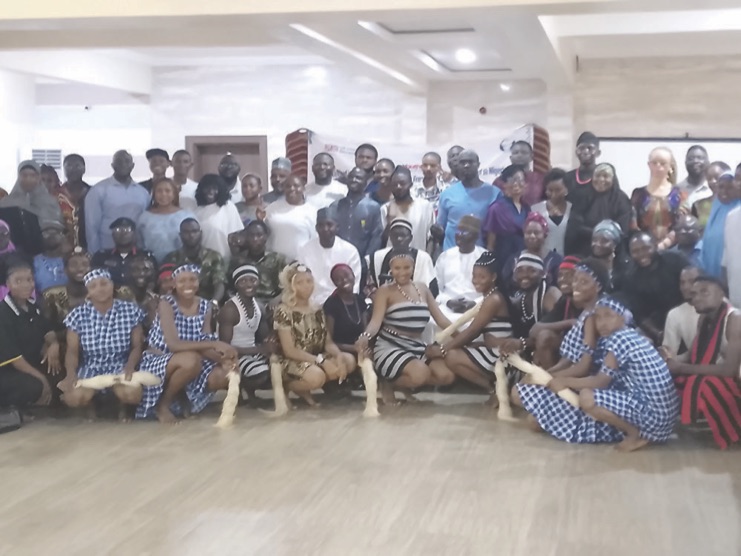
The young peace advocates converged on Makurdi, the capital of Benue State, for the Benue-Plateau Youth Peace and Freedom of Religion or Belief (Youth-FORB) Festival, where they showcased how youth-driven initiatives can bridge religious and ethnic divides while strengthening peaceful coexistence across communities.
The festival marked the end of a three-month project titled, “Youth of Faith for Peace: Advancing Freedom of Religion or Belief in Nigeria’s Middle Belt (Youth-FORB),” implemented by the Crest Research and Development Institute (CRADI) and the Dialogue, Reconciliation and Peace Centre (DREP) with support from the UK Foreign, Commonwealth and Development Office (FCDO).
Running from January to March 2026, the initiative targeted conflict-affected communities in Benue and Plateau states, empowering young people to serve as ambassadors of peace, reconciliation and religious tolerance.
Welcoming participants at the joint plenary, Head of CRADI, Williams Ibimago, described the festival as both a celebration of achievements and a test of the lessons learned during the project. He noted that although the formal funding cycle was ending, the peace activities initiated during the project would continue through sustained community engagement and collaboration among youth groups.
According to Ibimago, the Youth-FORB project was designed to strengthen interfaith dialogue and promote the rights of individuals to freely practise their religion or belief. The project sought to empower youths from diverse religious backgrounds to become agents of peace in communities where tensions and conflicts have historically disrupted social harmony.
He said the project’s goal is to strengthen interfaith dialogue and promote freedom of religion or belief among young people in conflict-affected communities of Plateau and Benue states, empowering them as active agents of peace and reconciliation and fostering sustainable interfaith collaboration.
He said: “The objectives include to promote interfaith understanding and tolerance among youths from Plateau and Benue states, showcase the cultural uniqueness and heritage of Plateau and Benue communities through music dance story telling and artistic performances, provide a platform for youthFORB companions creatives and peace actors to share stories of coexistence and peace building, strengthen cross state collaboration and trust among youths leaders, faith actors and community stakeholders as well as amplify positive narratives of youth led peace building and freedom of religion or belief in Nigeria’s Middle Belt.
“FORB principals are critical for fostering peace and development in Nigeria. While the country faces substantial challenges related to religious intolerance and conflict, there exists numerous opportunities to advance this principle.
“Fostering a culture of respect for diverse beliefs is essential for sustaining national peace, promoting human rights, and enhancing social and economic development. Addressing these issues requires collective efforts from all societal stakeholders including government, civil society and religious communities as well as students practitioners and security institutions.”
He noted that over the three-month period, the project organized capacity-building workshops, mentorship sessions and interfaith engagements that brought together youth leaders, faith actors and community stakeholders and through a mapping process conducted by DREP, several existing interfaith peace-building hubs were identified and strengthened, while new ones emerged across participating communities.
One of the most impactful strategies was the establishment of peace hubs and monthly interfaith peace circles across eight communities in both states. In total, sixteen peace circles were organized, providing platforms for dialogue, conflict prevention and community-based early warning systems where youth leaders could report potential threats to peace or violations of human rights.
Beyond dialogue, the festival itself reflected the cultural richness of the Middle Belt region. Music, dance, storytelling and artistic performances highlighted the cultural heritage of both states while demonstrating how cultural expression can serve as a unifying force among diverse religious and ethnic groups.
Ibimago emphasized that freedom of religion or belief is a fundamental human right that allows individuals to practice their faith freely, express their beliefs publicly and live without discrimination. He explained that societies that protect these rights are more likely to experience stability, social cohesion and economic development.
The initiative also confronted some of the pressing challenges facing communities in the region. While Plateau State grapples with issues such as drug abuse, youth exploitation and criminal activities linked to scavenging, Benue State’s major concern remains persistent insecurity and the need to strengthen trust between communities and government institutions.
Stakeholders at the event stressed that peace cannot be sustained without collective responsibility. Participants were urged to challenge narratives that fuel religious intolerance and to counter misinformation that manipulates sacred texts for political or ideological purposes.
In his goodwill message, co-chairman of Plateau Youth Interfaith Forum, Markus Kanda, noted that Plateau State has experienced several waves of crisis since 2001, particularly in communities such as Bassa, Riyom, Barkin Ladi, Mangu and Bokkos. He explained that the forum has continued to engage young people through peace hubs and interfaith dialogue platforms to discourage violence and promote tolerance.
Kanda commended the peace circle initiative, describing it as a practical step toward reshaping the mindset of young people who may have been influenced by divisive narratives. He pledged that the forum would sustain the peace circles even after the project ends, ensuring that more youths become advocates of coexistence rather than instruments of conflict.
He pledged: “We would continue to reach out to the youth who may have been cajoled or influenced negatively either by the peers or leaders who do not mean well for the state to ensure that they turn a new leaf and become advocate of tolerance.”
On the Benue side, the representative of the Community and Security Architecture Dialogue (CSAD), CSP Ann Ameh (retd) highlighted the role of collaboration among security agencies, civil society organizations and community leaders in maintaining peace. She explained that the CSAD platform includes representatives from the Nigerian Police, Civil Defence, NAPTIP, the Ministry of Women Affairs, youth groups and religious leaders. According to her, the combination of all representatives from the named organizations has helped in breaking bottlenecks and achieving peaceful coexistence in the state.
Ameh noted that the collaboration has helped establish early warning and early response mechanisms capable of preventing conflicts before they escalate. According to her, the system has successfully mediated disputes and prevented incidents such as mob action, jungle justice and escalating tensions between farmers and herders.
Similarly, representative of the Farin Gada Peace Initiative Forum in Jos, Steven Jang, explained that the group has been tackling drug abuse among young people, which often fuels violent behaviours during crises. Through community sensitization, the forum has engaged drug users and peddlers in areas along the Jos–Bauchi Road to reduce substance abuse and its impact on community stability.
The Chairman of the Benue Interfaith Peace Hub Initiative, Jemila Iliyasu, said the peace hub was established following a series of trainings conducted under the project. Since its formation, the hub has engaged in advocacy visits and dialogue sessions with stakeholders to strengthen peacebuilding efforts in the state.
Iliyasu, who also leads the Benue chapter of the Federation of Muslim Women Association of Nigeria, praised CRADI and DREP for creating a platform that allows youths and community leaders to collaborate across religious divides. She assured that members of the peace hub would continue to promote religious tolerance and peaceful coexistence within their communities.
Also, the Director General, Bureau for International Cooperation and Development (BICD), Dr Leonard-Angelo Viashima, represented by the Programme Analyst Culture, Elizabeth Olaje, said the state government is committed to seeing that what they have done is sustained. He said “We are happy that you incorporated cultural activities in peace building. What you have started will not die. We will do our best to collaborate with relevant stakeholders to sustain it.”
The festival also amplified voices often overlooked in peace conversations. Leader of People Living with Disabilities in North Central Nigeria, Charles Aende, lamented that persons with disabilities suffer disproportionately during conflicts, calling on youths to reject recruitment by individuals or groups seeking to exploit them to cause unrest.
For many participants, the Youth-FORB project demonstrated the immense potential of young people as drivers of peace in Nigeria’s Middle Belt. By combining dialogue, cultural expression and community-based peace structures, the initiative has laid a foundation for sustained interfaith collaboration between Benue and Plateau states.
Two young students, Mazi Adamu, who is the Director of Social at the Theater Arts and Paul Ogwuche both from Rev Fr Moses Orshio Adasu University, Makurdi (MOAUM), used their poem to sensitize participants on the need to live in peace.
Adamu, whose poem was titled, “The Label On My Forehead” reminded all and Sundry that “we can still live as one, be you a Muslim or a Christian. There’s unity in diversity.”
As the project concludes, the young peace ambassadors made a pledge to carry forward a message that peace is not merely the absence of conflict but a collective commitment to respect diversity, uphold human rights and protect the freedom of every individual to believe, worship and coexist in harmony.