Follow Us on Google

Merit Ibe
With the invasion of COVID-19 pandemic, economies of the world are bleeding and Nigeria is not isolated.
The pandemic has brought challenges for businesses, including small scale enterprises (SMEs) locally and globally. Its impact on businesses has resulted in global shutdown, frustrating business operations, investments and supply chains. Hence, there is dire need for a lifeline to save these small businesses from total collapse.
Countries around the world are experiencing pressure in various forms. The pandemic has also affected countries economically, politically and socially. Governments’ fiscal status, the incomes of low and middle- class citizens are affected. Industries have closed, with more people rendered jobless.
Since the outbreak, no doubt, unemployment rate, globally, has skyrocketed with huge health and economic crisis. Economic activities are a fraction of what they were before; all these are tending to recession as predicted.
Consequently, there has been an abrupt interruption in the supply of raw materials, goods, tools and machinery for manufacturing companies, forcing many SMEs to limit their operations.
The scourge has caused companies to downsize and some have shutdown, because they can’t cope with salaries; Some firms may not even recover after the pandemic.
Unemployment in Nigeria, now world’s poverty capital, is 23.1 percent, the number may run into 30+ after the pandemic, analysts say.
It is so difficult now for SMEs to carry out most business tasks in this crisis period.
Without doubt, SMEs need to be encouraged at this critical time of the scourge, so, they can survive and enable the overwhelmed economy come back to life.
It is clear that SMEs in Nigeria are vulnerable to shocks and are fragile due to the environment; they need to be saved from crumbling like a pack of cards.
On this note, to keep SMEs going since their contributions to gross domestic product (GDP) cannot be over emphasised, a substantial fiscal stimulus, palliatives and bailout are needed or else, they will record huge losses. Businesses are not in operation and even those in operation are experiencing low product demand, so, to continue, workers need to be kept on the payroll rather than laying them off.
SMEs, which account for 90 percent of all businesses in Nigeria, seem to be worst hit as they have been forced to restrict or suspend business since profit has nosedived.
As economies improve, trading conditions get better for small businesses but as the trading environment gets harsh by the day, small enterprises are hugely affected due to their nature.
A national survey of Micro, small and medium enterprises (MSMEs) conducted by the National Bureau of Statistics (NBS) in 2017 showed that the country has 41.5 million MSMEs scattered across various sectors. The data also affirm that about 73 percent of these MSMEs fully engage in wholesale and retail trade activities with China as a principal partner while about 43 percent of the medium scale enterprises engage in manufacturing activities.
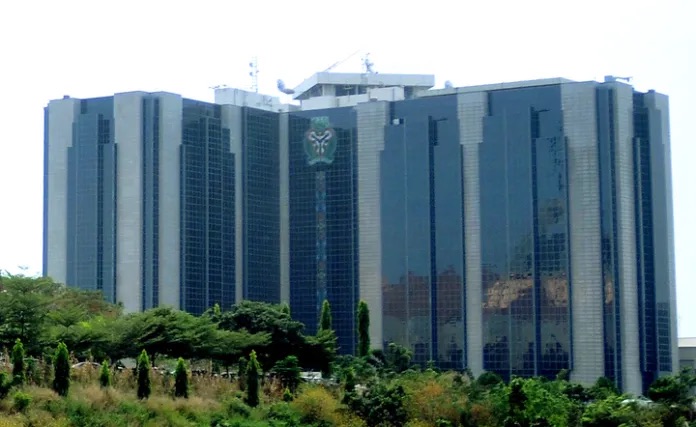
However, government is taking interest in the problems that SMEs are currently facing, which has been made manifest in the intervention funds by the Central Bank of Nigeria (CBN), the private sector support and other world bodies.
With the financial support from the International Monetary Fund, United Nations, European Union, USA, China, Germany and CBN, analysts and stakeholders are urging the government to ensure part of the funds go to MSMEs, which have created more than half of jobs in the economy.
The CBN had introduced the N50 billion Targeted Credit Facility as a stimulus package to support households and MSMEs affected by the COVID-19 pandemic, and guidelines to access the funds.
Although the apex bank introduced some palliatives and stimulus packages for businesses to curb the impact of the virus, some stakeholders are of the view that the funds might not go a long way with the number of SMEs in the country. Some others say the collateral clause; movable assets registered with National Collateral Registry (NCR), title documents, deed of debenture, life insurance, were not realistic, as such feel that most of the SMEs and households have been sidelined.
To cushion the effect of the COVID-19 crisis on the economy, experts have urged the government to release the funds on time and to the businesses in dire need. They argued that the emergence of COVID-19 and its increasing incidence in Nigeria calls for quick and adequate funding.
Though government has made moves to encourage SMEs by boosting their financial strength in this trying period, more needs to be done, and some stringent measures waived to allow more SMEs to partake in the intervention funds.
Right now, all eyes are on government to fulfil its promises to SMEs to assist them boost their businesses via loans at single digit rate, as they are in dire need of these loans and bailout to remain in business.
Executive Secretary of Nigerian Association of Small & Medium Enterprises (NASME), Eke Ubiji, said some SMEs may not be able to meet up with the CBN guidelines for accessing the N50 billion intervention fund to mitigate the effects of COVID-19, on businesses in the country.
The association, which commended the CBN for the initiative, also said the N50 billion might not go far compared to the number of SMEs in the country.
“The intervention fund is commendable for the initiative, but N50 billion is a tip of the iceberg, compared with the number of SMEs in Nigeria. The CBN can try the waters, disburse it and see how far the funds can go.”
Chief Operating Officer of WestAfrica ENRG, Lolade Oresanwo, urged the Federal Government to encourage and empower businesses and industries, saying government needs to provide a soft landing for SMEs in form of loans, increase moratorium, adding that with that, everyone will recover faster and better.
She said just sharing food, will not bring a lasting solution.
“You must give someone ammunition to revive himself and not just food.”
She also pointed out that majority of Nigerians were not employed by the civil service, but SMEs, as such government has to help the SMEs to weather the storm.
She added that the funds need to be given to companies that have showed track record that they are working; that employ staff and actually pay taxes. This, according to her, will help them with their working capital.
An Abuja-based business man, Charles Izundu, said the new stand by the CBN on SMEs financing is a commendable development. It will go a long way to ameliorate the dire circumstances of SMEs in Nigeria. This decision will revolutionise the development of the SMEs sector, expand local business activities and boost the GDP in this harsh era.