Follow Us on Google
•Operators lament N100bn losses, beg FG to act
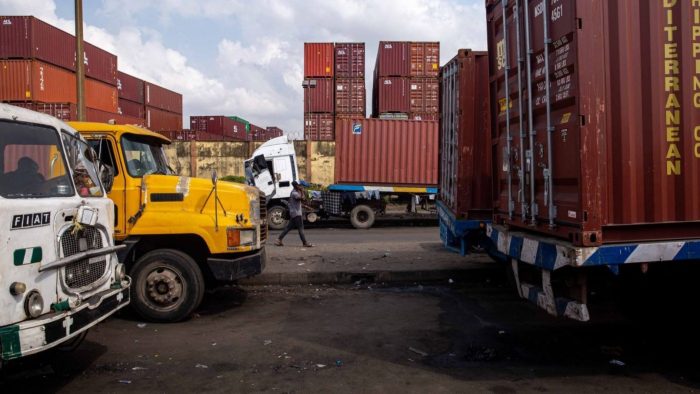
Thousands of export containers are stranded around the Apapa and Tin Can Island ports in Lagos as a resurgence of fuel tanker traffic has caused severe gridlock along the Apapa-Oshodi expressway, disrupting cargo movement and costing businesses over N100 billion.
The worsening traffic, especially around the Tin Can Island Port access road, has left trucks carrying export goods stuck for hours, forcing port users and truck owners to call on the federal government to urgently intervene.
They blamed the situation on petroleum tankers parked indiscriminately while waiting to enter tank farms, saying the disorder is crippling port operations.
Although officials of the Lagos State Traffic Management Authority (LASTMA), the Federal Road Safety Corps (FRSC), the Nigerian Ports Authority (NPA) and the police have been managing traffic, stakeholders said the efforts have not solved the problem because fuel tankers are not covered by the electronic call-up system used to regulate port-bound trucks.
They also pointed to the lack of holding bays for the tankers.
A visit by Daily Sun at the weekend showed long queues of tankers stretching from Coconut through Kirikiri, Mile 2 and Cele bus stop. Heavy rainfall over the weekend worsened the situation as flooded roads extended the traffic to the Berger/Kirikiri corridor and Second Rainbow.
Port users urged the government to include fuel tankers in the electronic call-up system to restore order on the port corridor. Speaking with Daily Sun, General Secretary of the Association of Maritime Truck Owners (AMATO), Bala Muhammed, said the growing number of fuel tankers heading to depots is responsible for the latest gridlock.
According to him, the tankers arrive in a disorganised manner, occupy two or three lanes and prevent trucks carrying cargo from reaching the ports.
“If care is not taken, it’s going to cause a serious national economic disaster,” Muhammed warned.
He appealed to the federal government, FRSC, LASTMA and other relevant agencies to quickly address what he described as the unregulated movement of tanker trucks along the Mile 2-Tin Can corridor.
“We call on the federal government to prevent the shutting down of the port operations and colossal economic loss to the nation’s economy,” he said.
Muhammed also urged the government to bring petroleum tankers under the electronic call-up system.
“We are also calling on the federal government to see how they can integrate all these fuel tankers into the call-off system so that they won’t be coming indiscriminately,” he added.
He warned that the traffic is gradually spreading towards the port because many tankers are now being diverted to the Ibru Jetty, saying the situation could become “a national embarrassment if care is not taken.”
He further called on the government to work with the National Union of Petroleum and Natural Gas Workers (NUPENG) to better manage tanker movement.
“It is very important for the government to address this tanker movement… so that the economy is not negatively affected,” he said.
Muhammed also expressed concern that trucks transporting agricultural exports, many of which are perishable, are spending too much time on the road.
He said the delays could reduce the quality of Nigerian export products before they reach overseas markets and undermine the country’s export drive.
Also speaking, the Chief Executive Officer of Harsecom Logistics Nigeria Limited, Haruna Omolajomo, said although traffic had improved slightly in recent months, the heavy rains had created fresh bottlenecks around the port corridor.
He said the congestion is affecting businesses by delaying workers and slowing down the movement of goods.
Omolajomo recalled that he left for work expecting to arrive by 10 a.m. but did not get to his office until about 12:30 p.m. because of the gridlock.
He warned that unless flooding and traffic problems are addressed, businesses operating around the Apapa port corridor will continue to suffer delays, lower productivity and higher operating costs.