Follow Us on Google
By Ngozi Nwoke
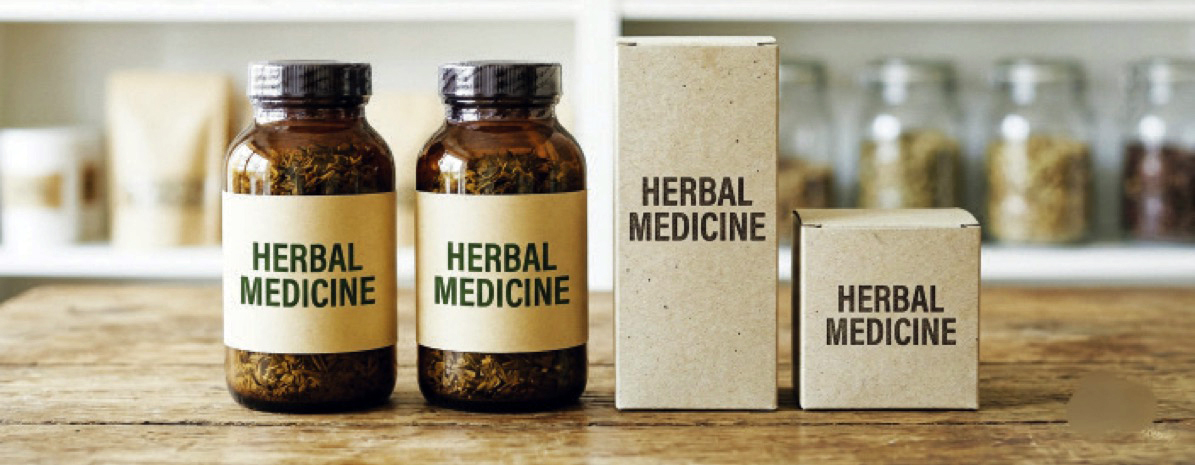
Counterfeit packaged herbal products now move in Nigeria. Not in open markets, but on Instagram, on TikTok, on Facebook pages with 30,000 followers and blue verification badges bought for different amounts depending on the product.

The packaging looks professional. The claims are bold, but the regulations are missing.
For decades, herbal medicine has been part of Nigerian healthcare. From agbo in the village to bitters in the city, people have turned to roots, leaves and barks for relief. The difference today is scale, speed, and silence.
Today, social media has turned every phone into a pharmacy, and every vendor into a manufacturer, marketer and doctor at once. The National Agency for Food and Drug Administration and Control, (NAFDAC), is the body mandated to regulate drugs, food, cosmetics, medical devices and packaged herbal products in Nigeria. But when a product is sold through a WhatsApp broadcast list and paid for by bank transfer, the regulatory net gets thin.
The World Health Organisation guideline for lead in herbal medicines is not more than 10 parts per millions (PPM), for products that have passed quality control.
The bigger issue is what is not on the labels of these products. Some herbal products labelled “Kidney and Liver Detox” contained high levels of heavy metals, including lead at 4.2 ppm. The products which always claim to be “pure herbs” have traces of dexamethasone, a steroid.
Some flat tummy tea had sibutramine, a drug banned globally in 2010 because of cardiovascular risks. Some man power herbal products have sildenafil, the active ingredient in Viagra, at doses that could be dangerous for a man with high blood pressure.
Most of these products don’t have NAFDAC registration numbers. Some have fake numbers printed on the bottles. This is the new face of counterfeit, fake wellness and real harm to the health.
At the Lagos University Teaching Hospital, (LUTH), Tolu Adebayo, a consultant physician said that, “The common trend is now that people are taking herbal mixtures online for waist pain, for infection, for weight loss. The problem is that they don’t know what’s inside those bottles.
“Some of these products contain steroids, some contain antibiotics, some contain industrial solvents used to extract the herbs. The liver tries to metabolise it and it shuts down. The kidney filters it and it fails.”
Adebayo disclosed that in the last eight months, his unit has admitted 18 patients between ages 22 and 40 with acute liver injury linked to self-medication with herbal products.
Ifeoma Nwosu, a public health specialist who runs a community clinic in Lawanson, puts it more bluntly. “Counterfeit herbal products are a double problem. First, they don’t contain what they claim, so the person’s real illness is not treated. A woman with fibroid delays surgery for six months drinking ‘fibroid tea’ and by the time she comes to us, the fibroid is 20 weeks size.
“They contain ingredients that were never meant to be ingested. We have seen cases of stroke in 30-year-olds who were taking ‘manpower’ mixes laced with undeclared sildenafil and caffeine. We have seen hypoglycemia in diabetics who stopped insulin because an influencer said ‘herbal cure’ works. Social media gives these products credibility they have not earned.
“Herbal medicine has value. Artemisinin for malaria came from a herb. But it went through research, standardisation and dosing. What we have now is chaos. People are mixing 15 herbs in a bottle, adding pharmaceuticals to make it work fast, and calling it natural. That’s not medicine. That’s roulette.
“If the vendor cannot tell you the ingredients and the dosage, don’t take it. And if you feel sick after taking it, go to the hospital immediately. Don’t wait to drink more ‘antidote’ from the same person.”
The regulatory challenge is volume and velocity. NAFDAC has a registration process for packaged herbal medicines. Companies are supposed to submit samples for laboratory testing, provide proof of Good Manufacturing Practice, and label products with batch numbers, expiry dates and NAFDAC numbers. But the agency itself admits it can not police every WhatsApp group.
However, with the intense calls for the resignation of the NAFDAC DG, Mojisola Adeyeye by civil society circles, the agency now faces its most public credibility test in years. Critics argue that despite several warnings and raids, the proliferation of unregistered herbal products on TikTok, Instagram and WhatsApp shows a regulatory gap that the DG has failed to close.
They point to the ease with which vendors create new accounts after takedowns and to the fake NAFDAC numbers still circulating on product labels as evidence that enforcement has not kept pace with digital commerce.
In response, the DG herself has maintained that the agency lacks the manpower, and has called for collaboration with the Advertising Regulatory Council of Nigeria (ARCON), the Lagos State Signage and Advertising Agency (LASAA) and other regulatory agencies.
For now, the pressure on NAFDAC reflects a large public outcry and frustration. People want to see the regulators speedily track down unscrupulous herbal products vendors on social media, before more Nigerians get hurt.
In Lagos, the other layer is advertising. LASAA regulates outdoor advertising, billboards, and brand activations. The Lagos State Consumer Protection Agency, (LASCOPA) handles consumer complaints. The agency received over 400 complaints in 2025 related to herbal products bought online. Most of the complaints are about the efficacy of the herbal products.
For digital advertising, the Advertising Regulatory Council of Nigeria (ARCON) is responsible for regulating all advertising in Nigeria, including adverts on social media platforms such as Facebook, Instagram, TikTok and WhatsApp.
The council states that under the ARCON Act 2022, all advertisements, whether paid promotions, influencer posts, or sponsored content, must be vetted and approved before exposure to the public. It added that it monitors digital ads through its Advertising Standards Panel, handles consumer complaints, and can direct platforms to take down misleading adverts, particularly those making unverified health and drug claims.
Health officials and concerned consumers complaint that vendors are using Instagram Lives, WhatsApp broadcasts and TikTok videos to market “cures” for fibroid, diabetes and infections without NAFDAC registration or scientific proof.
To understand the supply side, Mfonabasi Ifiok, a herbal product vendor runs “Mfon Naturals” on her Instagram page with 18,000 followers. She sells “Womb Cleansing Syrup,” “Infection Flush,” and “Blood Tonic.”
When I asked her if her products are registered with NAFDAC, she responded in affirmation. “It cost me 2 million naira and one year to register my products. They are certified. I source my herbs from a Mallam in Oyingbo and prepare them by myself and I have testimonials from customers. Over 500 women have used it and they are fine. If it was poison, would I be posting my face on my page? Would I do live videos? God is my witness.”
Vera as she chooses to be identified, is also a TikTok vendor who operates “VerdeRoot Herbal Solutions” and ships nationwide. She sells “Diabetes Destroyer,” “Hypertension Cure,” and “Stroke Reversal Oil.”
Her response was different. “I’m not a doctor. I’m a businessman. The products I sell are from a factory in Onitsha. The factory man told me it’s NAFDAC approved. He gave me the number to print. My own is, people are buying and they are seeing results. If NAFDAC comes tomorrow and says stop, I will stop. People want solutions. Hospital is expensive.
“Nigeria’s out-of-pocket health spending is among the highest in the world. A consultation at a private hospital can cost ₦20,000 before any test. A course of antibiotics can be ₦15,000. A fibroid surgery can run into millions. So when someone offers a ₦10,000 bottle with a promise and a payment plan, it feels like an option. We don’t just sell products. We sell hope.”
The platforms themselves are complicit by design. Meta and TikTok have policies against selling unapproved drugs, but enforcement in Nigeria is weak. A page gets taken down, three more pop up. Influencers with 100,000 followers do paid promos for “detox” teas without disclosing it. The algorithm rewards engagement, not accuracy.
Lagos State, through the Ministry of Health, is piloting a programme to train traditional medicine practitioners and bring them into a formal registry. The idea is to separate legitimate herbalists from quacks. But the online vendors are not part of any association. They are freelancers.
Health experts say the answer is not to ban herbs. They noted that herbal medicine has value, but warned patients that if herbal medicines promises to cure everything, it cures nothing. If it has no NAFDAC number, don’t take it.
They will look fresh. They will look natural. They will come with promises. And for some people, they will come with consequences.