Follow Us on Google

Omodele Adigun
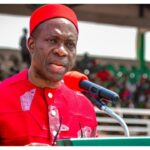
As non-oil revenue hovers around three to four per cent of the Gross Domestic Protect (GDP), Governor Nasir El-Rufai of Kaduna State, has charged the Federal Government to compel every Nigerian adult to pay taxes.
This was even as the President of the Chartered Institute of Taxation of Nigeria (CITN), Dame Olajumoke Simplice, also called on the executive arm of government to ensure that tax receipts are properly accounted for.
The duo stated this last Thursday at the just-concluded 22nd Annual Tax conference organized by CITN in Lagos.
According to El-Rufai, going by the nation’s colonial experience, paying tax is treated as an illegitimate imposition and voluntary compliance while the obligation to pay income tax remains a major challenge.
“Therefore, it is hardly surprising that many of our state governments and the Federal Government are not collecting as much tax as they should,” he stated.
Exploring the theme of the conference, Taxation and Economic Competitiveness: Imperative for National Development, he lamented that the “low rate of internal revenue collection in the country depresses public finances, hampers the ability to deliver social goods, services and physical infrastructure. This in turn limits competitiveness, shrinking the ability to promote the sort of enabling environment and economic dynamism that can create jobs, expand public revenues and improve public welfare.”
He then recommended that all adults should be forced to live up to their civic obligation.
His words: “As a whole, it is evident that Nigeria is not collecting as much public revenue as it can. There is still much potential for growing Value Added Tax (VAT) and independent revenues of the Federal Government. There was considerable resistance to the hike in VAT from five per cent to 7.5 per cent, but our rates are still much lower than our immediate neighbors. With national tax revenues (oil and non-oil) still less than seven per cent of GDP, Nigeria is way behind the average of comparator nations of about 20 per cent of GDP. As the world goes green, and crude oil loses its primacy as a leading source of energy, Nigeria must look inwards and compel every adult to pay tax as part of our citizenship obligation.”
Dame Simplice, on her part, urged the executive arm to set tone from the top by making political leaders pay their share of taxes and ensure government economic policies in generating revenue are matched with tax reforms.
“The executive arm of government should also ensure that economic policies in generating revenue are matched with tax reforms that encourage growth through executive orders and sponsorship of legislative bills capable of promoting entrepreneurial development; work with Business Enabling Environment Secretariat to simplify taxes on business to attract foreign direct investment.”
She also called on the private sector to ensure collaboration with the government to bring in the informal sector for expansion of the tax base.