Follow Us on Google
By Bimbola Oyesola, [email protected]
The economic challenges in Nigeria have had a devastating effect on the industrial sector of the economy and operators in the food sector have been more at the receiving end of the crisis.
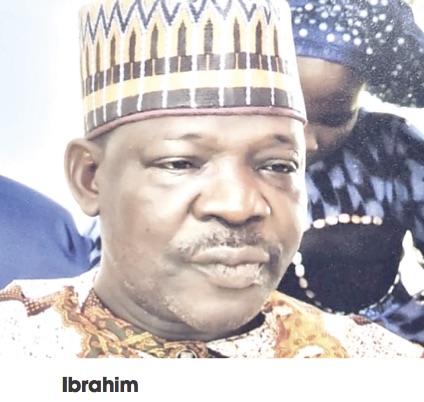
President of the National Union of Food, Beverages, and Tobacco Employees (NUFBTE), Garba Ibrahim, noted that this has negatively impacted productivity and increased hardship in the sector.
He highlighted heavy taxation, increased tariffs and power supply, as issues that have impacted the food sector.
Ibrahim also talked about the loss of jobs, the migration of companies to neighboring countries, efforts to address rising food prices and the impact of government interventions, while emphasizing the need for a conducive environment for local production and the union’s role in negotiating with employers to mitigate workers’ retrenchment.
Excerpts:
Current economic situation
The current economic situation has had a devastating impact on our sector, with heavy taxation, increase in tariff, and epileptic power supply. However, the most severe is the increase in tariff. Our members in the food sector are leaving in droves to neighbouring countries like Cotonou (Benin) and Ghana where they carry out production and then import the goods to Nigeria.
Loss of jobs has been another serious issue and some companies have had to shut down. There is the issue of importation too. We are trying to depend on our local products. We have had to look back at the resources that we have. For instance, in Kano, we used to depend on foreign or imported wheat for production, but with the recent economic reality occasioned by the Russia-Ukraine war that has impacted the supply of grains, we have now relied on our local wheat.
As I speak to you, the Northern Nigerian Flour Mills, Kano, uses 100 percent of our local wheat for their production, which was sourced from Jigawa, Kastina and other states within the country. We have even come to realize that the local wheat is performing even better than the foreign wheat.
Welfare
Concerning the welfare of our members, we have a National Joint Industrial Council Agreement (NJIC) which is an agreement between the union and the employers for our members, and this is reviewed every two years.
The agreement is due for review in December. And as usual, we send our demands/requests three months ahead to employers for the renewal of the agreement. The negotiation of the Agreement covers various components such as salary, wages, housing allowances, transport allowances among others.
We have already done that and when we come to the negotiation table, we would reach a reasonable agreement that would be beneficial to both the workers and their employers.
Fuel subsidy
On the issue of removal of fuel subsidy, we appreciate our employers because they have commenced giving palliatives even before the federal government. Most companies in the food sector have commenced giving both cash and kind rewards for members before now. Like they did during the COVID-19 pandemic where they also offered commendable palliatives. Currently, some companies give a minimum of N25,000 while some give way above that. Some have also gone as far as giving food items. We appreciate them for these efforts even though it is included in our NJIC agreement.
Rising food prices
We have joined hands with employers to cry out to the government to provide a soft landing in terms of taxes and tariffs for the food industry to operate effectively. We have also cried to the government to address the issue of power because the consistent use of fuel/diesel, especially now that they are expensive, has continued to push up our operational costs higher.
Also, we have recently signed an agreement between our employers and the union about outsourcing and contract staff. That guideline is currently before the Ministry of Labour for ratification. When it is approved, there will be no difference between permanent, casual or contract because the composition of the guidelines ensures that all staffs enjoy the same benefits including pensions and gratuity. Also, it is included in the review of condition of service.
Wage award and hardships in the country
It would be sufficient to ameliorate the hardship with other interventions, if there are stability and sustainability, because we are used to government kicking off certain policies and are unable to sustain it after a while. This has been a problem. So, I urge them to be deliberate about sustaining this intervention program as the issue of sustainability is key. Take Kano State, for instance, the current development on ground is as a result of current government continuing from the progress of the previous. That is also what we have imbibed in this union, to continue to build on the successes of the previous leadership.
Our members may benefit from some of these government’s interventions, but it is not primarily designed to cater for us. That is why we will continue to appreciate our employees who have done a lot to ease the suffering of our members. And we have also been exploring ways to sustain these interventions which the NJIC agreement is a part of the steps that we are taking.
Redundancy
We have lost hundreds of our members. Some companies have closed down, while some have taken the expansion of their businesses to other countries.
Take Guinness, for instance, they were planning an expansion line for Aba, but it was stopped and instead the expansion was done in Ghana. Some other companies like Nestlé and Wamco made similar moves because the cost of production in Nigeria is really high, it makes running their businesses in Nigeria almost unprofitable.
This, by implication, has made a lot of our members lose their jobs and have stalled the employment opportunities that would have been created if these companies had expanded in Nigeria. This in turn has affected economic activities in the country.
CBN lifting forex restriction on 43 items
If you go through the list of items, you will realize that some of the items concern the food industry directly. This would affect us negatively, because when the government gives room for the importation of food items like rice, when we are struggling to sustain our local industries, we cannot grow.
In Kano alone, we have about 42 rice mills in operation and there are others in neighboring states like Jigawa, Sokoto and others. So, if we lift importation on rice and it floods our market, Nigerians may not patronize our local rice, and this would lead to the closure of most of our industries.
Local production
The main reason that our local production has not been able to meet demand and its prices remain high is because of the high cost of production which has been exacerbated by lack of sufficient power supply, heavy tariffs among others. All these setbacks are the reason we find ourselves in this quagmire. I still insist that if the federal government can provide a conducive atmosphere for our local manufacturers, we would not bother about the importation of rice and other food items. We have sufficient resources and manpower to produce enough to meet demand and even to export to neighboring countries if availed the right business environment.
Government capacity to deliver desired changes
Well, we hope so. You cannot underestimate the capacity of the current government. As I said earlier, if there is continuation of policies and a conscious effort to build on the development of the previous government.
It is still too early to judge this government as they are still new in office, but let us give them the benefit of doubt.
Issue of companies’ retrenchment
Any company that is planning to retrench workers would first of all write to the union stating their reason for the retrenchment. So, we invite them for a meeting to negotiate the terms of this retrenchment and possibly dissuade them or reduce the number of workers that they intend to lay off. Although it is their right and we cannot completely prevent them from retrenching, when they come with the number of people that will be affected, then we negotiate it. Also, we would ensure that any worker that would be retrenched would enjoy all the benefits.
In this sector also, we have what we call ‘Ex-gratia’ which is different from other benefits. The ex-gratia is a form of favour or benefits that the company gives to an employee that was laid off until such person is able to get another job, or establishes himself. This ex-gratia lasts minimum of months and can last up to 34 months. However some companies sum up the amount and pay it once. The worker that was laid off can also use this money to establish himself or herself. Please note that this ex-gratia is an extra payment and is different from the regular benefits or entitlements due for such a person.
Another benefit of the ex-gratia is that when an employer calculates what he stands to lose by making all these payments, it would be discouraged to sack workers.
Re-skilling or training programmes for members
Yes, we have various forms of training for our members that cuts across different aspect of personal development to improve their productivity, some of which we have collaborated with the Ministry of Labour, Michael Imoudu Institute of Labour Study (MINILS) and other relevant labour organizations. Soon, we will commence giving training to our newly elected members from the recently concluded unit, branch and state elections.
We have 36 council across Nigeria with about 100 branches and their respective units and we have provided a timetable where we organize trainings. Our training courses are continuous because we believe strongly in human capital development. These also would impact the lives of our members.