Follow Us on Google
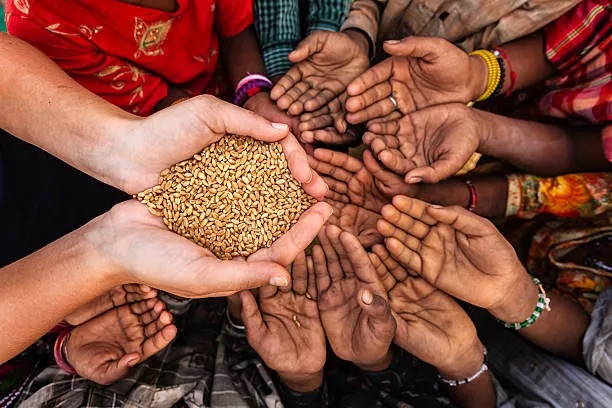
The recent report that about 24 million children in Nigeria are suffering from anemia is worrisome and unacceptable. This is also a clarion call on the federal and state governments to wake up and intentionally combat the alarming hunger and malnutrition challenges in the country. It is also saddening that 58 per cent of Nigerian women of reproductive age are reportedly living with anemia. The anemia among this category of women must equally be addressed.
The alarming report was disclosed during the recent CS-SUNN Capacity Building on Strengthening Media Role for Anemia Prevention in Nigeria. According to the statistics lifted from the 2023 Nigeria Demographic and Health Survey (NDHS), Nigeria has 35 million stunted children, over 14 million wasted children, and 24 million anemic children.
Speaking at the event, the Assistant Director in the Nutrition Department of the Federal Ministry of Health and Social Welfare, Helen Achimugu, bemoaned that anemia and other micronutrient deficiencies had undermined the health, productivity and survival of millions of Nigerians.
Also, the United Nations Resident and Humanitarian Coordinator in Nigeria, Mohamed Malick Fall, has disclosed that about 35 million people in Nigeria may face food insecurity in the upcoming lean season. Fall made the disclosure during the launch of the 2026 Nigeria Humanitarian Needs and Response Plan. Fall further said that “three million children are at risk of life-threatening severe acute malnutrition. These are not statistics. These numbers represent lives, futures and Nigerians.” Although the UN agency is doing much to stem the malnutrition crisis in the country, the federal government should lead the fight.
Similarly, the Senate President, Senator Godswill Akpabio, has decried the rising cost of food and the looming hunger across the country. During his welcome address at the first sitting of the Senate after the Yuletide season break, Akpabio expressed dismay that rising food prices and hunger pose a great challenge to national security and wellbeing of citizens.
According to him, “this sobering reality demands a doubling of effort through legislation, oversight and collaboration to strengthen food security, protect the vulnerable and ensure that no Nigerian is abandoned to despair.”
Malnutrition is not peculiar to Nigeria. It is indeed a global phenomenon. The World Health Organization (WHO) says that malnutrition, in all its forms, includes under-nutrition (wasting, stunting and underweight), inadequate vitamins or minerals, overweight, obesity, and resulting diet-related non-communicable diseases. In 2022, about 2.5billion adults were overweight, including 890 million who were living with obesity, while 390 million were underweight.
Other News
Globally in 2022, 149 million children under 5 were estimated to be stunted (too short for age), 45 million were estimated to be wasted (too thin for height), and 37 million were overweight or living with obesity. The global health agency further says that nearly half of deaths among children under 5 years of age are linked to undernutrition. These mostly occur in low-and middle-income countries.
Malnutrition is a serious challenge in Africa, affecting over 20 per cent of the population. Over 204 million people in sub-Saharan Africa are suffering from hunger. In 2025, an estimated 13 million children in Eastern and Southern Africa were acutely malnourished, with 4 million suffering from severe acute malnutrition. The regional hunger hotspots include West and central Africa, with over 36 million people struggling for basic food needs. The hunger crisis is worsened by conflict, climate shocks, high poverty rates and rising cost of food prices. This is particularly the case in Sudan and Nigeria.
The alarming malnutrition and hunger challenges in the country are real and unacceptable. We say this because Nigeria has the human and material resources to combat the rising menace in the country. We have enough arable land to grow plenty foods for our teeming population and even for export. At the same time, we do not lack expertise in fish and animal farming. What we lack is the political will to leverage on agriculture to combat the looming hunger threat and food insecurity.
With our enormous land and water resources, we should have no pact with hunger and malnutrition. We should also have no pact with poverty. To combat malnutrition, the federal government in 2025 launched the “Nutrition 774 Initiative.” This integrates grassroots, multisectoral approaches across the 774 local government areas to improve child health and food security. Some of the mitigating efforts include large-scale food fortification, cash transfers to women and partnerships with UNICEF and NGOs to treat acute malnutrition.
Let the cash transfer programme be inclusive and nationwide. Restricting cash transfers to a particular region of the country will not do much to address hunger and nutrition challenges. Without tackling the alarming malnutrition and hunger, Nigeria will not achieve most of the UN Sustainable Development Goals (SDGs) by the target date of 2030.
All tiers of government must intentionally begin to prioritize agriculture and food security. Governors and local government chairmen must be committed to large-scale agriculture and food production. They can even boost their dwindling internally generated revenue (IGR) through mechanized agriculture and all seasons farming. Apart from creating more jobs and businesses, agriculture has enormous potential to boost the revenue of non-oil sector. The era of paying lip service to agriculture is truly over.