Follow Us on Google
By Benson Michael
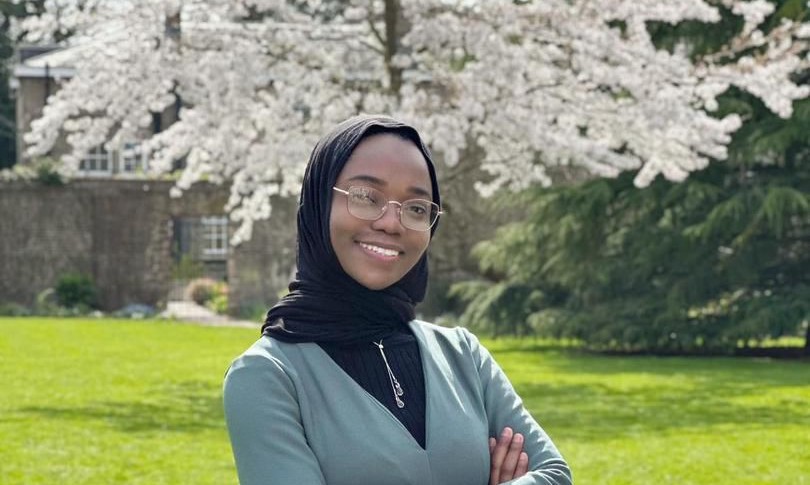
This year, the Climatebase Fellowship unveiled its Cohort 8, a big moment in the climate world. Among the chosen innovators from applicants around the globe was Aisha Abdullahi, a strategist who has always connected technology, governance, and climate action. She views this honor as more than a personal win, but as proof of her long efforts to create lasting systems.
The Climatebase Fellowship is known as one of the toughest programs for climate experts. Thousands apply each year, but only a small number get in after careful checks of their skills, leadership, and ability to build solutions that grow. Fellows join a worldwide group of leaders at the edge of climate resilience, adaptation, and new ideas. Abdullahi’s pick showed the program’s trust in her to guide important projects. The team called her acceptance a sign of her background, drive, and potential, putting her with others who will shape climate governance.
This honor comes from climate projects that have made real differences. In Nigeria, she led a national Climate Action effort that set up a Climate Risk and Vulnerability Assessment and a Carbon Data Repository. This work brought together government leaders, experts, and community members to build a system for smart decisions on resilience. An outside viewer said, “What Aisha did was more than a technical result. She made a system that helps governments act clearly amid uncertainty.”
Her main project in the Fellowship, the Climate Resilience Data Hub, is already drawing partners from other countries and it shows Abdullahi’s skill in building trust and groups around common aims. One partner said it well: “Aisha does not just plan projects, she builds platforms that let others take real climate steps.”
Her honor is also backed by her focus on mentoring and sharing knowledge. At GITEX Global in Dubai, through the National Information Technology Development Agency, she guided six startups on IT plans, data safety, and growth structures. Her help led one startup to win a ten thousand dollar grant from investors, showing how she turns advice into real results. A founder she mentored shared, “Aisha built our confidence to link technology with sustainability goals. Her guidance got us ready to grow with care and effect.”
Aisha Abdullahi’s academic foundation reflects both technical depth and global perspective. She earned a Bachelor’s degree in Information Technology and Business Information Systems from Middlesex University, London, where she built strong skills in digital systems and business integration. To expand her expertise, she pursued two advanced degrees at Hult International Business School: a Master’s in International Business in Boston and a Master’s in Business Analytics in San Francisco. This combination of business, analytics, and technology equips her with the ability to design solutions that are data‑driven, globally informed, and aligned with the complex governance and sustainability challenges that define climate resilience today.
She has Project Management experience and advanced learning in climate risk analysis, geospatial analysis, and IT governance. These skills help her manage complex multi-stakeholder projects, maintaining organizational order and accountability while keeping technology aligned with environmental and social needs. Her knowledge in data analysis, digital transformation, and resilience planning enables her to design robust technological systems that are both effective and relevant to people and the environment.
Her coworkers often point out her talent for mixing deep technical skills with a people first view. One said, “Aisha’s power is in linking data to real lives. She makes sure technology is not distant but useful, easy to reach, and strengthening.” This view is just what the Climatebase Fellowship wants to boost: leaders who connect new ideas to real effects, making sure climate answers are not only bold but also doable.
For Abdullahi, the Climatebase Fellowship is more than an award. It is a stage to grow her ideas and increase her reach. Through the program, she is building stronger ties, improving the Climate Resilience Data Hub, and linking with a global group of peers who share her dedication to adaptation and resilience. It lets her try out thoughts, share knowledge, and create solutions together for the pressing facts of climate change.
The key truth in her work is, leadership in climate technology is not about solo success but about creating systems where knowledge, new ideas, and community meet. Abdullahi has always shown that resilience is not made alone. It needs partnerships that go across borders, fields, and areas. By uniting geospatial experts, policy researchers, and local innovators, she is building a model of teamwork that captures the Fellowship’s spirit.
Looking ahead, Abdullahi sees the Climate Resilience Data Hub as more than one project. She views it as a flexible platform that can fit different places, from cities to rural areas, giving local insights that guide policy and actions. Her goal is to give decision makers, from officials to community leaders, the tools and data to act strongly against climate doubts.
As she enters this new stage, Abdullahi brings not only the Fellowship’s support but also the duty to form solutions that will shape climate resilience. Her story reminds us that leadership is not just about titles or prizes, but about motivating others, creating systems that last, and making paths for group progress. In this way, her Fellowship is not the end of her path, but the start of a bigger goal, one that will make a lasting mark on the global climate effort.