Follow Us on Google

The civil society in Nigeria took a bold step on unification of their energy to enable them continue to hold the government accountable to the people. On 31st July, 2025, the civil society organised a “Civil Democracy and National Development” summit with the theme: Civil Society, Democracy, and Governance Reforms: Building Sustainable Partnership for National Development. It was conducted by the National Civil Society Council of Nigeria (NCSCN) on behalf of over 630 affiliate members of the council at the Rotunda Conference Hall, Federal Ministry of Foreign Affairs, Abuja.
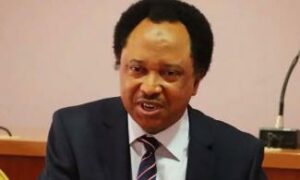
The summit attracted seasoned activists, scholars, politicians, and other sound minds. Senator Shehu Sani was there and the Senate President was represented by the Senate spokesperson, Senator Yemi Adaramodu. Sani was one of the lead speakers. As usual, he comprehensively delivered on the topic. Sani just needs to tell you his experience as a democracy advocate during the military regime for you to stay glued to him until he concludes his speech. But he made one striking revelation. When the military was disengaging from politics, they invited the politicians and democracy activists to take over the reigns of power. The politicians jumped at it, but the democracy activists, with their holier-than-thou attitude, refused to have anything to do with the military, in order not to create the impression that they have been compromised.
He pointed out that Bola Ahmed Tinubu attended the meeting where they consulted one another on whether they would join the democratic political process, and disagreed with the majority that they should stay away from anything military. He observed that today, Tinubu is the President, and by the time the activists were waking up to the reality of the situation, the politicians have taken over every space. The activists like Gani Fawehinmi, Olisa Agbakoba, Femi Falana, Mike Ozekhome, who after then came in to contest for positions couldn’t make it. It’s quite telling that till date, the same activists go cap in hand to the established politicians to plead that the Constitution should be amended to consolidate our democracy. This is something they would have easily done if they had taken over the reins of power after the military era. The import of Sani’s observations is that on the day you decide to be a politician, you must be ready to work with people you like and the people you don’t like. It’s not the arena for claiming saints as this will be unhelpful.
Everyone that came in for the summit believed that the idea of military regime coming back to our polity should be jettisoned. Being a participant at the summit, I agreed with this position. The great popularity of the Burkina Faso military junta among the youths in Africa is rekindling the appetite for military regimes in Africa. This appetite has swept through the Sahel Region of Mali, Burkina Faso, and Niger Republic, with offshoots into Gabon, and Guinea Bissau. The Sahel Region States have even pulled out of the Economic Community of West African States (ECOWAS) to form their own association.
Sani enumerated how the military summarily tried him for treason within 12 minutes and sentenced him to prison for life. He was allocated a lawyer whom he had never met to defend him. The prosecutor spoke for five minutes, his own allocated lawyer spoke for five minutes and the Head of the Military Tribunal sentenced him to life in prison within two minutes. He spent more than four years in the prison for simply advocating for democracy.
Supporting his point of view, I told the listening audience that nobody should deceive them, that contrary to public impression that during military regimes that it’s the military that is in power, it’s actually the regime of one man, who at the same time is the head of the executive, legislature, and the judiciary. During military regimes, the Head of State governs by decrees, which is made by the Army Council he established, he implements the laws made by his council, and sets up a military tribunal to try offenders.
Other News
The late President Muhammadu Buhari confirmed this procedure when he lamented that taking decisions in a democracy is beset with many bottlenecks. He recalled when he was a military Head of State, how every offender was considered guilty until the offender proves otherwise. This method of his saw some politicians sent to prison for hundreds of years for corruption. It also saw his regime making a retroactive law that condemned some drug pushers to death when the offence of drug peddling was not a capital offence when they committed it.
Sani Abacha even went further to confirm that military regime is the government of one man. He arrested the winner of the June 12 presidential election, MKO Abiola, for daring to declare himself President, after winning the presidential election, but which was annulled by Ibrahim Babangida’s regime. Abiola remained in jail, without trial, for more than four years. He eventually died in detention. Abacha went further to rope President Obasanjo, Shehu Musa Yar’Adua and some other military officers into a military coup and sent most of them to prison. Yar’Adua died in prison. He set up his own Deputy, Oladipo Diya, and other military officers with a coup d’état. They fell into his trap and were condemned to death. Abacha’s death saved Diya and his group from being executed by firing squad. All the democracy activists were rounded up and either killed, jailed, or chased to exile.
There’s nothing beautiful about military regimes. Awolowo was very clear that the worst civilian regime is better than the best military regime. However, the only silver bullet that can stop the military from interfering in our democratic process is if the civil society rises up to its functions. Nigeria’s journey since its return to democracy in 1999 has been marked by mild achievements and enduring challenges. As the country grapples with issues of corruption, weak institutions, insecurity, poverty, and social inequality, the need for governance reforms has become more urgent than ever.
Civil society is the aggregate of non-governmental organisations and institutions linked by common interests and collective activity. It involves diverse cultural, religious, and special interest groups. The civil society space in Nigeria has evolved from resistance movements during colonial rule to advocacy groups during military regimes, and now to development-focused organisations under democratic governance. Key actors include non-governmental organisations (NGO’s) and community-based organisations (CBO’s), faith-based institutions, trade unions and student movements, independent media, and professional associations.
The functions of the civil society include being a watchdog: monitoring government activities, exposing corruption, and advocating for transparency; being a voice of the voiceless: amplifying marginalised voices and demanding social justice; being a capacity builder: empowering citizens through education, training, and mobilization; and being a service provider: filling gaps where governments fall short, particularly in education, healthcare, and humanitarian response. When civil society is strong, organised and independent, it enriches the democratic space and compels governments to be more responsive and people-centred. When people complain that Nigerians are docile, it’s a direct complaint to the docility of the civil society.
The time is now for the civil society to move beyond consultation with government to collaboration, beyond tokenism to true partnerships, and beyond reactive advocacy to strategic engagement. Nigeria’s future depends on how well we can align democratic values with inclusive governance to build a just, prosperous, and united nation.
We live in a time where democratic backsliding is not hypothetical but real. Yet, history teaches us that democracy, when defended collectively, is resilient. The key challenges of our democracy today are: erosion of public trust in institutions; the rise of authoritarian tendencies; shrinking civic space through repressive laws and surveillance; electoral malpractices and weak democratic institutions. If the last challenge of electoral malpractices are not adequately addressed, there’s no guarantee that our democracy will survive. The civil society must ensure that they embark on resilience strategies to defend our democracy, which include: promoting civic education and political literacy; fostering intergenerational dialogue and youth political engagement; strengthening independent institutions like electoral commissions and ombudsman offices. Democracy must be nourished by participation, protected by rule of law, and sustained by shared values of tolerance and inclusion.
The journey toward democratic renewal and effective governance is arduous, but it is essential. Civil society must not be seen as an adversary to the state but as an indispensable ally in nation-building. Let us foster a democratic culture rooted in transparency, inclusiveness, and innovation. Let us reform institutions to serve the people, not just the powerful. And let us build partnerships that are not symbolic, but truly transformative. Together, we can shape a future where democracy is deepened, governance is reimagined, and development is sustainable. Kudos to the civil society for organising such a wonderful summit. With such awareness, our democracy may just survive.