Follow Us on Google
By Benjamin Tochi Praise
Guest columnist
I have flown into more airports than I care to admit, and I have learnt, the hard way, that a journalist’s first mistake is trusting his own prejudices more than his passport. So when words reached me that I would be heading north to Jigawa, somewhere between popular Kano State and the wide, with a sunlit that is nothing like that which most southern Nigerians imagine when they hear “the core north,” I did what any sensible, well-travelled coward would do: I requested for security escort from Kano airport into the state. I was, in my defence, only being careful.
I have read the headlines everyone reads.
I need not have bothered. Max Air, true to its national reputation for treating departure times as gentle suggestions, delayed my flight into Kano long enough for me to finish a novel and start resenting it. By the time I finally rolled into Jigawa, tired and slightly cranky and famished, I discovered that the armed convoy I had quietly arranged was, frankly, an insult to the state’s own peace. Jigawa is calm in the particular way that surprises a visitor who came braced for tension. The streets hum rather than simmer. Children walk freely unhurried. Traders and farmers haggle with the unbothered confidence of people who are not looking over their shoulders.
I lodged in a fine hotel, slept better than I had in weeks, and stepped out that first evening for what I consider most journalist’s sacred ritual on any assignment: roadside suya, peppered exactly the way I like it, eaten standing up while the smoke did its work on my clothes. If insecurity was hiding somewhere in Jigawa, it was hiding very well indeed, because I certainly could not find it, and I looked.
I had come, ostensibly, to write about weather and hospitality and the state’s quiet ambitions. I left with something rather more interesting: the story of an agency, and the men steering it, that appear to be doing the unglamorous work of pulling a state out of poverty while the rest of the country’s attention is fixed elsewhere.
Jigawa, for the uninitiated, sits in Nigeria’s northwest, carved out in 1991, agrarian in its bones and hospitable by instinct, with more than 70 per cent of its people under the age of 35. That youthfulness is either a ticking bomb or the greatest asset a governor could ask for, depending entirely on what is done with it.
Governor Umar Namadi appears to have concluded, correctly, that it is the latter and has timely gone about proving it with a discipline that reads almost like stubbornness. He is not, by any account I gathered, a governor who courts headlines. The noise of Nigerian politics, the theatrics that so many of his peers seem to mistake for leadership, simply is not his register. What he has instead is a 12-point agenda and, by his own administration’s figures, more than N20 billion ploughed into market development and small business support – the sort of number that does not trend on social media but changes, quietly and permanently how a young trader or a young farmer wakes up in the morning.
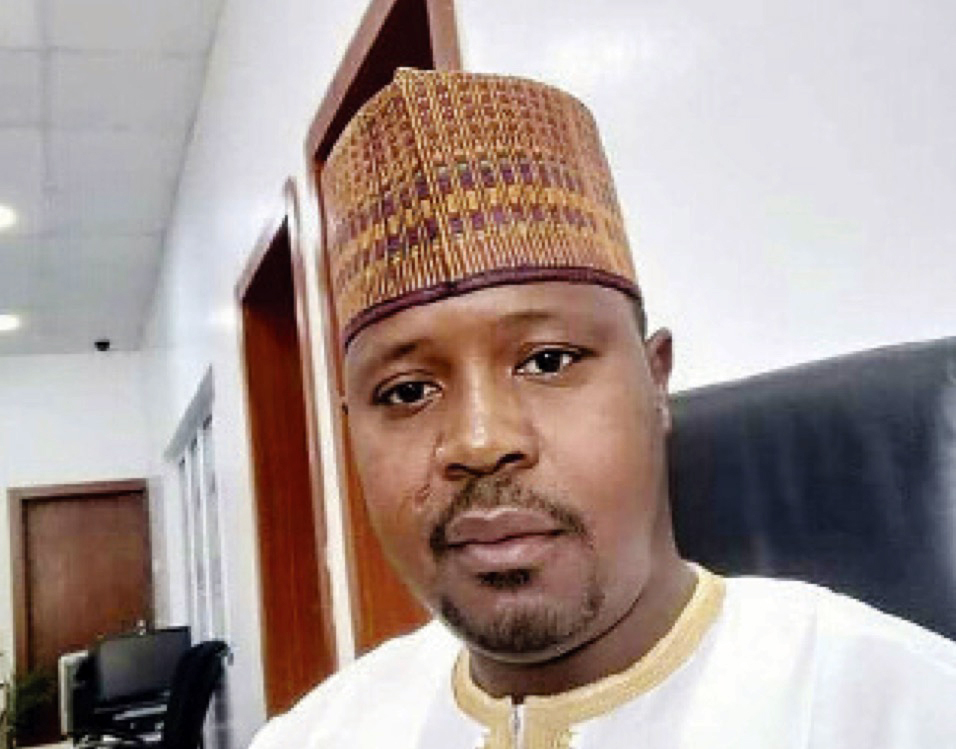
The engine room for a great deal of this is the Jigawa State Youth Empowerment and Employment Agency, JISYEEA, which the governor pulled directly under his own office rather than leaving it to drift. This itself a small but telling signal of how seriously he takes the youth question. And if the governor is the architect avoiding the noise, the Director General of the agency, Dr Habib Muhammad Ubale, is the man who seems to have taken “silently achieving a lot” as a personal creed.
Other News
I met him expecting a bureaucrat and left convinced I had met something closer to an engineer of second chances. He dresses plainly, almost deliberately so, the way men do when they have decided that their work should speak louder than their wardrobe. He talks in a low, even register, without the theatrical pauses politicians tend to borrow from Nollywood, and yet every figure he cites arrives fully formed, with dates and beneficiary counts attached, as though the numbers live somewhere just behind his teeth.
This is a man, well travelled and privately sector-tested before public service claimed him, who seems constitutionally incapable of hearing about a jobless young person without treating it as a personal grievance. Poverty, to him, is not a policy abstraction; it is an error that ought to be corrected, and corrected now. Those close to him joke that his hair has greyed faster than his years would suggest, and having watched him field question after question with the restless energy of a man perpetually mid-thought about his next project, I believe them. It is the particular exhaustion of someone who has decided that his principal’s promises are also his own debts to settle.
The scale of what JISYEEA has assembled since 2023 is, frankly, difficult to summarise without sounding like a press release, so I shall simply hand over some of what I saw and was told, and let the reader draw their own conclusions. Across the state’s five emirates, 2,500 mass housing units are under construction, a project awarded in 2025 and bound, by design, to be completed within the current administration’s tenure.
That means no passing the parcel to a successor. I was taken through a sprawling workshop, 60 per cent government-owned and 40 per cent in private hands, a partnership structure that struck me as sensible rather than showy, where giant waste bins, traffic lights, hospital beds, student beds, even massage beds, are being fabricated alongside crane equipment and other heavy metalwork. It is not every day one watches a state government quietly building the furniture of its own hospitals and schools rather than importing it.
Nearby sits a training facility with 240 rooms, and the Bola Ahmed Tinubu Multipurpose Skill Acquisition Centre, which the agency says can put some 200 trainees through their paces at once.
There is a fabric centre for the state’s aspiring fashion entrepreneurs, and in a detail that genuinely startled me is the 400 agricultural machines committed to supporting mechanized farming across the state, a figure that ought to embarrass any state twice Jigawa’s size.
Perhaps the most affecting stop was the almajiri school, built to take children who have spent their young lives begging on the street and equip them instead with Islamic knowledge, basic education, and a trade (replacing the plate with a skill) an attempt, unfashionable in its patience, to solve a generational problem rather than merely manage its optics. Another skills acquisition centre project is still to break ground, and the honesty with which this was disclosed to me, rather than glossed over, told me more about the agency’s credibility than any completed project could have.
Since its realignment, JISYEEA reports having empowered well over 340,000 youths and helped launch in excess of 176,000 startups, through nano grants, SME grants, and the J-CARES initiative aimed squarely at women and other vulnerable groups. Somewhere in those figures are 27 new water-resource entrepreneurs the agency now calls millionaires, a young tailor named Aisha who now employs two of her own staff, and a young farmer named Khalid whose organic produce is quietly finding its way into local markets. Multiply that arithmetic across a state of Jigawa’s size and one begins to understand why the governor can afford to stay quiet: the results are doing the talking.
None of this is offered as flawless. The agency itself is candid about its constraints funding competition, infrastructural gaps, and the old cultural habit of treating vocational training as somehow lesser than a university certificate, a prejudice Nigeria can no longer afford. But candour about one’s limits is, in my experience, a far more reliable indicator of good governance than the absence of any admitted fault.
What Jigawa has quietly built in my opinion is, worth more attention than it has received, and worth copying. There is no obvious reason a model that pairs a governor uninterested in noise with a technocrat obsessed with delivery could not be replicated in Abuja, or in any of the 35 other states currently arguing about youth unemployment on television rather than doing something about it. I came to Jigawa braced for danger and found suya, sleep, and a state busy proving that development in Nigeria’s north is not a fantasy but a schedule, currently being kept.
• Benjamin wrote in from Abuja, via [email protected]