Follow Us on Google
By Chinelo Obogo [email protected]
Senior Special Assistant to President Muhammadu Buhari on National Assembly Matters, Nasir Illa, on Monday, revealed that the President had signed seven new bills into law, including the Civil Aviation Act, 2022.
The legislation repealed the Civil Aviation Act, No. 6, 2006 and enacts the Civil Aviation Act, 2022 and establishes rules of operation and divisions of responsibility within the sector in order to promote aviation safety and security. It also seeks to ensure that Nigeria’s obligations under international aviation agreements are implemented and consolidated laws relating to regulation of civil aviation in Nigeria.
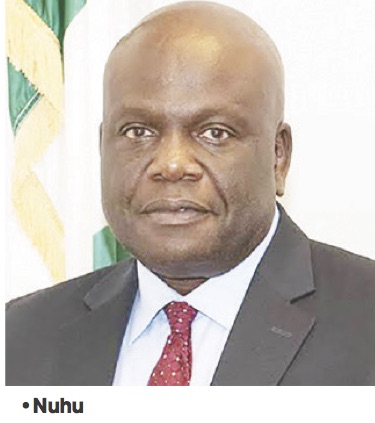
Director General of the Nigerian Civil Aviation Authority (NCAA), Capt. Musa Nuhu, who granted an interview earlier this week, said the Nigeria Airspace Management Agency (NAMA) and the Federal Airport Authority of Nigeria (FAAN) had some of their residual regulatory functions removed and moved to NCAA as industry regulator to avoid conflict of interest.
New Civil Aviation Act 2022
Since the Civil aviation Act 2006, there have been significant changes in the industry; we have had new annexes in the International Civil Aviation Organisation (ICAO), new developments in terms of ICT and in the sector generally. In addition to that, the service providers namely; the Nigeria Airspace Management Agency (NAMA) and the Federal Airport Authority of Nigeria (FAAN) had some residual regulatory functions in them which have been removed and moved to NCAA as the regulator of the industry to avoid conflict of interest. You cannot provide service and also regulate some of the services you provide. Those are the main things that we have in the new Civil Aviation Act 2022. Of course, there are other changes that are with a view to having a much efficient, effective air transportation industry and to ensure Nigeria complies with the new ICAO standards, new Annexes and international best practices.
Trapped funds
Airlines are enterprises like any other business that investors make money and the Bilateral Air Service Agreement (BASA) arrangement states that they should be allowed to repatriate their funds without hindrance.
Unfortunately, because of the challenges this country is facing, the funds accumulated and became very high. It is a welcome development that CBN had released a significant amount of the funds and I know the Minister of Aviation, Hadi Sirika, the Minister of Finance and the CBN Governor are still working to ensure the balance of the funds are released to the airlines and a mechanism is being developed to avoid the repeat of this.
I don’t have any idea when the remaining funds would be released but my prayer is that it should be released like yesterday. Nigeria currently has some challenges with the issue of foreign exchange, but we hope it is released as soon as possible so that normal services can resume and not interrupted. Nigerians travel a lot and air transport is critical for the economy of our country. So, we hope these funds are paid as soon as possible.
If you remember when this government first came into power; 2015 and early 2016, there was the same case of about $600 million, which through the efforts of the minister ensured the funds were released to the airlines, but unfortunately, six, seven years later, we found ourselves in the same conundrum, but I know all efforts are being made at the high level to settle this.
However, cannot force any airline to operate in Nigeria; we can encourage them, we can talk to them, but it is a commercial decision for an airline to decide a number of frequencies and where they operate to. If the passenger load is not there, you cannot force them to operate. If they believe they have other difficulties and challenges that affect their operations into certain airports, it is their decision. I cannot force or manipulate any airline to operate in Nigeria. We can only encourage them.
Outstanding debts by Nigerian operators
We have discussed and that was why we had a closed door meeting and it was a much calmer meeting. We all agreed; everybody is having challenges, difficulties and this is not restricted to the industry stakeholders alone, the airlines, ground handlers and other service providers. Even the agencies, we have the same problem in the issues of funds. At a point in time during the Covid-19 pandemic when the airlines ran into trouble, a lot of the agencies too had the same challenges of paying the salaries of their workers. So we are all in the same boat. You can imagine FAAN running about 27 airports and the funds are not there, NAMA has facilities all over the country that they must maintain, equipment are imported and they must be maintained. I had to train my inspectors overseas.
We are all in the same boat and we all need to work together, collaborate and get out of the problem. We need to stabilise the system and ensure there is improvement.
Also, there are issues of the outstanding debts that need to be paid. So, we are working on the airlines, we know that if we tell them to give us all these monies at the same time, it is very difficult and not possible, so, what we have put in place in NCAA and to prevent the debts from growing, we have put in place a tripartite agreement; the NCAA, airlines and the airlines’ banks. So, once those funds go to the bank, the 5 per cent TSA/CSC is automatically deducted and goes into the NCAA bank and NCAA will share it with the other sister agencies on a pre-determined ratio as entrenched in the 2006 Civil Aviation Act.
For the legacy debts, what we have done is to enter a Memorandum of Understanding with all the operators; we know they can’t pay all at a time, but they have to pay us a reasonable amount of money on a monthly basis at least. I think almost all the airlines are complying with this, except a few that we are working on. What we have said is that if they don’t pay this legacy debt, we are not going to renew their licenses; AOC, ATL. That is one of the conditions and most of them have entered into the agreement. My account people are sitting with them so that they can make an arrangement on payment of a reasonable amount so that the debts can be cleared off over a short or middle time period.
Audit of domestic airlines
Yes, the airlines have challenges; we have sat down with some of them, discussed with them and some of them need some injections of funds. Like Aero decided to shut down on its own volition and they are reorganising, getting more aircraft, expecting some injection of funds so that their financial status to grow. So, we are in discussions with them on this matter.
Financial distress in aviation if not managed properly could turn out to be a safety issues because we don’t want airlines to start to cut corners. Those with financial difficulties if you notice, they are delaying flights, cancelling flights, but we need to work with them. We are all in this together, except where we have serious concerns in the continued existence of the airlines or serious violation, we will work with them hand on hand so that they can be able to get out of this financial challenges they found themselves.
Update on Dana Air
Dana was not only the financial issue, there were other violations in conjunction with the weak financial position. We are working with Dana assiduously to see how the issue can be resolved. Even yesterday (Monday), we had internal zoom meeting with the airline and a couple of things need to be completed and we will call our management; Dana will sit down with them, they will tell us what they have done and what they have put in place. If we are happy, we release them, but if not, we will tell them what they must do before they are release for safe operations. Safety of the industry is paramount and it will never be compromise.